
Water-reflection photographer
You want to capture both the harbour and its reflection, while controlling bright spots without automatically filtering out the reflection.


First decide whether the reflection is part of your photo: a polarising filter can reduce unwanted glare, but it can also weaken a reflection you want to capture. Then compare the angle of view and optical zoom you need with the exposure controls and a viewfinder for bright conditions. A long zoom, a faster lens and a fixed focal length each serve a different purpose.
You want to capture both the harbour and its reflection, while controlling bright spots without automatically filtering out the reflection.
You’re standing on one quay and want to frame boats or architectural details across the water as well as a wider harbour view. Optical zoom range matters more to you than having just one fixed angle of view.
You take your camera with you on a walk and want to frame your shots easily in bright daylight. Size, weight and a viewfinder are all worth considering.
Your choice depends on the effect you want on the water, how far away your subjects are across the harbour, and the light you’ll be photographing in.
When to choose it: if you want to frame both the harbour and its details from the same quay. Sony specifies a 24–200 mm equivalent range for the RX100 VII; Canon lists 24–100 mm for the PowerShot G7 X Mark III.
Trade-off: the aperture changes as you zoom. Sony lists f/4.5 at the telephoto end; Canon lists f/2.8 at the same end.
When to choose it: if you can’t get closer to subjects across the harbour and optical reach is your priority. Panasonic specifies 30× zoom for the DC-TZ99; Canon lists 40× for the PowerShot SX740 HS Lite Edition.
Trade-off: according to their manufacturers, both models mentioned have a 1/2.3-type sensor. A large zoom range alone doesn’t tell you how well a camera performs in low light.
When to choose it: if you mainly want to compose your harbour shot with a chosen angle of view and don’t need to zoom in optically from one spot. Fujifilm specifies a fixed 35 mm equivalent lens for the X100VI.
Trade-off: you can’t use optical zoom to bring a boat across the harbour closer. The X100VI’s built-in ND filter is not a substitute for a polarising filter when dealing with reflections.
| What to consider | What should you check? | Who is this important for? |
|---|---|---|
| Reflections and exposure | Check the exposure compensation and, if you plan to edit your photos, RAW support on the exact model. If you want to use a polarising filter, check whether the camera has a compatible fitting; Nikon explains that this type of filter can reduce reflections. | I want to keep the reflection while controlling bright areas, without removing all the shine. Around 36% of consumers give this balance top priority. |
| Details across the harbour | Compare the optical wide-angle and telephoto focal lengths in 35 mm equivalent terms, and check the maximum aperture at the telephoto end. Digital zoom is not optical zoom. | If I want to frame boats or buildings closer from where I’m standing, optical reach matters most. Around 29% of consumers make range their top priority. |
| Framing in bright light | Check whether the exact model has a viewfinder and compare weights on the same basis, including the battery and card. Sony lists an electronic viewfinder for the RX100 VII. | I want to frame shots easily in bright daylight on a walk without carrying too much. Around 21% of consumers prioritise portability and framing in bright light. |
| Low light and post-processing | Compare the maximum aperture at the focal length you’ll use and check RAW support on the exact model. Canon lists f/1.8–f/2.8 for the G7 X Mark III; Panasonic lists f/3.3–f/6.4 for the DC-TZ99. | If I want to take photos in the evening and edit them afterwards, I look at the lens aperture and RAW support. Around 14% of consumers give these features top priority. |
A polarising filter can reduce unwanted glare, but it can also weaken the reflection you want to photograph. The fitting and size depend on the camera model.
First decide what effect you want, then check that the filter fits your exact camera.
A greater optical range isn’t automatically better for a wide harbour view or photos in low light. The travel zoom models mentioned have a 1/2.3-type sensor and model-specific lens apertures.
Compare the optical wide-angle and telephoto focal lengths, sensor and lens aperture together. Don’t count digital zoom as extra optical reach.
Fujifilm lists an ND filter for the X100VI; Nikon describes a polarising filter as a way to reduce reflections. The filters therefore have different uses.
Choose an ND filter for exposure control, and check separately whether polarisation is possible and suitable for your needs.
To reduce reflections, you may need a separate filter with a compatible fitting.
The Dutch government says there is no fixed statutory guarantee period in the Netherlands. If a product is faulty, the retailer remains your point of contact.
Keep your proof of purchase and read any additional warranty terms, without treating them as a replacement for your statutory rights.
The RX100 VII is a zoom option for anyone who wants to photograph both the harbour and its details from one spot.
The PowerShot G7 X Mark III and SX740 HS Lite Edition offer two different zoom options.
The LUMIX DC-TZ99 is a travel zoom option for anyone who wants to frame a more distant subject without changing lenses.
The X100VI suits anyone who wants to compose shots deliberately using a single fixed angle of view.
The Q3 is worth considering if you want a fixed wide-angle lens and are thinking about using a separate polarising filter.
This Joybuy selection includes cameras and pocket cameras for photography and video. Compare the camera type and the stated zoom system with the framing you need for harbour photos.
 Image unavailable
The stated optical zoom range may suit you if you want to frame details across the harbour from the quay.
12× optical zoom; Wi-Fi; 64 MP.
 Image unavailable
This is a pocket camera for photography and video; check that this type of camera suits your still harbour photography.
1-inch CMOS sensor; 4K/120fps video; 3-axis stabilisation; 2-inch rotating touchscreen.
 Image unavailable
This digital camera is designed for photography; digital zoom isn’t the same as optical zoom for framing distant details.
64 MP; 18× digital zoom; autofocus; 32 GB memory card.
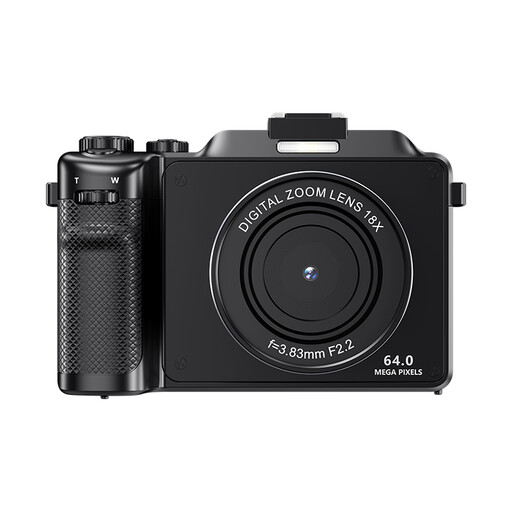 Image unavailable
This autofocus camera is designed for photography; bear in mind that the product description warns that digital zoom may reduce image quality.
18× digital zoom; flash; anti-shake.
 Image unavailable
This pocket camera is designed for photos and video; the stated zoom is digital and doesn’t add any optical reach.
4K; 44 MP; 16× digital zoom.
No. A polarising filter can reduce unwanted glare on the water, but it can also weaken a reflection you want to photograph. First decide what effect you’re after, then check whether a filter fits the exact camera model.
Check whether you can adjust the exposure and review the result as you shoot. Nikon describes exposure compensation as a way to choose your preferred exposure in high-contrast situations; it doesn’t guarantee that blown highlights can be recovered afterwards.
Check which battery, charger and memory card are included with the version you’ve chosen. Keep the lens and filter free of splashes and dirt, following that model’s manual. Don’t assume the camera is water-resistant unless you have model-specific information confirming this.
When you buy as a consumer, you’re entitled to a product that works as it should; according to the Dutch government, there’s no fixed two-year statutory guarantee period in the Netherlands. If a product is faulty, the retailer is your point of contact. Damage caused by your own actions isn’t covered by the stated right to free repairs.
Treat taking and publishing the photo as two separate things. The Dutch Data Protection Authority considers identifiable people to be personal data. The exception for personal or household use doesn’t apply when you share images publicly on a larger scale; in that case, consider the relevant privacy rules and legal basis.