
Detail hunter on the quayside
You want to capture wood grain, brickwork and other fine textures, and can choose where to stand. So don’t just look at megapixels: consider the lens, sensor and distance at which the camera can focus.


Start by considering how far away your subject is. A fixed wide-angle lens is better suited to capturing textures within reach than details on the other side of the harbour, which may call for optical zoom. The Consumentenbond points out that both the lens and sensor matter. Also check the focusing distance at the zoom setting you plan to use, as well as the protection offered by the exact model. More zoom or a rugged body doesn’t automatically mean you’ll capture finer details.
You want to capture wood grain, brickwork and other fine textures, and can choose where to stand. So don’t just look at megapixels: consider the lens, sensor and distance at which the camera can focus.
You can’t get closer to boats or buildings and want to frame details so they fill the shot. Compare the optical zoom range with the lens aperture and sensor size.
You often take photos close to the water or in changeable weather. Check the protection offered by the exact model and weigh it against the field of view and level of detail you want.
First decide whether you’ll usually be standing close by or won’t be able to get nearer to your subject. Then compare the lens and sensor, the focusing distance at your preferred zoom setting, and any protection against water and dust.
| What to consider | What should you check? | Who is this important for? |
|---|---|---|
| Fine surface detail | Compare the sensor size and lens of the exact model. Check that the field of view suits where you’ll be standing. | If you can get close enough and want to capture textures in a wide shot, the combination of lens and sensor matters a great deal. Around 36% of consumers put surface detail first. |
| Details at a distance | Compare the optical zoom range in 35mm-equivalent focal lengths and the aperture at the telephoto end. | If you can’t get closer to a boat or building, look at optical zoom rather than just digital zoom. Around 29% of consumers prioritise distant subjects. |
| Reflections and changing light | Check the lens’s maximum aperture and exposure controls. Separately check whether any filter you’re considering is compatible with the camera. | If you want to retain reflections on the water or reduce glare, control over the shot is important. Around 21% of consumers start by considering light and reflections. |
| Use in wet conditions | Check the protection rating for the exact model and compare the field of view with the crop you need. | If you often take photos close to water, check that the protection is suitable for the conditions you’ll use it in. Around 14% of consumers put protection in wet conditions first. |
A long optical zoom range won’t automatically make up for a lack of light. The lens and sensor also affect the shot.
Compare the crop and distance you want with the sensor size, optical zoom range and lens aperture of the exact model.
The minimum focusing distance can vary depending on the zoom setting. Being able to focus close up at wide angle doesn’t necessarily mean you can do so when zoomed in.
Check the focusing distance at the setting you’ll use to photograph surface detail.
Water and dust protection are specifications of specific rugged models, not of compact cameras as a category.
If you often take photos close to splashing water, check the protection offered by the exact model.
The models listed illustrate different trade-offs. The features below apply to these product ranges and don’t describe the availability or features of every model from each brand.
The GR IV is a compact camera with a fixed wide-angle lens, suited to anyone who can get close to their subject and choose their own framing.
According to Sony, the RX100 VII combines a 1.0-type sensor with optical zoom for shooting at a range of distances.
The PowerShot G7 X Mark III is a compact camera with a 1.0-type sensor and a stated 24–100 mm-equivalent zoom range.
The LUMIX DC-TZ99 is a travel zoom option for anyone who wants to frame distant subjects from a fixed position.
The Tough TG-7 is a rugged compact camera for situations where protection from water or dust is an important buying consideration.
These Joybuy cameras are options to compare for photography in a village harbour. Check the type of zoom listed for each model, and consider whether you’ll usually be standing close by or want to frame details at a distance.
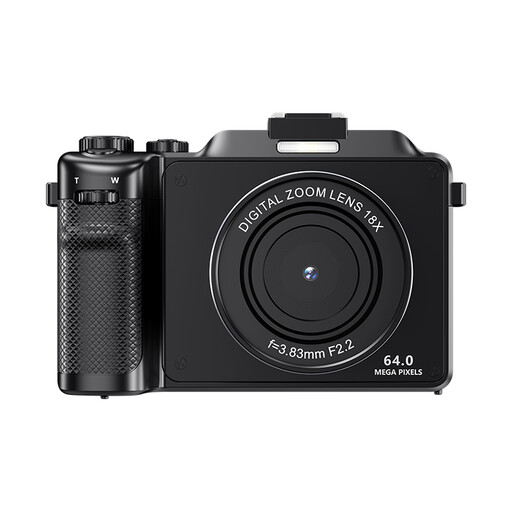 Image unavailable
Could suit photography of subjects within reach when autofocus is useful.
The product name lists 4K, 64 MP and autofocus. The description lists 18× digital zoom and warns that it reduces image quality, so bear this in mind when photographing distant details.
 Image unavailable
The stated optical zoom range could be useful if you want to frame subjects at different distances from one spot.
The product name lists 12× optical zoom, 4K, 64 MP and Wi-Fi.
 Image unavailable
Could suit anyone looking for a pocket camera for photography with the option to adjust the framing.
The product name lists 4K and 44 MP. The description mentions autofocus and 16× digital zoom; according to the description, this zoom reduces image quality.
 Image unavailable
The stated optical zoom could be useful if you want to adjust the framing from where you’re standing.
The product name lists 5K, 64 MP, 8× optical zoom and a dual lens.
 Image unavailable
Could suit anyone comparing optical zoom options for framing subjects at different distances.
The product name lists 5K, 56 MP and 10× optical zoom, with front and rear cameras.
First choose where to stand and the crop you want. Canon recommends varying the camera height to capture reflections and, for a calm reflection, finding a sheltered spot or quieter water. Check that the camera’s focal length range lets you capture both compositions.
No. A polarising filter can reduce glare, but it can also change a reflection you want to keep. Nikon describes how it works; before buying, check whether a suitable filter attachment is available for the exact camera.
Check which battery, charger, memory card and any filter adapter are included with the exact listing. The Consumentenbond notes that an extra battery and memory card may need to be bought separately, so check what comes with the version you’ve chosen.
Not necessarily. According to the Dutch Data Protection Authority, photos showing recognisable people count as personal data. The exception for strictly personal use doesn’t apply to wider publication, so consider which legal basis for processing applies.