
Taking photos at dusk
You keep shooting as daylight gives way to harbour lights and want to be able to control exposure and motion blur.


Start by deciding what you want to capture from your chosen spot: the entire skyline, or ships and buildings on the opposite bank. Then compare the wide-angle setting, optical zoom range and aperture at the zoom level you plan to use. For longer exposures at dusk, a stable surface or tripod is important.
You keep shooting as daylight gives way to harbour lights and want to be able to control exposure and motion blur.
You want to fit the entire skyline into one shot from a fixed, accessible spot, so you look at the wide-angle setting first.
You mainly photograph subjects across the water and weigh up optical telephoto reach against shooting in lower light.
First decide what framing you need from your chosen spot. Then compare the aperture at your preferred zoom setting and consider whether you can set the camera up securely while you’re out and about.
| What to consider | What to look for when buying | Who this matters most to |
|---|---|---|
| Exposure in changing light | Check the aperture at different zoom settings, exposure compensation and manual modes. | If I want to keep shooting at dusk, I look at exposure control and shutter speed. Around 36% of consumers put exposure in changing light first. |
| Fitting the whole skyline into the shot | Compare the equivalent wide-angle setting with the view from your chosen spot. | When I can’t step any further back, I want to know in advance whether the whole skyline will fit in the frame. Around 29% of consumers prioritise capturing the complete panorama. |
| Distant ships and buildings | Compare the optical telephoto range as well as the maximum aperture at the telephoto end. | If I want to capture subjects across the water, telephoto reach is my first consideration. Around 21% of consumers prioritise distant details. |
| Portability and a stable setup | Check the weight and consider whether you can use a stable surface or an authorised tripod at an accessible photo spot. | If I want to take the camera with me and keep it steady in low light, I weigh portability against my setup. Around 14% of consumers prioritise lightweight, practical equipment. |
A long optical zoom range can help bring distant ships closer, but Panasonic says the Panasonic TZ99’s maximum aperture reaches f/6,4 at the telephoto end. So at dusk, you’ll also need to consider shutter speed and stability.
As well as the zoom range, compare the aperture at the focal length you plan to use in low light.
At slower shutter speeds, camera shake can cause blur. Keeping the camera steady won’t freeze a moving ship.
Choose a stable, accessible spot and check whether tripods are permitted there. Set the shutter speed to suit the scene, bearing in mind the difference between stationary buildings and moving ships.
According to Fujifilm, the Fujifilm X100VI has a fixed 35 mm-equivalent lens. From a fixed position, this could leave part of the panorama outside the frame.
Before choosing, check whether that angle of view is wide enough from the spot where you’ll actually be taking photos.
The PowerShot G7 X Mark III is worth considering if you mainly photograph wide skyline views and want to keep shooting as the light fades.
According to Sony, the RX100 VII offers a range between wide-angle overviews and medium-distance harbour details.
The TZ300 and TZ99 are two different travel zoom options for anyone who wants to frame a variety of shots from one spot.
The X100VI could suit you if you’re deliberately shooting with one fixed angle of view from a suitable spot.
The cameras below differ in their listed features and positioning. Before buying, check whether the model suits stationary harbour photography and offers the angle of view you need from your chosen spot.
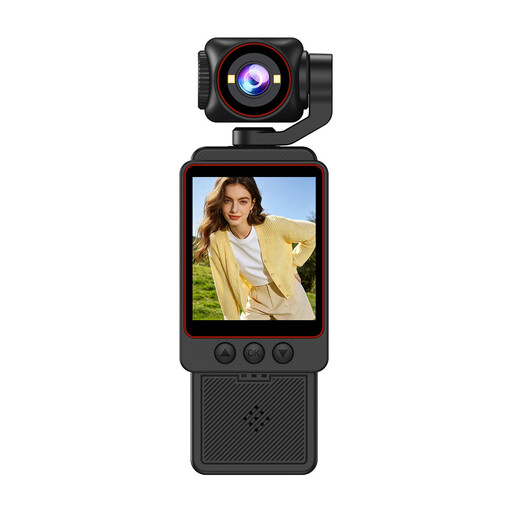 No image available
The product name positions this camera for handheld POV and vlog footage; check whether it’s also suitable for stationary skyline photos.
2K recording; 360° rotating lens.
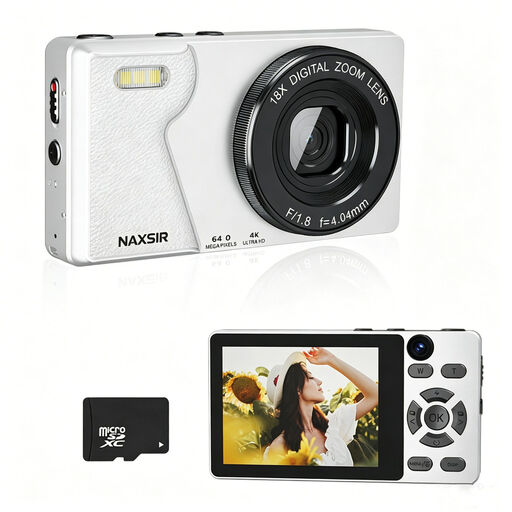 No image available
The product name mentions photography and vlogging; check whether the model and digital zoom suit the crop you want of the harbour.
64 MP photo resolution; 18× digital zoom; autofocus; includes 32 GB memory card.
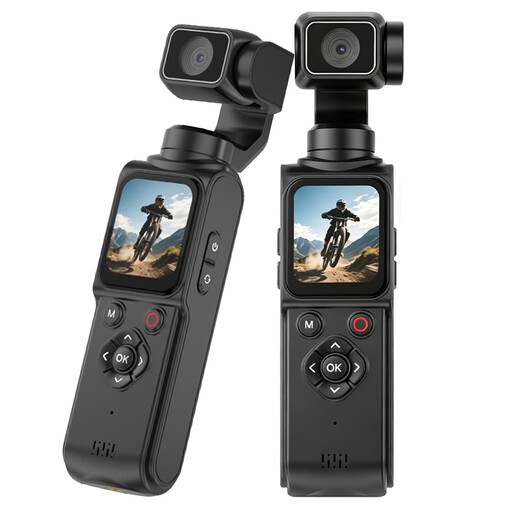 No image available
The product name mentions vlogging, travel and sport; check the listed angle of view to see whether it suits a harbour panorama.
64 MP; 330° rotating lens; 1,72-inch touchscreen; 150° wide-angle lens according to the product description.
 No image available
The product name positions this model as a pocket gimbal camera; check whether this vlog camera suits the type of stationary harbour photos you want to take.
1-inch CMOS sensor; 2× lossless zoom; 2-inch rotating screen.
 No image available
The product name mentions optical zoom, which could be useful if you want to frame distant subjects from the quay; check the other specifications to make sure it suits your needs.
12× optical zoom; 4K digital camera; 64 MP; Wi-Fi.
Check whether the camera offers exposure compensation and take test shots, deciding which part of the scene you want to prioritise. If you expose for the sky, buildings may appear darker; if you prioritise the buildings, the sky may look brighter.
A tripod or sturdy surface helps reduce camera shake during long exposures. It won’t stop a moving ship, so also check whether tripods are allowed at your chosen spot.
Don’t assume that every quay or site is open to the public. The Port of Rotterdam warns that visitors are not allowed in some parts of the port; check access rules and signs on site. When publishing photos, also consider the privacy of any identifiable people.
For online purchases from a business, you generally have a statutory cooling-off period of up to 14 days after delivery, according to ACM ConsuWijzer. Before buying, check which terms and exceptions apply to your situation.
If a product develops a fault sooner than you could reasonably expect under normal use, ACM ConsuWijzer says the seller is responsible for providing an appropriate solution free of charge under the statutory guarantee. What’s appropriate depends on the circumstances of the case.