
Photographers of distant harbour details
You’re often in one spot on the quayside and want to frame boats or details across the water as well as the wider scene. So, compare the optical zoom range first.


If you want to photograph both the harbour and boats across the water from one spot, start by looking at the optical zoom range. The lens, sensor and file formats also matter for evening light and editing. A fixed focal length calls for more thoughtful framing, while a water-resistant camera won’t necessarily offer a long telephoto range. Compare the specifications of the exact model with your viewpoint and how you plan to use it.
You’re often in one spot on the quayside and want to frame boats or details across the water as well as the wider scene. So, compare the optical zoom range first.
You’re looking to capture atmosphere and reflections in fading light. Compare the lens and sensor at the focal length you’ll use, not just the maximum zoom range.
You want to choose settings and file formats for discussing or editing your photos. Check which file formats the exact model supports.
Ideal for: switching between a wide harbour view and boats or building details further away, all from one spot.
The trade-off: a long telephoto range isn’t automatically better in low light; compare the sensor and lens aperture too. The Dutch Consumers’ Association highlights this trade-off in its general buying advice.
Ideal for: choosing a particular angle of view and composing shots when you can change your position.
The trade-off: you can’t optically zoom in on a distant boat from the same spot.
Ideal for: taking photos close to splashing water, if the stated water resistance matters more to you than a long telephoto range.
The trade-off: the OM SYSTEM TG-7 has a shorter stated range than the travel zoom cameras mentioned here. Always follow the model’s instructions for use.
| What to consider | What should you check? | Who should pay particular attention? |
|---|---|---|
| Wide views and distant subjects | Compare the wide-angle and telephoto focal lengths in 35 mm equivalent and distinguish optical zoom from digital cropping. | If I want to frame both the harbour and distant details from the same quayside, I put optical zoom range first. Around 29% of consumers say range is their main priority. |
| Atmosphere in low light | Compare the sensor size and maximum aperture at both the wide-angle and telephoto ends. Also check which exposure settings are available. | In the evening, I want to capture reflections and atmosphere without focusing only on maximum zoom range. Around 23% of consumers prioritise taking photos in fading light. |
| Control and editing | Check the manual exposure options and whether the exact model saves RAW photos. | For discussing or editing photos at my camera club, I want to be able to assess the files and exposure myself. Around 18% of consumers prioritise this control and editable files. |
| Taking photos close to water | Check the stated water resistance and instructions for use for the exact model, as well as the zoom range you need. | If I’m taking photos close to splashing water, I want to know what level of protection is specified for my camera. Around 12% of consumers prioritise use in wet conditions. |
| Taking it along on a walk | Compare dimensions, weight and controls. Only compare weights when they are measured on the same basis. | When walking between different viewpoints, I want a camera that’s easy to carry and use on my route. Around 18% of consumers prioritise portability. |
A long zoom range doesn’t, by itself, tell you how a camera performs at the focal length you’ve chosen. In its general buying advice, the Dutch Consumers’ Association points out that a high zoom range may involve a trade-off with sensor size and photo quality.
Compare the focal lengths you’ll actually use from the quayside, along with the sensor and lens aperture.
Leica specifies a fixed 28 mm lens for the Q3 and lists digital crops. A crop like this doesn’t change the lens’s optical focal length.
When photographing a distant boat, check whether the stated range refers to optical zoom or a digital crop.
Water resistance down to 15 m is a specification of the OM SYSTEM TG-7, not compact cameras in general.
Check the protection and instructions for use for the version you’re actually choosing.
According to the Dutch Data Protection Authority, the exception for personal or household use depends in part on how widely images are shared. Sharing more widely or publishing them may raise other privacy questions.
Before publishing, discuss how identifiable people will be treated and who will share the images.
The RX100 VII is worth comparing if you’re looking for a compact zoom camera with a 1.0-type sensor.
The LUMIX DC-TZ99 is an option for anyone who wants to frame both wide views and distant subjects with one camera.
The PowerShot SX740 HS Lite Edition is an option if you want to frame distant details from the same quayside.
The X100VI suits you if you want to choose your angle of view and settings deliberately, and optical zoom is less important.
The Tough TG-7 is an option if taking photos close to water is your priority.
The Q3 is an option if you deliberately want a wide view with a fixed 28 mm lens.
Camera options for photography from the quayside. Compare each model’s optical range, angle of view and the features you need for your harbour photos.
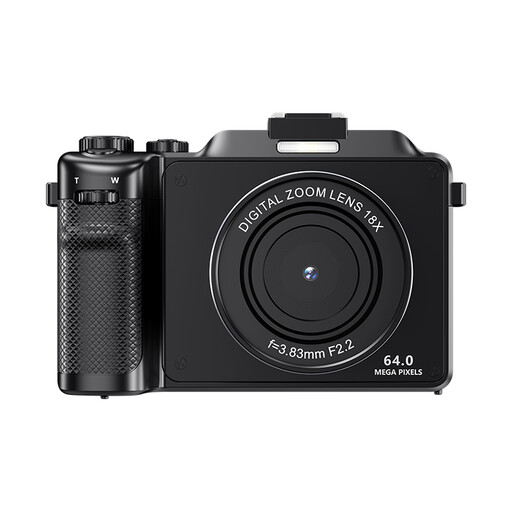 Image unavailable
An option if you’re looking for a compact camera and want to compare digital zoom with optical zoom.
The title lists 18× digital zoom, autofocus, flash and anti-shake. The product description warns that digital zoom can reduce image quality.
 Image unavailable
The stated optical zoom may suit you if you want to switch between wide views and more distant subjects from the same quayside.
The product information lists 12× optical zoom, 4K, 64 MP and Wi-Fi.
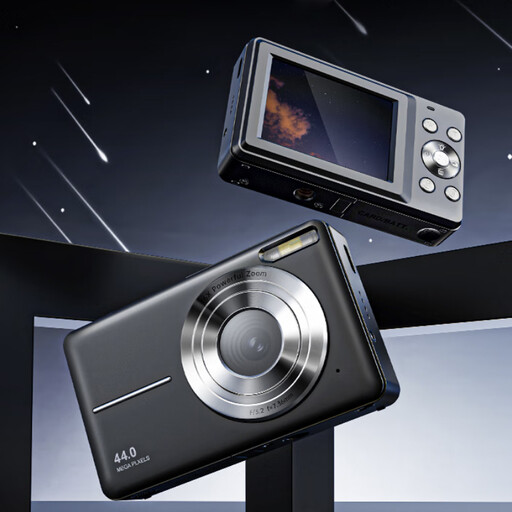 Image unavailable
An option if you’re looking for a pocket camera for photos and video. Check which type of zoom suits the way you frame your shots.
The title lists 4K, 44 MP and 16× zoom, but doesn’t specify whether the zoom is optical.
 Image unavailable
The stated optical zoom may suit you if you want to switch between different compositions from the quayside.
The product information lists 10× optical zoom and 56 MP.
 Image unavailable
An option if you want to compare RAW shooting and some optical zoom, but don’t need a long telephoto range.
The stated specifications include a 1-inch sensor, an f/1.8–2.8 aperture, JPEG and RAW shooting, and 2.7× optical zoom with a 24–70 mm range. This offers less telephoto reach for distant details from the same quayside.
Start with the angle of view and the distance to your subject, then compare the lens and sensor. The Dutch Consumers’ Association says sensor size matters more for photo quality than megapixel count alone, and points out that a high zoom range may involve a trade-off with sensor size.
Before you set off, check which memory card and battery are compatible with the exact model. The Dutch Consumers’ Association recommends considering an SD memory card, a spare battery if needed, and trying out the controls when buying.
For a consumer purchase in the Netherlands, the retailer is your point of contact for a solution under the legal guarantee. According to the Dutch government, there’s no fixed statutory guarantee period; what you can reasonably expect from the product and the cause of the problem are important.
That depends on how the photos are used and shared. The Dutch Data Protection Authority distinguishes private use within a very limited circle from wider sharing or use on behalf of an organisation. If people are identifiable, the GDPR may apply and a lawful basis is needed for processing. Before publishing, discuss who will share the images and which lawful basis applies.