What should you look for in a compact camera for harbour photography?
Your choice mainly comes down to four different priorities: shooting at dusk, switching between the skyline and details, carrying a lightweight camera for wide views, and capturing moving subjects.
Compact camera with a fixed angle of view
Best if: you can choose one composition from an accessible spot. Ricoh Imaging Europe lists the GR IV as equivalent to 28 mm; Fujifilm lists the X100VI as equivalent to 35 mm.
Trade-off: with these fixed lenses, you can’t optically zoom in on a more distant harbour detail.
Shorter, fast zoom lens
Best if: you want to combine wide views with a moderately tighter composition, even in lower light. Canon Netherlands specifies a 24–100 mm equivalent range, f/1.8–2.8 and optical image stabilisation for stills on the PowerShot G7 X Mark III.
Trade-off: its telephoto reach is shorter than that of the Sony RX100 VII and Panasonic TZ99 models reviewed here; stabilisation won’t automatically prevent blur from a moving ship.
Compact camera with a longer optical zoom range
Best if: distant ships, cranes or buildings matter, and you want to photograph them from the same spot. Sony Netherlands lists the RX100 VII as equivalent to 24–200 mm; Panasonic specifies 30× optical zoom for the TZ99.
Trade-off: check the exact camera’s sensor size and lens aperture at the telephoto end too. Panasonic lists five-axis compensation for video on the TZ99, except for 4K video; this specification doesn’t automatically apply to stills.
| What to consider |
What to look for |
Who it matters to |
| Sharpness at dusk |
Compare sensor size and lens aperture at the focal length you’ll use; check image stabilisation for stills and whether you can set the shutter speed. |
If I’m shooting handheld at dusk, I want to reduce camera shake and loss of detail. Around 40% of consumers prioritise sharpness in low light. |
| Framing wide views and details |
Compare the 35 mm-equivalent angle of view at both ends of the zoom range; for the TZ99, check which aspect ratio the stated zoom applies to. |
If I want to switch between the skyline and a more distant detail from one accessible spot, zoom range is crucial. Around 30% of consumers prioritise being able to frame different shots from one place. |
| Taking a wide view with you |
Check the dimensions and weight, including the battery and card, and whether the widest angle of view captures the skyline you want from your chosen spot. |
If I’m walking around and mainly want a wide harbour composition, I’m looking for a camera that’s easy to carry and suits the framing I want. Around 20% of consumers prioritise portability and wide views. |
| Moving ships or distant details |
Compare the optical telephoto range and lens aperture at the telephoto end; check whether you can set the shutter speed. |
If I want to capture a distant or moving ship, I’m looking for a tighter composition as well as ways to reduce subject blur. Around 10% of consumers prioritise moving harbour details. |
Joybuy camera options for a portable harbour photography set-up
The models below are compact camera and vlogging options whose listed product information points to portability, a wide angle of view or zoom range. Compare each model’s stated features with the way you plan to take photos; a video specification doesn’t automatically apply to stills.
 No image available
KINSI Mini Vlog Camera 4K, 64 MP, 330° Rotatable Lens
The listed 150° wide-angle lens could suit anyone looking to create a wide composition from one spot.
The product description lists a weight of 84 g, a 1.72-inch touchscreen and electronic image stabilisation for video.
View at Joybuy
 No image available
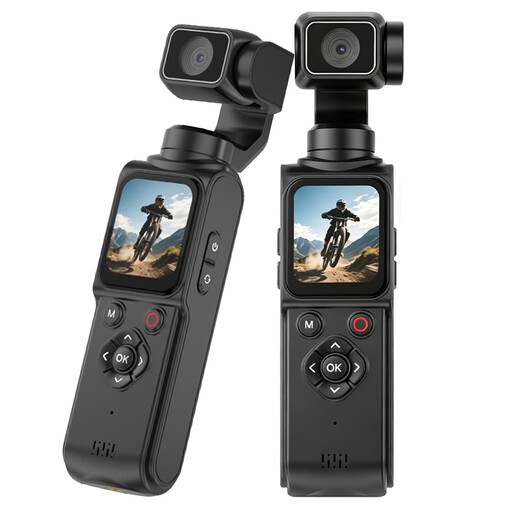
DJI Osmo Pocket 4 Standard Combo
Its pocket-sized design and listed stabilisation are worth comparing if you’re looking for a portable set-up.
The product title lists a 1-inch CMOS sensor, 3-axis stabilisation, 2× lossless zoom, 107 GB of built-in storage and a 2-inch rotating screen.
View at Joybuy
 No image available
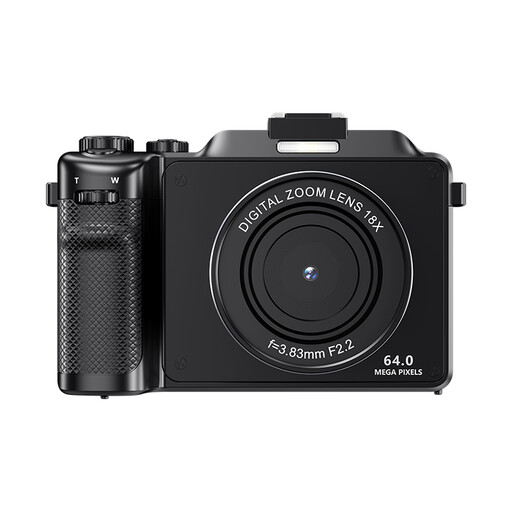
KOMERY X9 4K 64MP Autofocus Camera
This compact camera model is worth considering if you’re looking for a portable camera with autofocus.
The product information lists digital zoom and notes that it reduces image quality.
View at Joybuy
 No image available
KOMERY G7 5K Digital Camera, 80 MP, White
The listed zoom is worth comparing if you want to switch between compositions from a fixed spot.
The product title lists 18× zoom, 5K video and 80 MP.
View at Joybuy
 No image available
KOMERY W6 4K Camera, 12× Optical Zoom, 64 MP
The listed optical zoom could suit anyone looking to frame a more distant detail from the same spot.
The product title lists 12× optical zoom, 4K and 64 MP.
View at Joybuy
Frequently asked questions about harbour photography
Does image stabilisation help when a ship is moving?
Image stabilisation is designed to reduce camera movement, not to freeze a ship in motion. Sony Netherlands explains that a faster shutter speed can help when your subject is moving; check how to set it on the camera you choose.
How can you take a handheld harbour photo in low light?
First, check your composition and shutter speed, and use image stabilisation for stills where available. Take a test shot and check its sharpness; Sony Netherlands warns that stabilisation may not be enough when you zoom in a lot or use slow shutter speeds. A stable surface may help, but you’ll no longer be shooting entirely handheld.
Can you crop in on a distant harbour detail afterwards with a fixed lens?
Cropping doesn’t change the angle of view while you’re taking the photo and doesn’t provide optical magnification. So check in advance whether the fixed 28 mm- or 35 mm-equivalent angle of view suits your chosen spot and the composition you want.
Can you take photos anywhere in a Dutch harbour?
Don’t assume that commercial sites are open to the public. For the Port of Rotterdam, Port of Rotterdam says you must stay on public roads and may only enter commercial sites with permission. This is location-specific guidance for Rotterdam, not a rule that applies uniformly to every Dutch harbour.
Can you post a harbour photo featuring recognisable people online?
It depends on who took the photo and how it’s shared. According to the Dutch Data Protection Authority, the exception for personal or household use applies only when you keep images private or share them with a very limited group. The exception doesn’t apply to wider sharing, which requires an appropriate GDPR legal basis; assess each publication on its own merits.


