
Panorama photographer in changing light
You’re photographing the harbour while the sky is bright and the quay is getting darker. You want to be able to control the composition and exposure.


Start with the wide-angle setting that captures the entire skyline you want from your accessible viewpoint. Then decide whether you also want to fill the frame with distant buildings or ships. For low light and an exhibition print, consider your exposure options, a steady shot and how much detail remains after cropping: a high zoom figure alone does not tell you how suitable a camera is for the job. A zoom camera gives you more freedom to reframe from one spot, while with a camera with a fixed field of view you’ll need to adjust your position or crop.
You’re photographing the harbour while the sky is bright and the quay is getting darker. You want to be able to control the composition and exposure.
You want to capture both the skyline and details on the opposite shore from an accessible spot, and weigh up the field of view against the optical zoom range.
You assess the final file at your chosen print size, especially if you plan to crop or edit the photo further.
Start with the field of view from your viewpoint, then consider exposure, the file you’ll print and any extra telephoto reach you might need.
| What to consider | What should you check? | Who is this important for? |
|---|---|---|
| Exposure in changing light | Check the lens aperture at the focal length you’ll use, along with the exposure settings and options for keeping the camera steady. | If I want to capture the skyline in low light, I look for exposure control and a steady shot; around 31% of consumers prioritise low-light exposure. |
| The full skyline | Compare the wide-angle setting in 35mm-equivalent terms and check the framing from an accessible spot. With the TZ99, also check the aspect ratio. | I want to capture the whole skyline from my viewpoint, without finding out that the wide-angle setting is too narrow; around 25% of consumers prioritise the full panorama. |
| Print detail | Ask about the desired print size and pixel dimensions, then compare them with the file after cropping. | If I want to make an exhibition print, I check how much detail remains after cropping; around 25% of consumers prioritise print detail. |
| Distant parts of the harbour | Compare the optical telephoto range and the lens aperture at the telephoto end. Digital zoom does not give you extra optical reach. | I want to frame a ship or building on the opposite shore on its own from the same spot; around 19% of consumers prioritise distant details. |
For a skyline, the widest field of view needs to suit your viewpoint first. Distant details and low-light photography have different requirements. The stated equivalent range and lens aperture of the Panasonic TZ99 also vary depending on the setting or end of the zoom range.
Compare the field of view from your viewpoint, the optical telephoto range and the lens aperture separately.
Cropping leaves you with fewer pixels. The desired print size and viewing distance also affect the print resolution you’ll need.
Ask the printer or organiser about the file requirements and assess the image after making your final crop.
According to their manufacturers, the Fujifilm X100VI and Ricoh GR IV have a fixed field of view. You can’t optically zoom in on a building further away from the same spot.
Check in advance whether you can capture the panorama you want from an accessible viewpoint, or choose a zoom camera if you need to reframe from one spot.
The Dutch government explains that the Netherlands has no fixed statutory warranty period. A manufacturer’s warranty is not the same as your right to a product that is fit for purpose; if there’s a fault, your point of contact is the seller.
Compare any additional warranty terms with your existing rights before taking out extra cover.
The PowerShot G7 X Mark III offers a compact zoom option, while the SX740 HS Lite Edition has a much greater optical zoom range, according to Canon.
According to Sony, the RX100 VII combines a 1.0-type sensor with a zoom lens that offers greater telephoto reach than the Canon G7 X Mark III mentioned here.
The LUMIX DC-TZ99 is a travel zoom for anyone who wants to frame distant parts of the harbour from a fixed spot.
The X100VI is suited to a carefully chosen viewpoint and a fixed 35 mm equivalent field of view.
The GR IV is a compact option with a fixed wide-angle lens for anyone who can choose a suitable composition in advance.
These Joybuy product picks are cameras suited to photography; check whether the zoom and intended use of each model suit your panorama and print.
 No image available
The product name describes a pocket camera for photography and video; its stated digital zoom is not optical telephoto zoom for distant details.
The product name lists 4K, 44MP and 16× digital zoom.
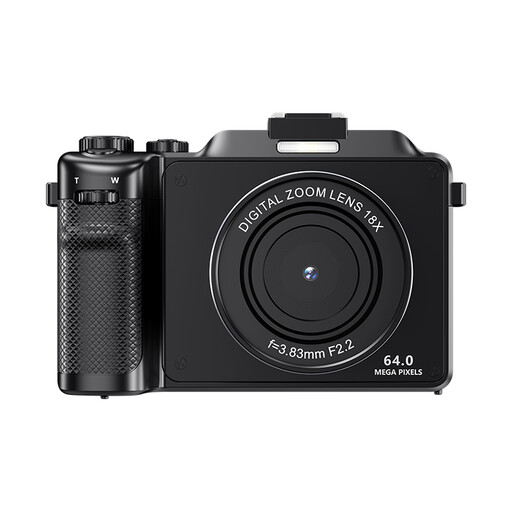 No image available
This compact camera is an option if you’re looking for a camera for photography and video; its stated digital zoom is not optical telephoto zoom for distant parts of the harbour.
The product name lists 4K, 64MP, autofocus and 18× digital zoom. The product description says that digital zoom can reduce image quality.
 No image available
This kit is worth considering if you’re looking for a camera with a zoom lens; check whether the stated zoom range suits the skyline from your viewpoint.
The product name lists a 16-50mm zoom lens and the colour black.
Not necessarily: start with the widest field of view from your viewpoint. Extra telephoto reach is most useful if you want to frame an individual building or ship on the opposite shore. Panasonic specifies a 24–720 mm equivalent range at 4:3 for the TZ99; Sony lists 24–200 mm for the RX100 VII and Canon 24–100 mm for the G7 X Mark III.
Ask the organiser or printer about the print size, aspect ratio, file format and required pixel dimensions. Check how many pixels will remain after your final crop and, if possible, make a test print. Adobe says that 300 pixels per inch is a common standard for prints viewed at close range, but notes that larger prints can also work at a lower resolution when viewed from further away.
It depends on the photo and how you use it. The Dutch Data Protection Authority considers identifiable people to be personal data; when a photo is used outside a private setting, privacy rules and an appropriate legal basis under the GDPR may be relevant. So consider the specific photo and how it will be presented.
No, don’t assume that every quay or site is open to the public. The Port of Rotterdam asks people to stay on public roads in its own area and to seek permission from the relevant company before taking photos of or on business premises. If you’re visiting another harbour, check its local access rules and signs.