
Harbour walker who wants to zoom in
You want to photograph both the harbour as a whole and boats further away, without changing lenses. Compare the optical zoom range and consider how large and heavy you’re happy to carry on your walk.


Choose based on what you can’t solve from your spot on the quay: optical zoom helps you frame boats further away, while aperture and sensor are important points of comparison in low light. If the camera could regularly get wet, check the water protection rating for the exact model. Size and weight are a separate consideration when you’re packing light for a walk.
You want to photograph both the harbour as a whole and boats further away, without changing lenses. Compare the optical zoom range and consider how large and heavy you’re happy to carry on your walk.
You take photos on the quay as the light fades, and are weighing up a brighter, shorter zoom against greater reach.
You often work in places where rain or splashes could reach the camera. Compare the stated protection with the zoom range, and remember to factor in maintenance.
A good fit when: you want to frame both a harbour overview and boats in the distance from a single walking route. Sony specifies a 24–200 mm 35mm-equivalent range for the RX100 VII.
The trade-off: according to Sony, the maximum aperture ranges from f/2.8 to f/4.5. So assess reach and low-light performance separately.
A good fit when: distant ships or details take priority on your walk. Panasonic specifies a 24–720 mm 35mm-equivalent range for the LUMIX DC-TZ99 when shooting stills in 4:3.
The trade-off: Panasonic also lists a 1/2.3-inch sensor and f/3.3–6.4. The stated range changes depending on the aspect ratio or video mode.
A good fit when: you mainly photograph nearby boats, quays and harbour views. Canon specifies a 24–100 mm 35mm-equivalent range and f/1.8–2.8 for the PowerShot G7 X Mark III.
The trade-off: the stated telephoto range ends at 100 mm. Those specifications alone don’t guarantee sharper results in evening light.
A good fit when: protection from wet conditions or knocks matters more than a wide zoom range. OM SYSTEM specifies that the Tough TG-7 is waterproof to 15 m.
The trade-off: its stated range is 25–100 mm in 35mm-equivalent terms. Waterproofing doesn’t make maintenance unnecessary.
A good fit when: you mainly photograph details within walking distance and want to work deliberately with a single angle of view. Ricoh specifies approximately 40 mm in 35mm-equivalent terms for the GR IIIx.
The trade-off: the fixed lens has no optical zoom. Check that the angle of view works from where you usually take photos.
| Buying concern | What to look for | Relevant consumers |
|---|---|---|
| Optical range | Compare the wide-angle and telephoto ends in 35mm-equivalent terms, and check which aspect ratio they apply to. | If I want to capture both a wide view and distant boats from one spot, I look at the range. Around 31% of consumers prioritise optical zoom for harbour photos. |
| Shooting at dusk | Check the maximum aperture at both the wide-angle and telephoto ends, and compare the sensor type and size of the exact models. | When I take photos as the light fades, I want to consider aperture and sensor, and may accept less zoom. For around 25% of consumers, shooting in low light is the main reason to buy. |
| Protection from wet conditions | Check the stated waterproof rating for the exact model and weigh it against the focal range you need. | If rain or splashes could reach the camera, I want to know what protection the model offers. For around 19% of consumers, protection from wet conditions comes first. |
| Ease of carrying | Check the dimensions and compare the weight including battery and memory card, using the same basis for each. | For a long walk, I want a camera that fits into my small kit, even if that means less reach. Around 25% of consumers name ease of carrying as their main reason to buy. |
A longer range doesn’t automatically tell you anything about the aperture or sensor size. Panasonic also lists different ranges depending on the aspect ratio.
Start with the distances you usually shoot from and the available light. Then compare the range, aperture and sensor of the exact models.
A walk by the water won’t automatically get your camera wet, but protection varies by model. The Dutch Consumers’ Association also warns that sand between moving lens parts can cause damage.
Check the protection rating for the exact model, and store the camera appropriately when there’s sand or splashing water nearby.
According to Ricoh, the GR IIIx has a fixed angle of view of approximately 40 mm in 35mm-equivalent terms. From a fixed spot, you can’t use optical zoom to bring a distant boat closer.
Before choosing a fixed lens, check that its angle of view suits the distances you usually shoot from.
An additional warranty doesn’t replace your statutory rights. According to the Dutch government, there is no fixed statutory warranty period for all products in the Netherlands. What you can expect depends, among other things, on the product and the information provided at the time of purchase.
The Dutch government advises contacting the seller if a product is faulty. Check what an additional warranty offers on top of that.
The RX100 VII combines a wide-angle view with a medium telephoto range, for walks where you want to frame subjects at different distances.
The LUMIX DC-TZ99 is a travel zoom for anyone who wants to frame subjects further away in the harbour.
The PowerShot G7 X Mark III offers a shorter zoom with a wider stated maximum aperture than the long-zoom models mentioned here.
The Tough TG-7 is worth comparing when protection close to water matters.
The GR IIIx is designed for a way of working with one fixed angle of view.
These Joybuy product picks are suited to taking a compact camera on a walk. The product listings highlight features including zoom and ease of carrying.
 Image unavailable
The listing mentions 18× optical zoom, a feature worth comparing if you want to frame boats at a distance.
The product name includes 5K and 80MP; these are product claims, not independent performance measurements.
 Image unavailable
The product name states 12× optical zoom, which is useful to compare when framing subjects at a distance.
The listing also mentions 4K, 64MP and Wi-Fi.
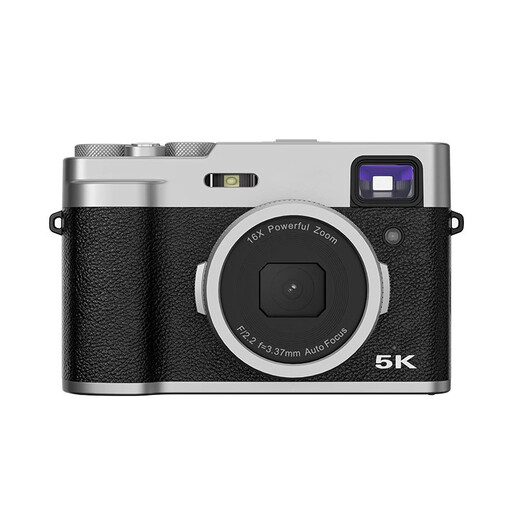 Image unavailable
The listing mentions autofocus and an optical viewfinder for everyday photography on a walk.
The product name also mentions 5K Ultra HD and a 2.8-inch LCD screen.
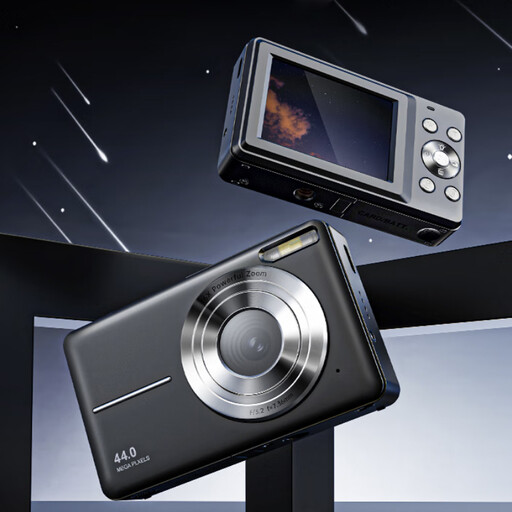 Image unavailable
The product name describes a pocket camera for photos and video, making it a possible fit if you want to travel light on a walk.
The description mentions 16× digital zoom; bear this distinction in mind when comparing optical range.
 Image unavailable
The product name mentions 10× optical zoom, which is worth comparing if you want to frame subjects further away.
The listing also mentions front and rear cameras.
Compare the wide-angle and telephoto ends in 35mm-equivalent terms, using the same aspect ratio. For example, Panasonic lists 24–720 mm for the DC-TZ99 when shooting stills in 4:3, but gives different ranges for other aspect ratios and video. Sony lists 24–200 mm for the RX100 VII.
The Dutch Consumers’ Association recommends using a case or bag, removing grains of sand promptly and cleaning carefully with a microfibre cloth. If you have a waterproof model, follow the care instructions for that exact model too; waterproofing doesn’t make cleaning unnecessary.
According to the Dutch government, you can contact the seller to resolve the issue. There is no fixed statutory warranty period for all products in the Netherlands; what you can expect depends, among other things, on the product and the information provided at the time of purchase.
There’s a difference between strictly private use and wider publication. The Dutch Data Protection Authority says the exception for personal or household use doesn’t apply when you share images more widely, for example by posting them publicly online. If people are recognisable, consider the relevant privacy rules.