For a wide harbour panorama, a suitable wide-angle lens and control over exposure are important; for distant ships, optical zoom matters more. Canon Netherlands describes exposure compensation as a way to adjust settings for unusually bright or dark scenes. Compare the sensor, lens and stabilisation of the exact model too, and check which protection and accessories the manufacturer recommends if you’ll be taking photos somewhere wet.
Who is this advice for?
Skyline photographer in cloudy weather
Wants to capture the sky, water and buildings together from a chosen spot, and assess the exposure of both the bright and dark areas. Canon Netherlands describes exposure compensation as a way to adjust settings for unusually bright or dark scenes.
Photographer of distant ships
Wants to capture not only a wide view from a vantage point, but also bring distant ships or cranes closer. The Consumers’ Association notes that a wide zoom range is one advantage compact cameras often offer.
Photographer who wants to travel light
Wants to take a camera along on a walk and may be happy with less reach than a larger travel zoom camera offers. The Consumers’ Association describes compact cameras as generally small and light, with a non-interchangeable lens.
What should you look for?
Pocket compact with a moderate zoom
Best for: a skyline as your main subject, with the occasional more distant object. Canon lists a 24–100 mm equivalent lens, a 1.0-type sensor and exposure compensation for the PowerShot G7 X Mark III.
Trade-off: its reach is shorter than that of the travel zoom cameras mentioned here, which may matter if you want to photograph a ship from the same spot.
Compact camera with a longer zoom range
Best for: switching between wide views and photographing distant ships. Sony lists a 24–200 mm equivalent lens for the RX100 VII; Panasonic and Canon list 24–720 mm for the LUMIX TZ99 and 24–960 mm for the PowerShot SX740 HS Lite Edition respectively.
Trade-off: the stated range alone doesn’t tell you how a camera performs in cloudy light; compare the sensor, lens, stabilisation and aperture at the telephoto end too.
Camera with a fixed focal length
Best for: taking photos from a chosen viewpoint without optical zoom. Fujifilm lists a fixed 35 mm equivalent lens for the X100VI; Leica describes the Q3 as a compact camera with a full-frame sensor and fixed focal length.
Trade-off: if the framing isn’t right, you’ll need to change your position if possible, or crop the image afterwards.
| What to consider |
What should you check? |
Who is this for? |
| Exposure of the sky and harbour |
Check whether the model offers exposure compensation, and assess a test shot for both the sky and foreground. |
I want to assess the sky and darker parts of the harbour together on a cloudy day; around 40% of consumers prioritise control over exposure. |
| Reach for ships and cranes |
Compare optical zoom in 35 mm equivalent millimetres, and check stabilisation and the aperture at the telephoto end. |
If I can’t get closer to a ship or crane, I want to make it appear larger in the frame from where I’m standing; around 30% of consumers prioritise reach for distant subjects. |
| Fitting the whole skyline in the frame |
Compare the wide-angle setting in 35 mm equivalent millimetres, and consider whether you can change your position. |
I want to fit the water, buildings and sky into one composition from where I’m taking photos; around 20% of consumers prioritise a wide field of view. |
| Portability on a walk |
Compare the stated dimensions and weight on the same basis, and check what’s included in the weight figure. |
If I want to carry my camera easily on a walk, portability matters most to me; around 10% of consumers prioritise this. |
Common buying mistakes
-
Choosing based only on the highest zoom figure
A wide skyline and a distant ship call for different framing. A wide zoom range alone doesn’t tell you how exposure or image quality will turn out in cloudy weather.
Compare the wide-angle and telephoto settings in 35 mm equivalent millimetres, and look at the sensor, lens and stabilisation of the same model too.
-
Assuming a camera is weather-resistant without checking the model’s conditions
Protection may depend on accessories and can diminish with use. For the X100VI’s weather resistance, Fujifilm specifies an AR-X100 adapter ring and PRF-49 filter.
Before taking photos in the rain or near splashing water, check the manual and the conditions for the exact model.
For the Fujifilm X100VI, the specified adapter ring and filter are required for the weather resistance described by Fujifilm.
-
Taking a place in a ranking as proof that a camera suits this scene
The ranking by Thijs Schouten Fotografie, updated on 28 September 2026, reflects the authors’ order of preference, not a separate assessment of cameras for a cloudy harbour.
Use a ranking as a starting point, then compare the full model, lens, sensor and controls with your own location and subjects.
Camera brands to consider
Canon
Canon offers both a compact camera with a moderate zoom and models with a longer stated range. The specifications mentioned apply to individual models, not the brand as a whole.
- Key feature: Canon lists a 24–100 mm equivalent lens and a 1.0-type sensor for the PowerShot G7 X Mark III.
- What to consider: according to Canon, the PowerShot SX740 HS Lite Edition has a 24–960 mm equivalent lens and a 1/2,3-type sensor; its greater range alone doesn’t prove it will take better photos in cloudy weather.
Sony
Sony positions the RX100 VII as a compact camera with a 1.0-type sensor and a zoom lens.
- Key feature: Sony lists a 24–200 mm equivalent lens and 8× optical zoom for the RX100 VII.
- What to consider: Sony lists a maximum aperture of F2.8 at the wide-angle end and F4.5 at the telephoto end; these are manufacturer specifications, not an independent performance test.
Panasonic
Panasonic describes the LUMIX TZ99 as a compact travel zoom camera.
- Key feature: Panasonic lists 30× optical zoom, from 24 to 720 mm equivalent.
- What to consider: a long stated range alone doesn’t determine how a camera performs in cloudy light; compare the other features of the exact model too.
Fujifilm
According to Fujifilm, the X100VI combines an APS-C sensor with a fixed 35 mm equivalent lens.
- Key feature: its fixed focal length suits photography from a chosen viewpoint when the framing works for you.
- What to consider: for weather resistance, Fujifilm specifies an AR-X100 adapter ring and PRF-49 filter; don’t assume the camera has this protection without the specified accessories.
Leica
Leica describes the Q3 as a compact camera with a full-frame sensor and fixed focal length.
- Key feature: its fixed lens suits a style of photography where you deliberately shoot from a chosen viewpoint.
- What to consider: Leica states that the camera has IP52 protection under controlled test conditions and warns that this protection diminishes over time. Don’t treat the camera as waterproof.
Cameras at Joybuy
These Joybuy picks focus on portable zoom cameras for changing your framing; for a cloudy harbour, also consider the exposure controls and protection against water or moisture.
 No image available
KOMERY G7-A 4K Digital Camera, Pink
If you want to change the framing from a fixed viewpoint, the product title lists 18× zoom; check whether the lens and sensor specifications suit photography in cloudy light.
The product title lists 4K, 80MP and 18× zoom, but doesn’t specify that the zoom is optical. The product warning says not to expose the camera to water or moisture.
View product at Joybuy
 No image available
Komery W6 4K Digital Camera
If you want to bring subjects closer optically from a fixed spot, the product title lists 12× optical zoom; compare the lens and sensor for cloudy conditions too.
The product title lists 4K and 12× optical zoom. Check the protection offered by the exact model before using it near water.
View product at Joybuy
 No image available
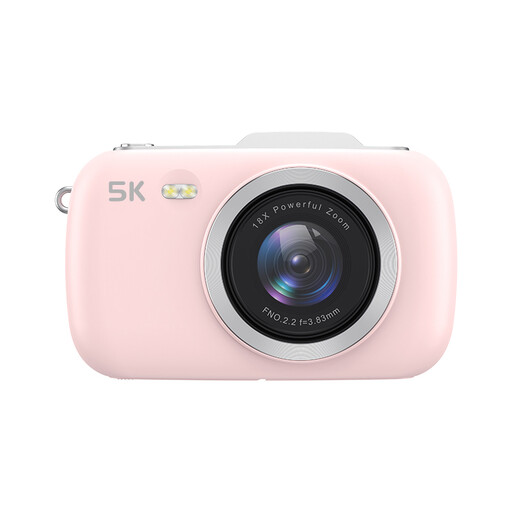
KOMERY G7 5K Digital Camera, Pink
If you want to adjust the framing from a fixed viewpoint, the product title lists 18× zoom; it doesn’t specify that this is optical zoom.
The product title lists 5K and says that no SD card is included. The product warning says not to expose the camera to water or moisture.
View product at Joybuy
 No image available
Songdian Pocket Camera 4K, Pink
If you’re looking for a pocket camera that lets you adjust the framing digitally, the product title lists 16× digital zoom; this isn’t the same as optical zoom for distant ships.
The product title lists 4K, 44MP and 16× digital zoom. Check the lens and sensor information too when choosing a camera for cloudy light.
View product at Joybuy
Frequently asked questions
How can you stop the cloudy sky or harbour from looking too bright or too dark?
Take a test shot and assess the sky and foreground separately. If the camera doesn’t expose the image as you’d like, use exposure compensation if available; the right adjustment depends on which parts you want to preserve. Canon Netherlands describes exposure compensation as a way to adjust settings for unusually bright or dark scenes.
Can you take photos with any compact camera in light rain on the quayside without taking precautions?
No. Check the protection offered by the exact model and whether any additional parts are required. For the X100VI’s weather resistance, Fujifilm specifies an adapter ring and protective filter. Leica states that the Q3 has IP52 protection under controlled conditions and warns that this protection diminishes over time.
What rules apply if you’re looking for a place to take photos in the Port of Rotterdam?
For the Port of Rotterdam, the Port Authority advises staying on public roads and following traffic rules. According to the Port Authority, you can’t access business premises without permission; ask the relevant company for permission to take photos of or on its premises. This location-specific advice doesn’t automatically apply to every Dutch port.
When you buy a camera online in the Netherlands, are you always entitled to exactly two years of statutory guarantee?
No. ACM ConsuWijzer explains that statutory guarantee depends on what you could reasonably expect from the product under normal use, and that the seller is responsible for providing a solution if the product is faulty. For a qualifying online purchase, you’ll also generally have a cooling-off period that ends 14 days after delivery; check which exceptions apply.


