
Photographer of glossy cards
You want to capture the printed design clearly and control distracting reflections. Decide whether adjusting your lighting setup will be enough, or whether you need a camera with a suitable filter thread.


Start with the lighting and adjust the angle of the light sources before choosing a camera based solely on its minimum focusing distance. If you want to fit a polarising filter, look for a documented filter thread; for fine printed details, the focusing distance at your intended working position is key. For overview shots, also check that the whole card fits straight and evenly in the frame.
You want to capture the printed design clearly and control distracting reflections. Decide whether adjusting your lighting setup will be enough, or whether you need a camera with a suitable filter thread.
You want to photograph complete cards consistently, so look for straight framing, even lighting and file formats that suit the way you plan to edit your images.
You want to capture small lettering, print dots or foil details separately. Check the focusing distance and the space available for lighting with your actual card and camera setup.
Choose based on what you most want to show: the glossy finish, the complete card, fine printed details or a consistent workflow. Your lighting setup can be just as important as the camera.
| What to consider | What should you look for? | Who is this important for? |
|---|---|---|
| Controlling reflections | Check whether you can fit a suitable polarising filter, and compare shots taken with and without it. Also try changing your lighting setup. | I want the printed design to be easy to read, but sometimes I also want to show the glossy finish. Around 33% of consumers prioritise tackling reflections. |
| Capturing the whole card | Measure the card and the available camera-to-subject distance. Check that the whole card fits straight in the frame and that you can position the lighting evenly. | I want to photograph a complete card consistently and evenly within my available workspace. Around 27% of consumers mainly need an overview shot. |
| Focusing on fine details | Check the minimum focusing distance at each zoom setting and test a detail at the actual working distance with your intended lighting. | I want to capture small lettering or print dots separately, so I need to know whether the camera can focus at that distance. Around 20% of consumers prioritise details. |
| Processing shots consistently | Check which file formats and white balance and exposure settings are available. Keep the lighting setup consistent for similar photos. | I want to photograph cards in similar conditions and process them afterwards using a consistent workflow. Around 20% of consumers prioritise repeatable processing. |
The Canadian Conservation Institute describes lighting from two sides at a 45-degree angle as a way to illuminate a surface evenly. According to Nikon, a polarising filter can reduce unwanted reflections, but check on your own card that it still shows the gloss you want to capture.
The minimum focusing distance doesn't tell you whether the whole card will fit in the frame in your workspace. On zoom cameras, the stated distance may also differ between wide-angle and telephoto settings.
Try photographing the card at actual size in both an overview and a detail setup, with the camera at a distance you can use at home.
The fitting varies by model. Leica specifies an E43 filter thread for the D-Lux 8; OM SYSTEM lists a separate CLA-T01 adapter for 40.5 mm filters for the TG-7.
Before buying, check that the camera, any adapter and the filter size are compatible.
The CLA-T01 is a separate part for the filter setup mentioned for the TG-7.
A shot that makes the printed design easy to read won't necessarily show what the gloss or foil on the surface looks like.
If needed, take an evenly lit overview shot as well as another that preserves the visible gloss.
The Government of the Netherlands explains that statutory guarantees apply alongside any manufacturer's warranty, and that there is no fixed statutory guarantee period in the Netherlands.
Check exactly what any additional warranty covers. If something is faulty, contact the seller.
The D-Lux 8 is worth considering if you're looking for a documented filter thread and DNG files.
The Tough TG-7 is worth comparing if capturing very small print details separately is your priority.
The PowerShot G7 X Mark III is worth considering if you want to compare overview and detail shots using a single zoom lens.
The RX100 VII is an option if you also need your camera to capture subjects at different distances.
These cameras are options to consider for photographing art cards. Check the focusing distance, framing and suitability for your preferred lighting setup for each model.
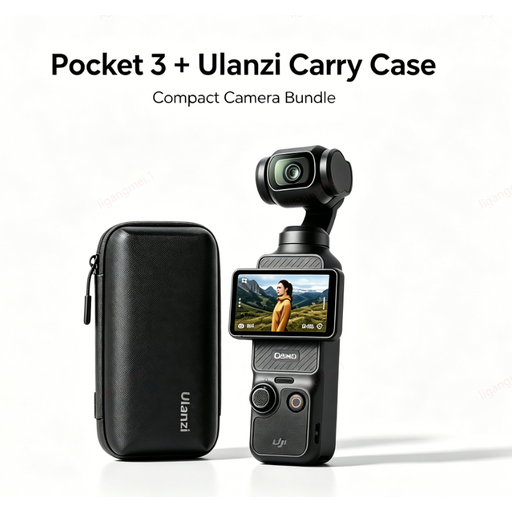 No image available
For card photography, check whether the camera can capture your chosen composition in focus at your working distance.
The product name lists an included storage case.
 No image available
Test it with your card to see whether the focusing distance and framing suit the shot you want.
The product name lists 64 MP photo resolution, 18x digital zoom, autofocus and a 32 GB memory card.
 No image available
At your intended working distance, check whether the whole card and the details you want are in focus and fit in the frame.
The product name lists 80 MP and 18x zoom.
 No image available
Test whether the camera can capture the composition you want, whether that's a complete card or a small detail, in your workspace.
The product name lists 4K, 44 MP and 16X zoom.
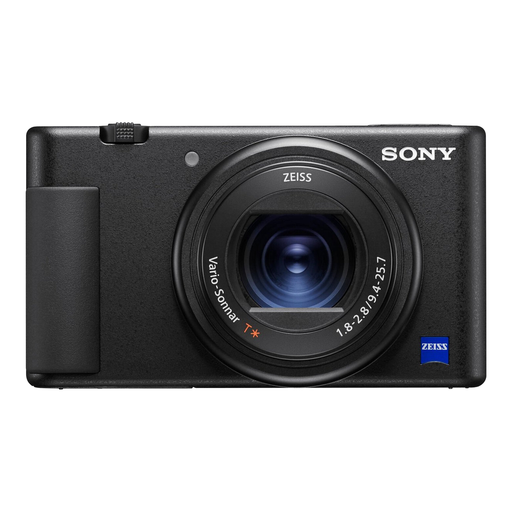 No image available
For art cards, check that the focusing distance, framing and lighting setup suit the shot you want.
First, change the direction of the lighting and assess the result on the card itself. The Canadian Conservation Institute describes lighting from two sides at 45 degrees as a way to illuminate a surface evenly. According to Nikon, a suitable polarising filter can reduce unwanted reflections. If the finish matters, also take a shot that shows its gloss.
No. A short focusing distance doesn't prove that the whole card will fit in the frame at your working distance. Canon and Sony specify different minimum distances at the wide-angle and telephoto ends, so test your chosen framing and lighting setup together.
For a 40.5 mm filter, OM SYSTEM lists the separate CLA-T01 adapter for the TG-7. Also check whether you need the accessories for your setup. In the Netherlands, the seller is your point of contact for statutory rights if something is faulty; the Government of the Netherlands states that there is no fixed statutory guarantee period.
Not automatically. Auteursrecht.nl explains that publishing or sharing photos of artworks usually requires permission from the rights holder; the rules depend on the circumstances. The Government of the Netherlands distinguishes between making a copy for personal use and sharing or making it publicly available. Check the rights and intended use before publishing.
For distance purchases from a business, a 14-day cooling-off period applies in many cases, according to the Government of the Netherlands. This doesn't automatically apply to every transaction; purchases from a private individual are treated separately.