
Sellers of glazed ceramics
You want to show the whole object and its glaze without a harsh hotspot dominating the surface. So pay attention to diffused light and where you position the light source.


Choose a camera based on the focusing distance you need for both overview and close-up shots; a high zoom ratio does not automatically mean you can focus at close range. With glossy glaze, your lighting set-up, shooting angle and white balance also matter, so consider the camera and your technique together.
You want to show the whole object and its glaze without a harsh hotspot dominating the surface. So pay attention to diffused light and where you position the light source.
You want to photograph chips, maker’s marks or crazing separately. Compare the focusing distance at the zoom setting you actually plan to use.
You want the glaze colours in your product photos to look true to life. Pay attention to using a consistent light source and setting the white balance.
First decide whether you mainly need to manage reflections, capture small details, reproduce colours accurately or create a repeatable photo set-up. Then consider the focusing distance, the controls and how much space you need around the object and light source.
| What to consider | What to look for when buying | Who is this important for? |
|---|---|---|
| Reflections on glaze | Try diffused light and a different shooting angle. Check whether a suitable polarising filter can be fitted to the exact model. | When I photograph glossy glaze, I want to make sure reflections don’t hide signs of wear. Around 36% of consumers prioritise managing reflections. |
| Small imperfections | Compare the focusing distance at both wide-angle and telephoto, and try the framing you want with an object of a similar size. | When I need to show chips, maker’s marks or crazing separately, I want to be able to focus at the distance I’ve chosen. Around 29% of consumers prioritise capturing small details. |
| True-to-life glaze colour | Check the white balance settings and see whether the exact model can shoot RAW if you want to edit your photos afterwards. | When I sell several pieces, I want the colours to look consistent across successive photos. Around 21% of consumers prioritise consistent colour reproduction. |
| A repeatable set-up | Measure your largest pieces and the camera-to-subject distance available. Compare a fixed angle of view with a zoom lens, without assuming zoom is automatically an advantage. | When I regularly photograph different pieces, I want to be able to reposition my camera, background and lighting quickly. Around 14% of consumers prioritise a repeatable workflow. |
The specified distance may differ between wide-angle and telephoto. Canon Netherlands lists 5 cm at wide-angle and 40 cm at telephoto for the PowerShot G7 X Mark III; for the LUMIX TZ99, Panasonic Netherlands lists 3 cm and 200 cm respectively in AF macro mode.
Check the distance at the zoom setting you plan to use for close-up shots.
Reflections are also affected by your light source and shooting set-up. Removing a reflection entirely can also take away information about the glossy surface.
Start with softer light and a different shooting angle. Then decide which camera controls you still need.
A diffused lighting set-up may require extra equipment and time.
The Dutch government states that the Netherlands has no fixed statutory warranty period. If a product is faulty, the retailer is your point of contact.
If you’re considering an additional manufacturer’s warranty, compare the extra cover it offers separately from your statutory rights.
The PowerShot G7 X Mark III may suit a tabletop set-up for both overview and close-up shots.
The LUMIX TZ99 is a compact travel zoom for anyone looking for a longer optical zoom range as well as tabletop photography.
Sony says the RX100 VII combines a compact body with a zoom that may suit changing your framing.
The Tough TG-7 is an option for taking separate photos of very small surface details.
The GR IIIx may suit a fixed tabletop set-up where you can adjust the distance to the camera yourself.
Cameras for photography and video that may suit different parts of this task. Check whether each model’s focusing capabilities and camera type are right for your tabletop set-up.
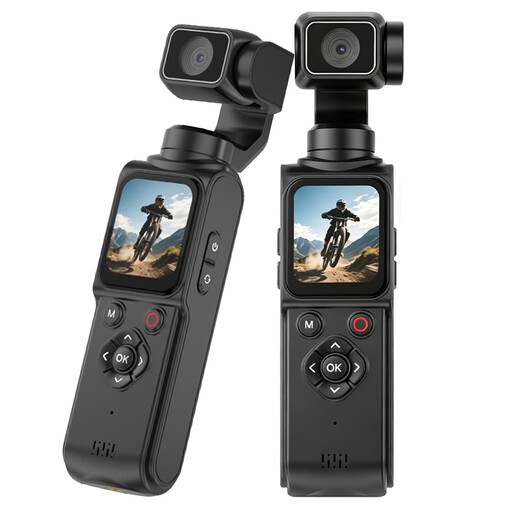 Image unavailable
The product title mentions photography and video; consider whether the controls suit the way you take photos.
The title lists a 330° rotating lens, a 1.72-inch touchscreen, a tripod and Type-C.
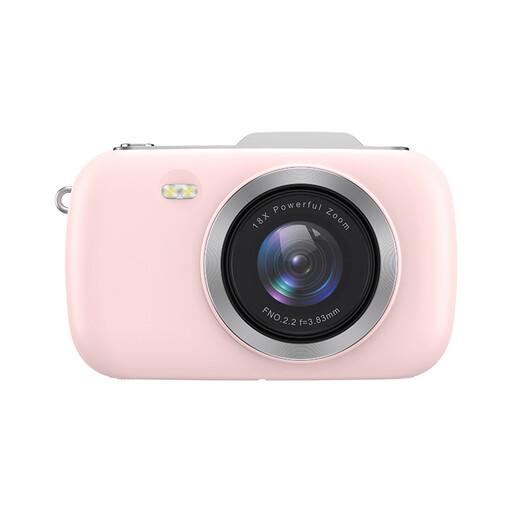 Image unavailable
The stated zoom may help you adjust the framing; check separately whether the camera can focus at close range from your intended distance.
The product title lists 4K video, 80 MP UHD photos and 18× zoom. This version is pink.
 Image unavailable
The stated zoom may help you frame different shots, but it doesn’t tell you whether the camera can focus at close range.
The product title lists 5K video, 80 MP photos and 18× zoom. This version is white.
 Image unavailable
This is a mirrorless camera with an interchangeable lens, not a compact camera with a fixed lens. Check whether this type of camera suits your set-up.
The product description lists a 16–50 mm power zoom lens and a vari-angle LCD screen.
No. A polarising filter can reduce unwanted reflections, but the result depends on your set-up. Nikon USA explains that reflections can sometimes be reduced or eliminated; check that the filter fits your camera model, and take a shot without it too so you can assess the sheen of the ceramic.
Not necessarily: the minimum distance can vary with the zoom setting. Canon Netherlands lists 5 cm at wide-angle and 40 cm at telephoto for the PowerShot G7 X Mark III; for the LUMIX TZ99, Panasonic Netherlands lists 3 cm at wide-angle and 200 cm at telephoto in AF macro mode. Compare the distance at the setting you want to use.
Where possible, use the same background and lighting set-up, and check the white balance whenever you change the light source. Adobe describes diffusion as a way to soften harsh light; take separate shots of small details if needed.
No. According to the Dutch government, the Netherlands has no fixed statutory warranty period. You can expect a product to meet what you could reasonably expect from it; if it is faulty, the retailer is your point of contact. A manufacturer’s warranty is separate from these statutory rights.
When you buy online from a business, you generally have a 14-day cooling-off period after delivery as a consumer, according to the Dutch government and ACM ConsuWijzer. This does not necessarily apply when buying from a private individual. If you’re buying for business use, don’t automatically assume it counts as a consumer purchase.