
Photographing a flower market on a cloudy day
You want to capture both stalls and bouquets, and are particularly interested in light, colour and a usable shutter speed.


Choose based on what you photograph most often: a whole stall, tiny floral details or subjects at a distance. Then compare the focusing distance at your preferred zoom setting and the lens aperture at both ends of the zoom range. More zoom or protection from rain doesn’t automatically mean a camera will offer the low-light performance or angle of view you need.
You want to capture both stalls and bouquets, and are particularly interested in light, colour and a usable shutter speed.
You want to fill the frame with veins, petals or small arrangements, so you compare the focusing distance at each zoom setting.
You can’t always walk up to a stall or subject, so you’re looking at optical zoom range and the lens aperture at the telephoto end.
First decide which type of shot matters most to you at the market, then check whether the specifications suit that situation. Canon Netherlands describes cloudy conditions as light that softens and diffuses natural light; for moving visitors, choosing a suitable shutter speed is still important.
| What to consider | What should you check? | Which consumers does this matter to? |
|---|---|---|
| Light and flower colour | Compare the maximum lens aperture at wide angle and telephoto. Also check whether you can adjust the shutter speed, ISO and white balance. | If I mainly want to assess flower colours on a cloudy day, I look at white balance and the options for adjusting exposure. Around 36% of consumers prioritise light and colour. |
| Tiny floral details | Compare the focusing distance at the zoom setting you want to use; also check whether a macro mode suits the framing you’re after. | If I want to fill the frame with veins or small petals, I compare the focusing distance at the setting I’ll actually use. Around 29% of consumers prioritise floral details. |
| Framing subjects at a distance | Compare the optical zoom range in 35mm equivalent and check the lens aperture and focusing distance at the telephoto end. | If I can’t get close to a stall, I want to adjust my framing with optical zoom. Around 21% of consumers make zoom range their top priority. |
| Photographing in the rain | Check the protection rating for the exact model and consider whether shooting in wet weather matters more to you than the other factors. | If I want to keep taking photos in the rain, I check the protection rating for the specific model. Around 14% of consumers prioritise taking photos in wet conditions. |
The stated distance may apply only at wide angle. Canon gives the PowerShot G7 X Mark III a focusing distance of 5 cm at wide angle and 40 cm at telephoto; Sony gives the RX100 VII a distance of around 8 cm and around 100 cm respectively. Both manufacturers therefore specify different distances for different zoom settings.
Compare the focusing distance and the framing you want at the same zoom setting.
A lens’s zoom range alone doesn’t tell you how much light it lets in at each zoom setting. Sony specifies a maximum aperture of f/2.8 at wide angle, narrowing to f/4.5 at telephoto, for the RX100 VII.
Check the lens aperture at both ends of the zoom range before choosing a camera for its extra zoom.
According to the Dutch government, if a product is faulty, you should contact the seller. There is no fixed statutory warranty period in the Netherlands; what you can reasonably expect from the product is what matters.
Compare the terms of any extended warranty with your statutory rights, and check what additional cover it provides.
The PowerShot G7 X Mark III is worth comparing if you want to use zoom for both stalls and bouquets.
The RX100 VII is an option to compare if you want a greater optical zoom range at the market.
The GR IIIx suits you if you’re happy to photograph with a fixed angle of view.
The Tough TG-7 is worth considering if photographing in the rain or using a microscope macro mode is important to you.
These cameras are aimed at general market and bouquet photography, or at framing shots when you can’t keep walking up to your subject. Check the type of zoom offered by each model and whether its specifications suit cloudy conditions.
 Image unavailable
The product name describes this as a camera for general photography, with 18x zoom and an 80MP specification.
Check what type of zoom 18x refers to before relying on it for distant subjects.
 Image unavailable
The product name lists 12x optical zoom, which could be useful if you can’t always get close to a stall to take a photo.
The product name also lists 4K and 64MP.
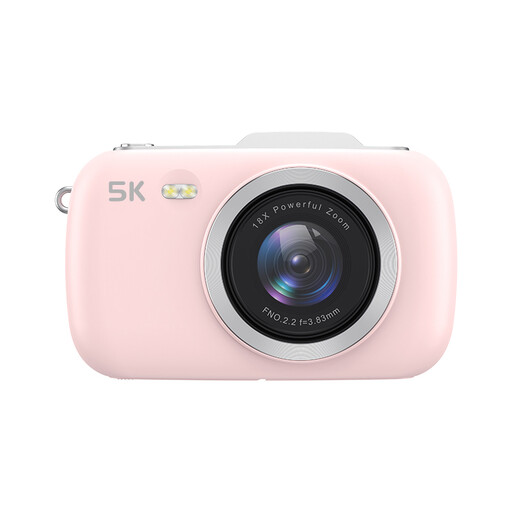 Image unavailable
The product name describes this as a camera for general photography and lists 18x zoom.
No SD card is included. Check what type of zoom 18x refers to before relying on that range.
 Image unavailable
The product name describes this pocket camera as suitable for photography and video, with 16x zoom.
Check what type of zoom is meant if you want to use the camera for distant subjects.
 Image unavailable
The product name lists 10x optical zoom, which could be useful if you can’t always walk up to a stall.
According to the product name, the camera has a front and rear camera.
Check the white balance and review the result on the screen. If the camera supports RAW and you want to edit your photos, you can adjust the white balance afterwards; a preset can’t guarantee that every flower will look exactly as it does in real life.
Not on its own. For moving subjects, choose a suitably fast shutter speed and check that the exposure is still adequate. A faster shutter speed lets in less light, so aperture and ISO may also matter.
Before you set off, check the battery, storage media and manual for the exact model. If you want to take photos in the rain, check that model’s protection rating rather than assuming it’s suitable because it’s a compact camera.
According to the Dutch government, if a product is faulty, you should contact the seller. The Netherlands has no fixed statutory warranty period; what you can reasonably expect from the product is what matters. Check separately what any extended warranty provides.
This depends partly on how you use and share the photos. The Dutch Data Protection Authority distinguishes private use within a very limited circle from wider public or commercial distribution; for the latter, a lawful basis under the GDPR may be required when people are identifiable. This doesn’t mean that taking photos at every market is either prohibited or permitted without conditions.