Start with the distance at which you’ll actually be able to photograph flowers: for close-ups, the focusing distance at the zoom setting you choose matters, while optical reach is more important for a stall further away. Then compare the aperture, stabilisation and weight for handheld use. A higher zoom ratio or shorter stated focusing distance alone doesn’t guarantee a better photo.
Who is this buying guide for?
Flower-detail photographer
You can get close to flowers and want to know whether the camera will focus at your shooting distance. A useful macro mode and enough room for light to fall on the flower may matter more than a high zoom ratio. Canon and OM SYSTEM list focusing distances that vary by model and setting.
Market visitor with a fixed spot
You want to capture both an entire stall and a detail further away from one spot. So compare the optical range and focusing distance at the telephoto setting. For example, Sony lists different minimum focusing distances at wide-angle and telephoto for the RX100 VII.
Photographer in changing light
You’re shooting handheld as you move between sun and shade. The aperture, stabilisation and controls need to suit the way you use the camera, but none of these alone tells you whether a moving flower or person will be in focus.
What should you look for when choosing?
First, choose based on your main shooting distance. Then compare the features that matter for the way you take handheld photos.
| What to consider |
What to look for |
Who it matters most to |
| Close-up flower details |
Check the focusing distance at the zoom setting you want to use and see whether you can get the framing you want from that distance. |
If I want to photograph a flower up close, I want to know whether the camera will focus at my working distance and leave enough room for light and composition. Around 33% of consumers say flower details are their top priority. |
| Changing light and stability |
Compare the aperture at both ends of the zoom range and check what stabilisation and exposure controls the model offers. |
When moving between sun and shade, I want to shoot handheld and adjust the settings to suit the scene. Around 27% of consumers prioritise light and stability. |
| Stalls from one spot |
Compare the wide-angle and telephoto ends in 35mm-equivalent terms and check whether the range is optical. |
If the crowds keep me in one spot, I want to frame both a view of the whole stall and a flower further away. Around 20% of consumers say distance and framing are their main considerations. |
| Portability and ease of use |
Compare the weight including the battery and card, and check the controls. Consider weather protection only if it’s relevant to how you’ll use the camera. |
For a walk around the market, I want a camera I can keep close at hand. I’ll only consider extra protection if rain is a realistic possibility. Around 20% of consumers give portability and ease of use the most consideration. |
Common buying mistakes
-
Assuming the highest zoom ratio makes the best camera for flowers
A long zoom can help with subjects at a distance, but it doesn’t automatically tell you whether a camera can focus up close or is suitable for taking photos in low light.
Compare optical range, focusing distance at your preferred zoom setting and aperture separately.
-
Assuming the macro distance applies at every zoom setting
The stated minimum distance can vary by zoom setting. Canon lists 5 cm at wide-angle and 40 cm at telephoto for the PowerShot G7 X Mark III; Sony gives approximately 8 cm at wide-angle and approximately 100 cm at telephoto for the RX100 VII.
Check the focusing distance at the setting you’ll actually use to photograph the flower.
-
Assuming every compact camera is weatherproof
Protection specifications vary by model. OM SYSTEM lists the TG-7 as waterproof to 15 m; this feature doesn’t automatically apply to other cameras.
If you want to take photos in the rain, check the protection rating of the exact model.
-
Treating a fixed lens or digital crop as optical zoom
The Fujifilm X100VI has a fixed 35mm-equivalent angle of view. Leica lists digital crop modes for the Q3, which has a fixed 28 mm lens; digital cropping isn’t optical zoom.
Choose a fixed angle of view only if you can compose the shots you want from the positions available to you.
Camera brands to consider
Canon
Canon offers compact cameras with a range of zoom and close-up capabilities.
- For the PowerShot G7 X Mark III, Canon specifies a 24–100 mm-equivalent zoom, f/1.8–f/2.8 and a focusing distance of 5 cm at wide-angle.
- For the same camera, Canon lists 40 cm at telephoto. The SX740 HS Lite Edition has a much greater stated zoom range, but the stated macro distance doesn’t automatically apply at telephoto.
Sony
According to Sony, the RX100 VII combines a 24–200 mm-equivalent zoom with a viewfinder and optical stabilisation.
- Sony specifies a 1.0-type sensor and a focusing distance of approximately 8 cm at wide-angle for the RX100 VII.
- At telephoto, Sony lists a focusing distance of approximately 100 cm. So the zoom range doesn’t automatically make the camera suitable for flower details at very close range.
Panasonic
The LUMIX DC-TZ99 is a compact travel zoom for anyone who wants more reach from a fixed spot.
- Panasonic specifies 30× optical zoom and a 24–720 mm-equivalent range; Focus Stacking is also listed.
- A long telephoto range doesn’t replace checking the focusing distance at the zoom setting you want to use.
Fujifilm
The X100VI is an option for anyone who prefers to shoot with a fixed angle of view rather than using a zoom.
- Fujifilm specifies an APS-C sensor, a fixed 35mm-equivalent f/2 lens and in-body image stabilisation.
- The fixed angle of view limits your framing if you can’t move around at a busy market. Fujifilm lists a minimum focusing distance of approximately 10 cm.
OM SYSTEM
The Tough TG-7 combines a close-up mode with protection for conditions where water or knocks are a real concern.
- For the TG-7, OM SYSTEM lists a shooting distance from 1 cm in close-up mode, a 12MP sensor and a 25–100 mm-equivalent lens.
- The stated toughness doesn’t prove that it takes better photos than other models, and it doesn’t offer a telephoto range comparable to long-zoom models.
Leica
The Q3 is a distinct fixed wide-angle option for anyone specifically considering a full-frame compact camera.
- Leica specifies a fixed 28 mm f/1.7 lens and digital crop modes.
- Digital cropping isn’t optical zoom. Leica lists a weight of approximately 743 g including the battery, which is worth considering if you’ll be shooting handheld for long periods.
Joybuy products
The products below are compact pocket and digital cameras for handheld use, including models whose product titles are aimed at vlogging. Before buying, check that the focusing, angle of view and controls suit the way you want to photograph flower details and market stalls.
 No image available
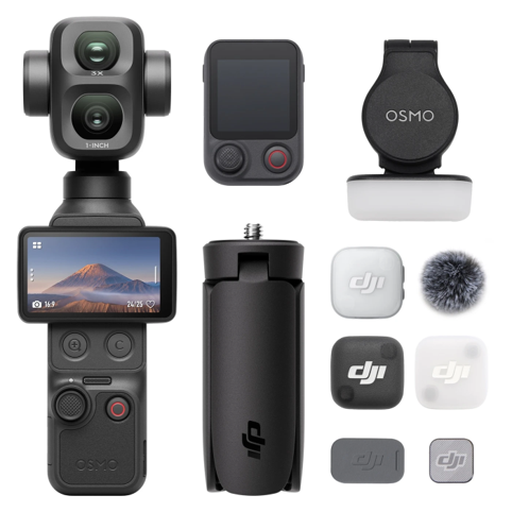
Osmo Pocket 4P Vlog Combo, black
The product title describes a vlogging combo. Check whether the camera also meets your needs for still flower photos and close-ups.
View at Joybuy
 No image available
DJI Osmo Pocket 4 Standard Combo
The product title describes this model as a pocket gimbal camera. Check whether its stated angle of view and focusing capabilities suit the flower compositions you have in mind.
The title lists a 1″ CMOS sensor, 4K/240fps, 3-axis stabilisation, 2× lossless zoom, 107 GB of built-in storage and a 2″ rotating screen.
View at Joybuy
 No image available
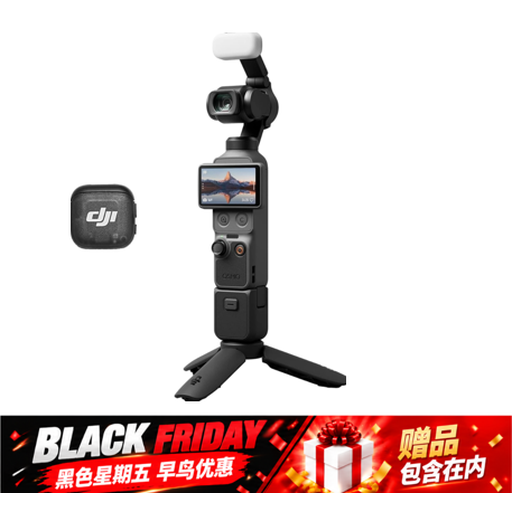
Osmo Pocket 4 Creator Combo
The title describes a pocket gimbal camera with an included handle. Check whether its close-focusing capabilities are suitable for your flower details.
The title lists a 1″ CMOS sensor, 4K/240fps, 3-axis stabilisation, 2× lossless zoom, 14-stop dynamic range, 107 GB of built-in storage and a handle with a 1/4″ thread.
View at Joybuy
 No image available
Komery W6 digital camera
The product title mentions optical zoom. Check the focusing distance and wide-angle setting before choosing this model for close-ups or a view of the whole stall.
The title lists 12× optical zoom, 4K, Wi-Fi and 64 MP.
View at Joybuy
 No image available
DJI Osmo Pocket 3
The product title describes a camera for photography and vlogging. Separately check whether the focusing distance and angle of view suit close-up flower shots.
The title lists a 1″ CMOS sensor, 4K/120fps video, 3-axis stabilisation and a 2″ rotating touchscreen.
View at Joybuy
Frequently asked questions
Is a short stated macro distance enough to fill the frame with a flower?
No, not by itself. Check the focusing distance at your chosen zoom setting and whether you can get the composition you want from that distance. Canon lists different minimum distances at wide-angle and telephoto for the PowerShot G7 X Mark III.
What should you take with you, and what should you check before setting off?
Check the battery, a suitable memory card and what’s included for charging with the exact model. Canon Netherlands lists a battery and separate battery charger with the SX740 HS Lite Edition and states that USB charging isn’t supported. Don’t assume this applies to other models.
What are your rights when you buy online or if the camera breaks down too soon?
For distance purchases from a business, the Dutch Government says that in many cases you have a 14-day cooling-off period, depending on the circumstances of the purchase and any exceptions. ACM ConsuWijzer explains that your statutory guarantee depends on what you could reasonably expect from the product under normal use; it isn’t the same as one fixed guarantee period.
Does it matter whether you take private photos of identifiable market visitors or publish the images?
Yes. The Dutch Data Protection Authority describes an exception for photos you keep for personal use or share with only a very limited circle. That exception doesn’t apply when you publish identifiable people more widely; for business use or photography on behalf of an organisation, the authority says you need a GDPR legal basis. What applies depends on the specific publication and the people in the image.


