What should you look for when choosing?
If reflections are your biggest concern, start by checking the filter mount. Then compare the focusing distance and zoom range with the locations and distances at which you’ll be taking photos at the market.
| What to consider |
What should you check? |
Who is this important for? |
| Managing reflections |
Check the filter mount for the exact camera model and find out which ring or filter you’ll need. An ND or diffusion filter does not serve the same purpose as a polarising filter. |
If I want to retain details on glass, film or wet leaves, I’ll look for a suitable way to reduce reflections. Around 36% of consumers put managing reflections first. |
| Close-up flower details |
Compare the focusing distance from the lens at both the wide-angle and telephoto settings you plan to use. |
If I photograph small flowers, I want to know how close I can focus at the zoom setting I’ve chosen. Around 29% of consumers put close-ups first. |
| Wide views and reach |
Compare the focal length in 35mm-equivalent terms and the focusing distance at the telephoto end. Keep optical zoom and digital zoom separate. |
If I want to switch between a wide view of a stall and flowers further away without changing lenses, I’ll look for a range that suits both. Around 21% of consumers prioritise a versatile zoom range. |
| Carrying and composing your shots |
Check the size, weight including the battery, screen and any viewfinder. Consider how you’ll view your composition in bright ambient light. |
If I want to compose shots quickly while walking around, I’ll consider portability and how I can view the image. Around 14% of consumers put portability and composing shots first. |
Cameras at Joybuy
This selection includes compact pocket and digital cameras for photography and video. Check whether the zoom and features listed for each model suit flower photography, especially if you want to take close-ups or reduce distracting reflections.
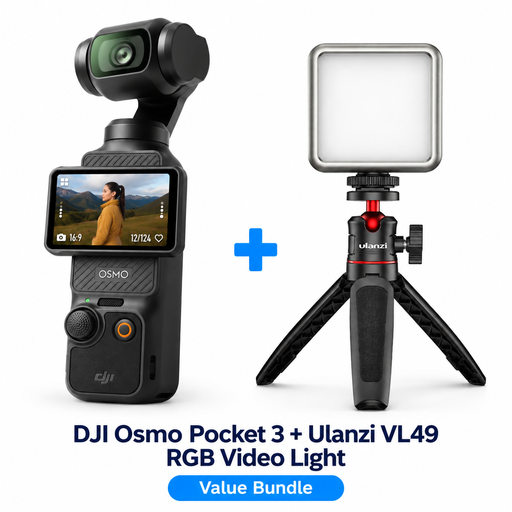 Image unavailable
DJI Osmo Pocket 3 Creator Combo with Ulanzi VL49 RGB video light
A compact camera option for photography; the product description mentions mechanical 3-axis stabilisation.
The description lists a 1-inch CMOS sensor. The bundle name includes an Ulanzi VL49 RGB video light.
View at Joybuy
 Image unavailable
DJI Osmo Pocket 4 Standard Combo
A pocket camera for photography and video; the product name lists 3-axis stabilisation.
The product name lists a 1-inch CMOS sensor, 4K/240fps video, 2× lossless zoom, 107 GB of built-in storage and a 2-inch rotating screen.
View at Joybuy
 Image unavailable
Komery W6 digital camera
A camera with optical zoom for framing flowers from a little further away.
The product name lists 12× optical zoom, 4K video, Wi-Fi and 64 MP.
View at Joybuy
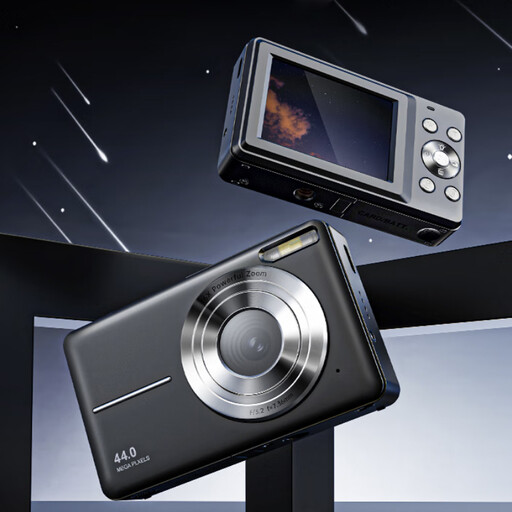 Image unavailable
Songdian pocket camera 4K 44 MP
A pocket camera for photography; the product name lists digital zoom for framing subjects.
The product name lists 16× digital zoom and 4K/44 MP. Digital zoom is not the same as optical zoom.
View at Joybuy
 Image unavailable
Songdian 5K digital camera 56 MP
A camera for photography and video; the product name lists optical zoom for distant subjects.
The product name lists 10× optical zoom, 5K video and front and rear cameras.
View at Joybuy
Frequently asked questions
Does a built-in ND filter reduce reflections on glass or wet leaves?
No, an ND filter doesn’t serve the same purpose as a polarising filter. Canon lists a built-in three-stop ND filter for the G7 X Mark III; Nikon describes a polarising filter as a way to reduce distracting reflections on surfaces including glass and water. Check separately whether a suitable polarising filter can be attached to your camera.
How should I assess exposure in bright, glary conditions?
After taking a test shot, check the histogram and the bright areas of the photo, not just how bright the camera screen looks. Canon explains that screen brightness can give a misleading impression of exposure.
What should I check when fitting a polarising filter?
First, check that the ring and filter size are compatible with the exact camera model, then follow the manufacturer’s fitting instructions. For the X100VI, Fujifilm lists the AR-X100 ring and the option to use 49 mm filters; this doesn’t confirm that the same combination will fit other compact cameras.
What warranty cover do I have when buying a camera in the Netherlands?
According to the Dutch government, you’re entitled to a product that meets legal standards, and there’s no fixed statutory warranty period in the Netherlands. If there’s a fault, the retailer is your point of contact; a manufacturer’s or additional warranty is on top of your statutory rights.
Can I photograph visitors or sellers at a flower market and publish the photos?
It depends on how you use the images and the circumstances. The Dutch Data Protection Authority describes an exception for photos that remain private or are shared only with a very limited group. This exception doesn’t apply to identifiable people in more widely published images; GDPR requirements also apply to professional or commercial photography.


