
Flower detail photographer
You want to capture the veins, edges and textures of a single flower. Compare the close-up mode and minimum focusing distance before focusing mainly on megapixels or zoom range.


If you mainly want to photograph veins and petals up close, compare the minimum focusing distance and close-up modes of the exact camera model. A wide zoom range alone tells you little about capturing these details. For both flowers and market scenes, consider the angle of view and zoom you need. The minimum focusing distances quoted are manufacturers’ specifications, not directly comparable tests of flower detail.
You want to capture the veins, edges and textures of a single flower. Compare the close-up mode and minimum focusing distance before focusing mainly on megapixels or zoom range.
You want to switch between a flower, a bouquet and an entire market stall. Consider whether you prefer a fixed angle of view or want the option to zoom in.
You won’t always be able to get closer to the display. So compare the telephoto reach and the minimum focusing distance when zoomed in.
A good fit if: tiny flower details are your main subject and you can get close.
Bear in mind: the manual specifies shooting from 1 cm in Microscope mode. This doesn’t mean every flower will appear the same size in every mode.
A good fit if: you want to photograph flowers alongside the stall and its surroundings, and are happy with a fixed angle of view.
Bear in mind: the lens has no optical zoom to bring a flower at a distance closer.
A good fit if: you want one compact zoom camera for switching between flowers and market scenes.
Bear in mind: Canon specifies a longer minimum focusing distance at the telephoto end than at the wide-angle end.
A good fit if: you can’t always get close to flowers and want more telephoto reach as well as wider views.
Bear in mind: the specified minimum focusing distance is longer at the telephoto end than at the wide-angle end.
A good fit if: you want to photograph flowers and market scenes at very different distances.
Bear in mind: a long telephoto reach or focus stacking doesn’t tell you how large a nearby flower will appear in the frame.
For close-ups, check the minimum focusing distance in the mode you plan to use; it can vary between zoom settings. The percentages in the table reflect the primary buying needs listed.
| What to consider | What to look for | Who is this important for? |
|---|---|---|
| Flower details up close | Compare the minimum focusing distance measured from the front of the lens and the close-up mode available on the exact model. | If veins and leaf surfaces matter more to me than zoom reach, I want to know how close I can focus. Around 36% of consumers prioritise flower detail. |
| Changing light | Look at the model’s controls and image settings; assess sample images taken in similar lighting. | Under canopies, I want to assess the exposure and details without relying on a single specification. Around 29% of consumers prioritise changing light. |
| Distance and framing | Compare the equivalent focal length range and minimum focusing distance at both the wide-angle and telephoto ends. | If I can’t always get close to the stall, I need reach for flowers further away and want to know how close I can focus at the telephoto end. Around 21% of consumers prioritise distance and framing. |
| Portability and protection | Compare the dimensions and weight of the exact version; check whether it has any protection suitable for your intended use. | For a long visit to the market, I want a camera that’s easy to carry and to know what protection suits my circumstances. Around 14% of consumers prioritise portability or protection. |
For the Canon PowerShot G7 X Mark III, Canon specifies 5 cm at the wide-angle end and 40 cm at the telephoto end, measured from the front of the lens. For the Sony RX100 VII, Sony specifies approximately 8 cm at the wide-angle end and approximately 100 cm at the telephoto end. So you can’t assume the camera will focus from the same distance after you zoom in.
Compare both ends of the zoom range and consider how far away you’ll be able to shoot from at the market.
Zoom range helps with distant subjects, but it’s different from the ability to focus up close. A long zoom range alone doesn’t show how large a flower detail will appear in the frame.
Check the close-up mode, minimum focusing distance and crop of the exact camera.
According to the Dutch government, a manufacturer’s or additional warranty is separate from your right to a product that meets expectations. If a product is faulty, the retailer must provide a solution.
Check what an additional warranty covers and keep the retailer’s details in case you need to make a complaint.
The Tough TG-7 is a compact camera with a dedicated Microscope mode for subjects at very close range.
The GR IV combines a fixed angle of view with a macro mode.
The PowerShot G7 X Mark III offers a zoom for switching between flowers and market stalls.
The RX100 VII is a compact zoom camera for shooting at different distances.
The LUMIX TZ99 is a travel zoom camera for shooting at a range of distances.
These Joybuy picks are compact cameras designed to be carried around and used for still photography. For flower details, check the minimum focusing distance and close-up capabilities of the exact model.
 No image available
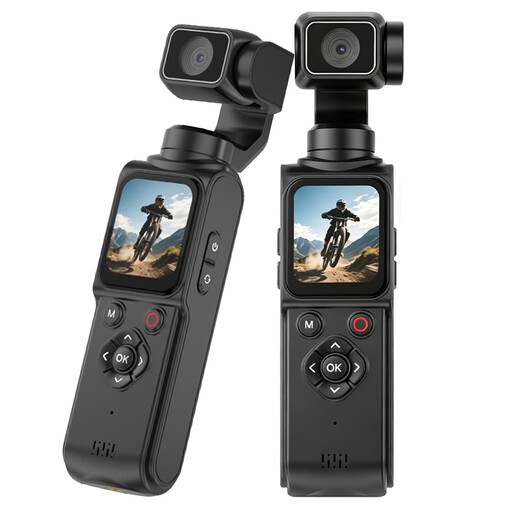
The product information lists still photography and an ultra-compact design weighing 84 g, which may be useful if you want a camera that’s easy to carry.
The title lists a 150° lens, 18× digital zoom, a 330° rotating lens, a 1.72-inch touchscreen, Wi-Fi, a tripod and Type-C. The digital zoom figure doesn’t tell you how large a nearby flower detail will appear in the frame.
 No image available
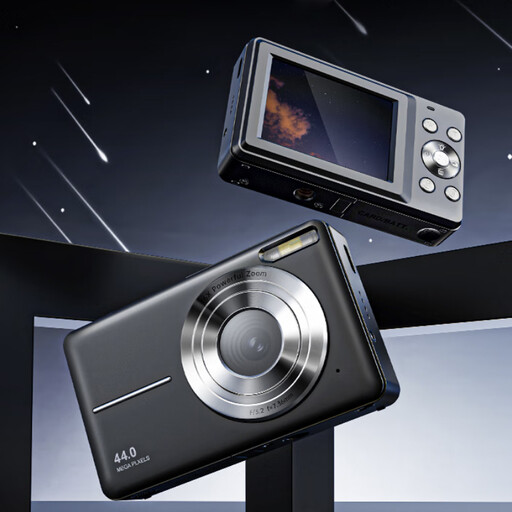
The product information lists still photography, autofocus and a compact design. Check the minimum focusing distance if you mainly want to capture small flower details.
The title lists 16× digital zoom. A digital zoom range alone doesn’t tell you about the camera’s close-up capabilities.
No. It tells you how close a camera can focus in the specified mode, but on its own it doesn’t measure magnification or the detail in the final image. Also check which zoom setting the distance applies to and what kind of crop you need.
For the TG-7, OM Digital Solutions describes a function that combines images taken at different focus points into a single image with greater depth of field. For best results, use it with a flower that’s as still as possible and consult the manual for the exact model.
According to the Dutch government, the retailer must provide a solution if a product is faulty. There’s no fixed statutory warranty period in the Netherlands; what you can reasonably expect depends on factors including the product, the information provided, the price and its condition.
Not necessarily: the Dutch Data Protection Authority distinguishes between private use within a very limited circle and wider publication or commercial use. Privacy rules and a valid legal basis may apply when people are recognisable; this doesn’t amount to general permission to publish every market photo.