
Maker showcasing embroidery details
You want to capture individual stitches and decorations as well as the whole bag. So look at the close-up mode and make sure you can set up the camera steadily.


Choose a camera based on how well it focuses in the mode you’ll use to photograph the embroidery, as well as the angle of view and distance you need to capture the whole bag. A short minimum focusing distance doesn’t necessarily apply at every zoom setting. When window light changes, a stable setup and control over white balance matter too. Specifications alone can’t predict how sharp or colour-accurate your bag will look in a photo.
You want to capture individual stitches and decorations as well as the whole bag. So look at the close-up mode and make sure you can set up the camera steadily.
You photograph the bag by a window and want to compare the framing and colour reproduction across shots as the light changes.
You want to photograph both the whole bag and its details, but have limited room to move the camera. The angle of view and focusing distance at each zoom setting are important considerations.
First decide whether details, colour reproduction, repeatable full-bag shots or portability matter most to you. The percentages below give a rough indication of how those priorities may vary for this particular type of photography.
Best for: when individual stitches and small decorations are your main subject. OM SYSTEM states that the Tough TG-7 can shoot from as close as 1 cm and offers focus stacking.
Bear in mind: a very close-up photo won’t show the whole bag. Check the full-bag framing too, and keep the camera and bag still when using focus stacking.
Best for: when you want to switch between the bag and its embroidery details without changing lenses. Canon specifies a focusing distance of 5 cm at the wide-angle end and 40 cm at the telephoto end for the PowerShot G7 X Mark III. Panasonic specifies 3 cm at the wide-angle end in macro mode and 200 cm at the telephoto end for the DC-TZ99.
Bear in mind: the stated focusing distance varies with the zoom setting. Compare the figures for the setting you’ll actually use to photograph the embroidery.
Best for: when you have room to move the camera and like working with RAW files. Ricoh specifies a fixed 28 mm-equivalent angle of view and a macro mode of approximately 6–15 cm for the GR IV.
Bear in mind: without zoom, you’ll need to move the camera to change the framing. Check that you have enough distance to capture the whole bag.
Best for: when you also want to use the same camera for subjects at a distance. Sony specifies a 24–200 mm-equivalent range for the RX100 VII.
Bear in mind: Sony states a focusing distance of approximately 8 cm at the wide-angle end and approximately 100 cm at the telephoto end. The longer zoom range doesn’t automatically make the telephoto setting suitable for embroidery details.
| What to consider | What should you check? | Who should pay particular attention? |
|---|---|---|
| Embroidery details | Check both the focusing distance and the framing in the macro or zoom setting you plan to use. | I want to show the stitches and decorations clearly without losing sight of the whole bag. Consumers who prioritise embroidery details make up approximately 33% of people with this type of photography task. |
| Colour in window light | Check the white balance settings and review test shots in the light you’ll be photographing in. | When daylight changes, I want to see how the fabric and thread come across in the photo. Consumers who prioritise colour reproduction make up approximately 25% of the group. |
| Repeatable full-bag shots | Measure the available distance and check that the angle of view includes the whole bag. Also see whether you can position the camera steadily. | I want to photograph the whole bag repeatedly from a similar viewpoint. Consumers who prioritise these full-bag shots make up approximately 25% of the group. |
| Use on the go | Compare size and zoom range, but most importantly check the focusing distance in the setting you’ll use for the bag. | I want a camera I can take along for other subjects too, not just use for this setup. Consumers who prioritise portability and other uses make up approximately 17% of the group. |
For several compact cameras, the stated distance differs between the wide-angle and telephoto settings. So a distance quoted for wide angle doesn’t necessarily tell you whether the camera can focus close up at telephoto.
Compare the specification for the setting you’ll actually use to frame the embroidery.
Extra telephoto reach won’t automatically give you repeatable framing for product photos. Canon recommends using a tripod to keep product photo framing consistent.
First work out the distance between the window, bag and camera, then see whether a stable support will fit in the space available.
Window light can change colour, and white balance affects how that colour is captured. Having a setting available isn’t an independent test of how accurately your fabric and threads will be reproduced.
Check the white balance settings and review a test shot of your own bag as the light changes.
The models mentioned differ in their close-up modes, zoom ranges and angles of view. Check which features suit your bag and the space available for your setup.
The Tough TG-7 is worth considering if you mainly want to capture embroidery details from very close up.
The PowerShot G7 X Mark III combines a zoom lens with close-up capabilities at the wide-angle end.
The GR IV is an option if you want a fixed angle of view and RAW files.
The RX100 VII is worth considering if you also want to use the camera for subjects at a distance.
The LUMIX DC-TZ99 is a compact zoom camera with a dedicated macro setting.
These camera options are worth considering if you’re looking at a compact model for photography and vlogging. Before choosing, check that the focusing distance and angle of view suit both the embroidery details and the whole bag.
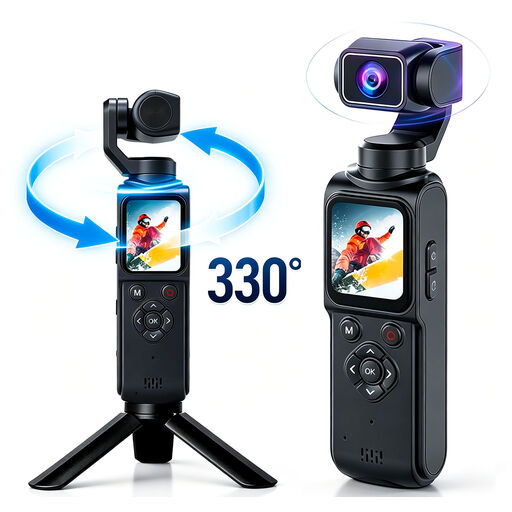 No image available
An option to consider if you’re also looking for a camera for photography and vlogging. Check whether its focusing distance is suitable for your embroidery details.
The product title mentions a 330° rotatable lens and a 1.72-inch touchscreen. According to the title, a memory card is not included.
 No image available
If you’re also considering a pocket camera for photography, check separately whether it can focus close enough to capture the stitches on your bag.
The product title mentions a 1″ CMOS sensor, 4K/240fps, 3-axis stabilisation, 2× lossless zoom, 107GB of built-in storage and a rotating 2″ screen.
 No image available
A compact option to compare if you want to combine photography and video. Check its close-up capabilities before choosing it for embroidery details.
The product title mentions a 1″ CMOS sensor, 4K/120fps and a rotating 2″ touchscreen.
 No image available
Consider this camera with zoom lens if you want to try different framings. Check whether the lens can focus on the embroidery from your preferred distance.
The product title mentions a 16–50 mm zoom lens. This version is black.
No. Check the framing in the relevant zoom or macro setting too. Canon and Sony state different focusing distances for wide-angle and telephoto settings, so the figures aren’t interchangeable.
Place the bag against a plain background and keep the camera in the same position for each shot, using a stable support if needed. Recheck the white balance when the daylight changes.
When you buy online from a business, you’ll often have a 14-day cooling-off period. This doesn’t automatically apply when you buy from a private seller. In the Netherlands, statutory warranty applies without a fixed legal warranty period. If a product is faulty, the seller is your point of contact, according to the Dutch government (Rijksoverheid).
Not without permission. According to the Dutch government (Rijksoverheid), you may only use someone else’s copyright-protected photo with the creator’s permission.