
Maker showcasing embroidery details
You want to show individual stitches and the texture of the yarn. Compare the close-up mode with the space left for lighting the embroidery.


Start by checking the size of your bag and the space available for the camera, background and lighting. Then check whether you can achieve your desired angle of view and focusing distance at the same zoom setting. Choose a camera with a close-up mode if the stitching is your main focus, or adjustable exposure and white balance if you want to create a consistent series of photos. A short minimum focusing distance alone won’t tell you whether you can frame the whole bag properly.
You want to show individual stitches and the texture of the yarn. Compare the close-up mode with the space left for lighting the embroidery.
You need an overall shot against a plain background, and want to be able to frame the edges and handles from the distance available to you.
You photograph several bags or colour options and want to keep the background, camera position and colour reproduction consistent.
Choose this option: if individual stitches are your main subject and you’re looking for a camera with a fixed lens. OM SYSTEM describes a microscope mode on the Tough TG-7 that works down to 1 cm; Ricoh lists a digital microscope function on the PENTAX WG-90 from 1 cm.
Bear in mind: at such a short distance, you’ll still need room for lighting. A detail shot won’t show whether the whole bag fits in the frame from the same position.
Choose this option: if you want to capture both the whole bag and its details, and adjust exposure and white balance yourself. Canon lists a 24–100 mm full-frame equivalent range for the PowerShot G7 X Mark III.
Bear in mind: Canon specifies focusing from 5 cm at the wide-angle end and from 40 cm at the telephoto end. So, zooming in doesn’t mean you can stay just as close to the bag.
Consider this option: if you also want to use the wider zoom range away from your bag photography setup. Panasonic lists a minimum focusing distance of 3 cm at the wide-angle end for macro AF on the LUMIX DC-TZ99.
Bear in mind: Panasonic lists 200 cm at the telephoto end, so check the focusing distance separately for the zoom setting you want to use.
| What to consider | What should you check? | Who should pay particular attention? |
|---|---|---|
| Framing the whole bag | Measure the available shooting distance and check the angle of view at the zoom setting you want to use. | If I want to show the bag, including its handles, against a plain background, I want to check in advance that it fits in the frame from my workspace. Around 31% of shoppers prioritise an overall view. |
| Photographing stitches up close | Check the close-up mode, zoom setting and where the focusing distance is measured from. | If I want to show the texture of individual stitches, I need to be able to capture the detail without the camera blocking the light. Around 31% of shoppers prioritise embroidery details. |
| Reproducing colours consistently | Check whether you can adjust the white balance and exposure, and keep the light source and camera position the same. | When photographing several bags or colour options, I want to capture the fabric and yarn under similar conditions. Around 23% of shoppers prioritise consistent colours. |
| A setup that’s easy to manage | Check that the camera, bag, background and lighting fit in your workspace, and that the controls suit the way you work. | If I regularly take product photos, I want to be able to recreate the setup without having to make complicated lens choices. Around 15% of shoppers prioritise ease of use. |
A camera may focus at close range at the wide-angle end but need a much greater distance at the telephoto end. For the LUMIX DC-TZ99, Panasonic lists 3 cm at the wide-angle end and 200 cm at the telephoto end in macro mode.
Compare the focusing distance at the zoom setting you actually want to use, and at the distance available in your setup.
A short shooting distance can make it tricky to light embroidery details, while consistent product photos benefit from a fixed frame.
First, set up a test with the bag, a plain background and a light source. Then assess which camera distance and framing will work for you.
Consumentenbond says its camera tests ran until autumn 2025, and that models released later were not included.
Use a test only for the models it assessed, and check the specifications of each model separately.
The PowerShot G7 X Mark III is worth considering if you’re looking for a compact zoom camera with manual focus and exposure settings. The SX740 HS Lite Edition is another Canon range, with an emphasis on a greater zoom range.
The RX100 VII is an option if you also want to use its 24–200 mm full-frame equivalent zoom range for subjects other than bag photos.
According to the Dutch model specifications, the LUMIX DC-TZ99 combines a compact travel zoom with macro AF and focus stacking.
The Tough TG-7 is worth considering if you want to capture very close details and are looking for a robust camera.
The WG-90 is an alternative with a digital microscope function for detail shots.
The Joybuy cameras below offer options for different types of framing and use. Before choosing, check that the close-up mode, focusing distance, exposure controls and working distance suit your bag photography setup.
 No image available
The product description calls the Pocket 3 a compact handheld camera. Check that its controls and focusing options suit the photos you want to take of your bag.
The title mentions a Ulanzi Custom Storage Carry Case.
 No image available
The rotating lens and stated wide-angle view could be useful if you want flexibility when setting up your shot. Check that it can focus on the framing you want for your bag.
The title mentions a 330° rotating lens, a 150° wide-angle lens and a 1.72-inch touchscreen.
 No image available
The stated zoom can help you try different framings. Check separately which focusing distance applies at the zoom setting you choose.
The title mentions 80 MP and 18× zoom.
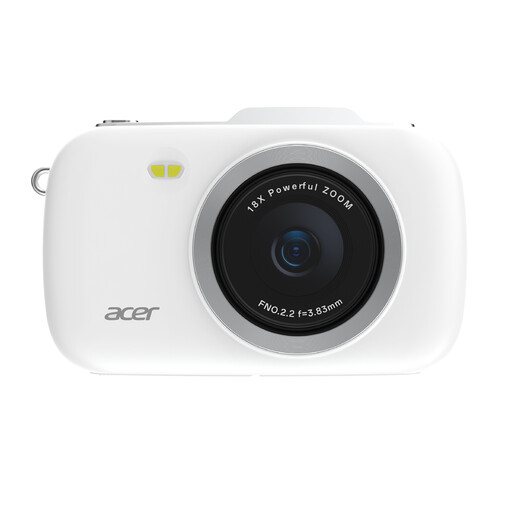 No image available
The stated zoom can help you try different framings. Check separately which focusing distance applies at the zoom setting you choose.
The title mentions 80 MP and 18× zoom. This is the G7-A variant.
 No image available
The stated lens range can help you try different framings. Check that the focusing distance suits the close-up shots you want to take.
The product description mentions a 24–70 mm lens range and a tilting screen.
No. Check the zoom setting and the framing you get at that distance too. For example, Canon lists 5 cm at the wide-angle end and 40 cm at the telephoto end for the PowerShot G7 X Mark III. Make sure there’s also enough room for lighting.
Keep the camera, lighting setup and background in the same positions as much as possible. Canon discusses using a tripod to keep framing consistent and recommends paying attention to white balance in challenging lighting conditions. Check this setting whenever the light changes.
For an eligible online purchase from a business, the Netherlands generally has a 14-day cooling-off period, according to the Dutch government. Check the seller’s information, and bear in mind that your statutory rights for a faulty product are separate from any additional seller’s guarantee.
Check in advance who the seller is, which consumer rights and return options apply, and what import and VAT requirements you may need to meet. The Dutch government says electronic products placed on the EU market must carry a CE marking. That marking alone doesn’t tell you whether a camera is suitable for your embroidery photos.