
Sellers of bags with fine embroidery
You want to show the stitches and any signs of wear separately. So, check the focusing distance at the zoom setting you’ll use for close-ups.


Choose a compact camera based on its focusing distance at the zoom setting you plan to use for the embroidery. Then check whether you have enough space to photograph the whole bag. Even lighting and adjustable white balance can help you assess colours; a wide zoom range or a short stated macro distance alone won’t guarantee a better listing photo.
You want to show the stitches and any signs of wear separately. So, check the focusing distance at the zoom setting you’ll use for close-ups.
You photograph coloured thread or fabric in changing light and want to minimise colour casts with suitable lighting and white balance.
You want to take an overview shot and a few detail photos without complicated equipment. Framing, ease of use and anything else you need all play a part.
Start with the distance at which you want to photograph details, then check whether the camera can also fit the whole bag in the frame. Next, compare the white balance, controls and accessories you’ll need against your lighting and available space.
| What to consider | What should you check? | Who is this most important for? |
|---|---|---|
| Sharp embroidery details | Compare the minimum focusing distance at each zoom setting and check the framing; take a test shot if possible. | If I want to show the stitches and wear separately, I check that the camera focuses at the distance I’ve chosen. Around 36% of consumers say sharp embroidery details are their top buying priority. |
| True-to-life colours | Check whether the white balance is adjustable, then compare a test shot taken in even lighting with the bag itself. | If you want the fabric and thread colours to look true to life, pay attention to the lighting and white balance. Around 29% of consumers give colour accuracy top priority. |
| The whole bag in the frame | Check the wide-angle setting and working distance in your available space; take separate overview and detail shots. | If I mainly want to show the shape and condition of the whole bag, the overview shot matters more than getting the closest possible close-up. Around 21% of consumers prioritise the overall view. |
| Ease of use and what you’ll need | Compare the controls and included accessories; assess a test shot in the lighting you’ll be using. | For anyone who only photographs a bag occasionally, a simple process and few extra items may be decisive. Around 14% of consumers prioritise ease of use and the total purchase cost. |
For the camera models mentioned, the minimum focusing distance can vary considerably between wide angle and telephoto. So a short distance at wide angle doesn’t automatically tell you how close you can focus at telephoto.
Compare the distance at the zoom setting you’ll use for the stitches, and check the framing with a test shot.
A wide zoom range doesn’t automatically mean you can focus at close range; these are different features.
Prioritise the working distance you need, a suitable wide-angle setting for the overall view and a macro setting for details over the highest zoom factor.
Canon explains that different light sources can cause a yellow or green colour cast, even when the photo is sharp.
Use lighting that’s as even as possible, and check the white balance and colours in the final photo before adding it to your listing.
The Dutch Government states that the Netherlands has no fixed statutory warranty period and that the seller is your point of contact if there’s a problem with a product.
Before buying, check who the seller is, whether the camera is new or second-hand, and what’s included with the delivery.
The LUMIX DC-TZ99 combines a fixed zoom lens with a macro setting.
The PowerShot G7 X Mark III is worth comparing if both indoor lighting and close-ups are important to you.
According to the manufacturer, the Tough TG-7 is designed for very close-up shots and rugged use.
The FZ55 is a simpler compact camera to compare for occasional photos.
The RX100 VII may be worth considering if you want to use the same camera for a range of shots.
This Joybuy selection includes pocket cameras, pocket gimbal cameras and a mirrorless camera. For each model, check whether the focusing distance, controls and included accessories suit the photos you want to take of the bag.
 No image available
The title describes a pocket camera for photography. Before buying, check whether it can focus at the distance you need to photograph the embroidery.
The product details mention autofocus, 16× digital zoom and storage on a removable card. According to the product description, a microSD card isn’t included.
 No image available
This pocket gimbal camera is for anyone who wants to record video as well as take photos. Check whether this type of camera suits your needs for still detail shots.
The product title mentions a 1″ CMOS sensor, 4K/240fps, 3-axis stabilisation, 2× lossless zoom and 107 GB of built-in storage.
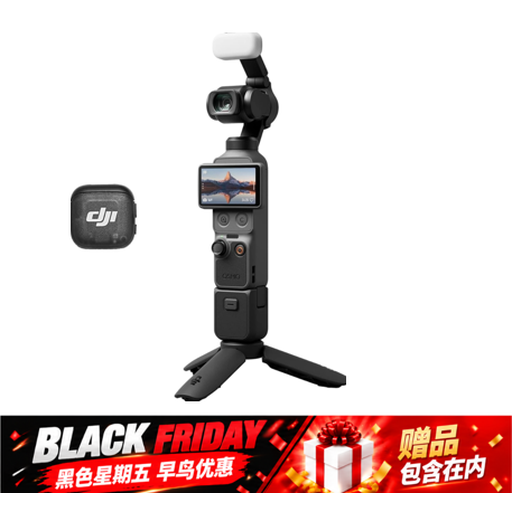 No image available
This pocket gimbal camera is worth comparing if you also want to shoot video. Assess separately whether it’s suitable for close-ups of the bag.
The product title mentions a 1″ CMOS sensor, 4K/240fps, 3-axis stabilisation, 2× lossless zoom, 14 stops of dynamic range and 107 GB of built-in storage. The stated handle has a 1/4″ thread.
 No image available
This mirrorless camera is an alternative to consider if you’re not looking for a compact camera with a fixed lens. Check whether its focusing distance suits the details of your bag.
The product description mentions a 24.2 MP APS-C sensor, autofocus and a 16–50 mm power zoom kit lens. The Product Showcase setting shifts focus from a face to an object. According to the description, an adapter or charger and an SD memory card aren’t included.
Not necessarily: the shortest distance may apply at wide angle and be very different at telephoto. For the LUMIX DC-TZ99, Panasonic states 3 cm in macro mode at wide angle and 200 cm at telephoto. Take an overview shot from further away, then check the detail shot at the zoom setting you want to use.
Photograph in lighting that’s as even as possible, compare the image with the bag and adjust the white balance if needed. Canon explains that different light sources can create a colour cast; check which settings are available on each camera model.
If you buy online from a business as a consumer, you’ll often have a 14-day cooling-off period. According to the Dutch Government, online purchases from a private individual aren’t covered by this arrangement. For a purchase covered by Dutch statutory guarantee rules, you’re entitled to a product that works as it should, and the seller is your point of contact. The Netherlands has no fixed statutory warranty period.
According to the Dutch Tax and Customs Administration, you usually don’t have to pay income tax on occasional sales of your own belongings as a private individual. However, if you buy items to resell at a profit, those activities may count as a source of income.