
Landscape photographer who wants to edit RAW files
You want to assess and edit the bright sky and darker dunes yourself. Nikon explains that RAW gives you more scope to adjust an image afterwards; check whether the exact camera model supports RAW.


The right camera depends mainly on your subject. A wide-angle lens and RAW support are worth considering if you want to capture expansive dune scenes and assess the bright sky and dark foreground afterwards. Choose a travel zoom if you also want to frame distant details from the path. If you expect exposure to sand or water, check the protection conditions for the exact model. Manufacturer specifications describe different capabilities; they are not the result of a comparative hands-on test.
You want to assess and edit the bright sky and darker dunes yourself. Nikon explains that RAW gives you more scope to adjust an image afterwards; check whether the exact camera model supports RAW.
You want to switch between a wide view and distant subjects on a dune walk without carrying an interchangeable lens. Travel zoom models from Panasonic, Sony and Canon, among others, offer different stated zoom ranges.
You prioritise protection against water and dust when exposure is likely. Ricoh Imaging lists this protection for the PENTAX WG-8, but that claim does not automatically apply to other compact cameras.
Choose this option: if you mainly take wide dune shots and want to edit tonal differences afterwards. Canon specifies a 1.0-type sensor and a zoom that starts at 24 mm for the PowerShot G7 X Mark III.
Bear in mind: its stated 4.2× zoom is more limited than that of the travel zoom models mentioned here.
Choose this option: if you want to frame both wide views and distant shapes from permitted paths. Panasonic specifies a 24–720 mm full-frame equivalent for the DC-TZ99; Sony lists 24–200 mm and an electronic viewfinder for the DSC-RX100M7.
Bear in mind: a longer telephoto range does not automatically make a camera suitable for wide landscapes. Compare the angle of view and other model specifications too.
Choose this option: if protection against water and dust is essential. Ricoh Imaging specifies that the PENTAX WG-8 is dustproof and waterproof to 20 metres for up to two hours.
Bear in mind: according to the manufacturer, the WG-8 has a 1/2.3-inch sensor and a 28–140 mm equivalent lens. Check whether that angle of view suits your photos.
Choose this option: if you deliberately want to work with a single angle of view. The Fujifilm X100VI has an APS-C sensor; the Ricoh GR IIIx has a fixed angle of view equivalent to approximately 40 mm on a full-frame camera.
Bear in mind: you cannot zoom out optically for a wider frame. Also check the conditions for any weather protection.
| What to consider | What should you check? | Who is this important for? |
|---|---|---|
| Exposing for the sky and editing afterwards | Check RAW support, exposure controls and a histogram function on the exact model. | If I want to assess and adjust the bright sky and darker foreground myself, control over exposure is my top priority. Around 33% of consumers say exposure and post-processing are their main reason for buying. |
| Wide views and distant details | Compare focal lengths on the same basis, preferably in full-frame equivalent, and consider whether you mainly need a wide-angle or telephoto lens. | If I want to switch between a wide frame and distant dune shapes from the path, lens range is what matters most to me. Around 27% of consumers make this framing choice their top priority. |
| Water and dust protection | Read the protection claim for the specific model and all the conditions of use; don't assume a camera is sealed based on its appearance. | If I expect exposure to water or dust, I want to know what protection is specified for my model. Around 27% of consumers prioritise weather protection. |
| Easy to carry | Check the exact model's dimensions, weight including the battery, grip and controls. | For a longer walk, I want a camera I enjoy carrying without overlooking the photo features I need. Around 13% of consumers say portability is their main reason for buying. |
Telephoto reach for distant details and a wide angle for an expansive dune scene are different ways of framing a shot. Stated focal lengths are not a hands-on test of image quality.
First decide which frame you want to take most often, then compare focal lengths on the same full-frame equivalent basis.
The explicit protection claim listed by Ricoh Imaging applies to the PENTAX WG-8 and has specific limits.
Read the protection details and conditions of use for the exact model. Portability or a sturdy body alone is not a claim that the camera is sealed.
The Consumers' Association (Consumentenbond) says its compact camera test does not cover models released after autumn 2025.
Use test results within their original timeframe and check the specifications of the model you are considering now.
Canon offers both a compact wide-angle zoom and a model with a long stated optical zoom range.
The DSC-RX100M7 is a pocket-sized zoom camera with a viewfinder.
The LUMIX DC-TZ99 is a travel zoom model with a broad stated focal length range.
The WG-8 is an option for anyone who places a high value on stated protection against dust and water.
The X100VI is for anyone who deliberately chooses a compact camera with an APS-C sensor and fixed lens.
The GR IIIx has a fixed angle of view that is better suited to selected dune details than to a very wide view.
The Joybuy cameras below mention zoom in their product names. Compare the type and stated range with the frame you want, and check the conditions for exposure to moisture before using a camera on the coast.
 No image available
The stated 18X zoom may be useful if you want to frame distant subjects; the product information advises against exposure to damp environments.
The product name lists 4K, 80MP and 18X zoom.
 No image available
The stated optical zoom may come in handy if you want to frame distant dune details from the path; compare its range with the wide-angle view you need.
The product name lists 12X optical zoom; the product description mentions 4K and 64MP.
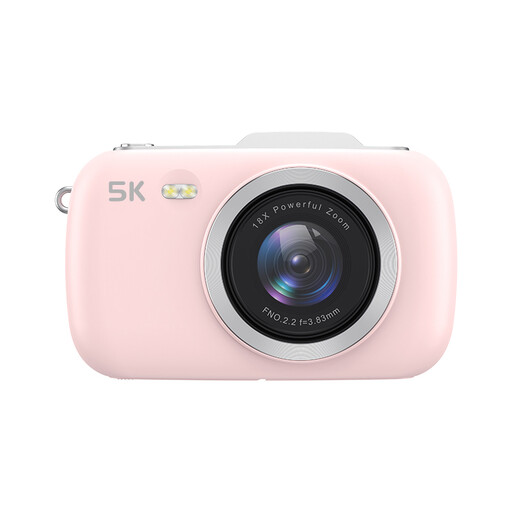 No image available
The stated 18X zoom may be useful for distant subjects; the product information advises protecting the camera from water and moisture.
The product name lists 5K, 80MP and 18X zoom. According to the product name, an SD card is not included.
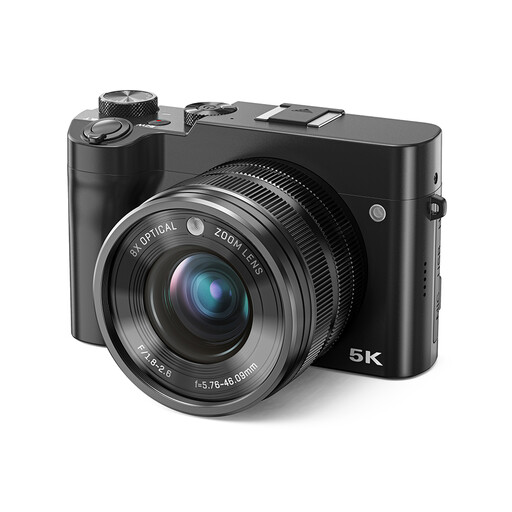 No image available
The stated optical zoom may be useful when you want to frame subjects further away; also check whether the camera offers the angle of view you need for a wide dune scene.
The product name lists an 8X optical zoom lens; the product description mentions 5K video at 25FPS, autofocus and manual focus.
 No image available
The stated optical zoom may be useful for distant subjects; also compare the angle of view with your need for a wide landscape shot.
The product name lists 10X optical zoom and 56MP. The product description mentions 5K video and a 2.8-inch IPS screen.
Check the histogram and adjust the exposure if important highlights are losing detail. If you want to edit the image afterwards, check whether the exact model can save RAW files; according to Nikon, RAW gives you more scope for editing than JPEG.
Don't assume you can leave the marked routes. Staatsbosbeheer asks visitors to follow the signs in each area and, during the breeding season in the Schoorlse Duinen, stresses that visitors must stay on the paths. Check the signs on site.
First check the protection specifications and conditions of use for your exact model. The dust and water protection specified by Ricoh Imaging applies to the PENTAX WG-8; it does not show that another model can withstand the same exposure.
No. ACM ConsuWijzer explains that your statutory guarantee depends on what you could reasonably expect from the product under normal use; a retailer's or manufacturer's guarantee is separate. If a product is faulty, the retailer is responsible for providing an appropriate solution under the applicable conditions.