
Exhibition print maker
You want to print dune photos and choose a camera to suit the final print size, crop and number of pixels left afterwards.


Start with the print requirements and check which viewpoints you’re allowed to photograph from under the rules for your chosen dune area. Then choose between a fixed angle of view, optical zoom, or proven protection against sand and moisture. If you opt for a fixed lens, check that enough pixels will remain for the print after cropping.
You want to print dune photos and choose a camera to suit the final print size, crop and number of pixels left afterwards.
You want to be able to choose between a wide view and a more distant detail from permitted viewpoints.
You’re factoring in blowing sand or moisture and want to know what protection applies to the exact camera model.
| What to consider | What to look for | Who this matters to |
|---|---|---|
| Print detail | Ask your printer about the print size and resolution required. Then compare this with the image file’s pixel dimensions after cropping. Adobe gives 300 ppi as an example for an average desktop inkjet printer, not as a universal requirement for exhibitions. | If I want to crop a dune photo for a print, I need to know how much image information will be left. Around 28% of consumers put print detail first. |
| Framing from the path | Compare the wide-angle and telephoto ranges of the exact model with your subjects. Also check the rules for the area where you’ll be taking photos. | When I want to capture both a wide view of the dunes and a more distant detail from a permitted viewpoint, the available framing options are crucial. Around 22% of consumers prioritise flexible framing. |
| Exposure in changing light | Check which exposure settings and file formats the model offers. Compare the lens specifications at the angle of view you actually want to use. | If the outdoor light changes while I’m taking photos, I want to be able to adjust exposure and post-processing to suit the way I work. Around 22% of consumers prioritise control over exposure. |
| Protection against sand and moisture | Read the terms for the exact model and any accessories it may require. Protection claims for different cameras aren’t necessarily comparable. | Anyone taking photos in sandy or damp conditions will want to know what protection comes with their chosen model. Around 17% of consumers make this their top priority. |
| Carrying it on your walk | Compare the dimensions and ready-to-use weight of the exact version. Also consider whether a fixed angle of view or zoom better suits the way you take photos. | If I want to carry as little as possible on a walk in the dunes, size and handling matter as well as imaging options. Around 11% of consumers put portability first. |
Fewer pixels remain after cropping. The file you need depends on the desired print size and your printer’s requirements.
Agree the print size and file requirements with your printer in advance, and assess the file after cropping. Adobe’s 300 ppi example is for an average desktop inkjet printer, not automatically for every exhibition.
If needed, allow time for a test print or extra image editing.
A zoom figure on its own doesn’t tell you the wide-angle and telephoto ranges. With the Panasonic DC-TZ99, the equivalent range also depends on the selected aspect ratio.
Compare the optical range, sensor type and file specifications of the models you’re considering. Don’t assume the zoom is optical if the product information only says ‘zoom’.
Protection claims vary by model and may depend on specific accessories. FUJIFILM describes the X100VI as weather-resistant when used with the specified adapter ring and a suitable filter. OM SYSTEM describes the TG-7 as dustproof.
Before you set off, check the conditions for your exact model and the accessories fitted. Don’t treat weather resistance and dust or water resistance as the same thing.
Access rules, paths and conditions for organised productions vary depending on the land manager and activity.
Read the land manager’s latest information and follow signs on site. If you’re planning a shoot, ask in advance which rules apply to your setup.
For Noordhollands Duinreservaat, PWN states that a dune pass is compulsory.
The X100VI is an option if you’re looking for a fixed angle of view comparable to 35 mm and want plenty of room to crop.
The GR IV is worth comparing if you’re looking for a fixed, wider angle of view, equivalent to around 28 mm.
The RX100 VII is a good fit for comparing compact zoom cameras for wide dune views and more distant details.
The LUMIX DC-TZ99 is worth comparing if you want a wide optical zoom range and RAW shooting.
The Tough TG-7 is an option if protection against sand and water matters more than having maximum scope for a large crop.
These Joybuy product picks are a starting point for comparing cameras for photography and different ways of framing a shot. Check the exact product information before choosing a model for an exhibition print or for taking photos in sandy or damp conditions.
 No image available
Could be worth considering if you want to crop after taking a photo; check the file requirements for your chosen print before relying on it.
The product title lists 80 MP and 18× zoom, but doesn’t specify whether the zoom is optical or digital.
 No image available
Could suit you if you want to try different framings from one viewpoint; check whether the stated zoom range works for your subjects.
The product title lists 80 MP and 18× zoom. Check the product information to find out what type of zoom is meant.
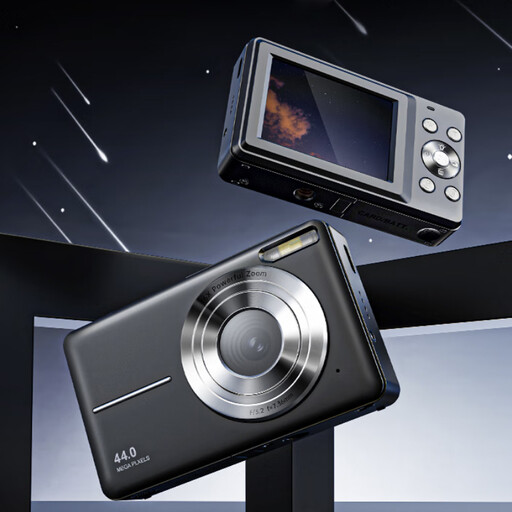 No image available
Could be an option if you’re looking for a pocket camera; assess the actual image files against your printer’s requirements.
The product title lists 44 MP and 16× digital zoom. Digital zoom is not the same as optical zoom.
Ask your printer about the print size and the required file resolution. Compare those requirements with the pixel dimensions after cropping. Adobe gives 300 ppi as an example for an average desktop inkjet printer; it’s not a universal requirement for every exhibition.
Check the rules for the specific area before you do. Natuurmonumenten generally allows access to its areas between sunrise and sunset and asks visitors to stay on the paths, although rules vary by area. PWN states that a dune pass is compulsory for Noordhollands Duinreservaat; this rule doesn’t automatically apply to all Dutch dunes.
This depends, among other things, on the area and how the photo shoot is organised. Natuurmonumenten says you don’t need to ask permission to take photos independently for your own enjoyment, as long as you follow the site rules. For professional or commercial productions, including art projects, the organisation requires prior permission. Ask the land manager how your specific plans will be classified.
Check the protection conditions for the exact model and follow the manufacturer’s care instructions. OM SYSTEM describes the TG-7 as dustproof; FUJIFILM says the X100VI is weather-resistant when used with a specific adapter ring and a suitable filter. These claims aren’t interchangeable.
According to ACM ConsuWijzer, under the legal guarantee the seller is responsible for providing an appropriate solution if a product used normally doesn’t meet the standard you could reasonably expect. A manufacturer’s guarantee doesn’t replace this right. ACM also states that most online consumer purchases come with a 14-day cooling-off period from the date of delivery, subject to applicable exceptions.