
Photographing the scene and the subject
You want to frame both the paving and buildings and a subject further away from your position in the courtyard, without changing lenses.


Choose based on the framing you need: compare both the wide-angle and telephoto ends of the optical zoom range in millimetres, not just the zoom ratio. If you often shoot in low light, also consider sensor size and lens aperture. A larger bridge camera may give you more reach, but it’s less convenient to carry around.
You want to frame both the paving and buildings and a subject further away from your position in the courtyard, without changing lenses.
You also take photos in the shade or later in the day, and want to weigh image quality against extra telephoto reach.
You want a camera that’s easy to take with you, and need to decide how much reach you’re willing to trade for portability.
A good fit if: you want to switch between a wide view and a close-up of a distant subject from one spot. Panasonic gives the DC-TZ99 a 24–720 mm equivalent range; Canon lists 24–960 mm for the PowerShot SX740 HS Lite Edition.
The trade-off: more telephoto reach doesn’t guarantee sharper photos in low light. Consider the lens aperture too, and how easy it is to keep your subject in the frame when zoomed in.
A good fit if: you often photograph the surroundings in lower light and don’t need your subject to fill the frame. Sony gives the RX100 VII a type-1.0 sensor and a 24–200 mm equivalent range.
The trade-off: a 200 mm telephoto end gives you less reach than the travel zooms mentioned above; a larger sensor alone doesn’t guarantee a particular photographic result.
A good fit if: reaching a distant subject matters most and you’re happy to carry a larger camera. Panasonic lists a 20–1200 mm equivalent range and a viewfinder for the DC-FZ82D; Nikon specifies optical zoom up to 3000 mm equivalent for the COOLPIX P1100.
The trade-off: a bridge camera isn’t ideal if you need something that fits in a jacket pocket. At high telephoto zoom, keeping your subject in the frame can also be more difficult.
| What to consider | What to look for | Who should pay particular attention? |
|---|---|---|
| Framing a distant subject | Compare the telephoto end in mm equivalent and check that it refers to optical zoom; also consider how easy it is to find your subject in the frame. | If the subject at the far end of the courtyard looks small, I want to frame it more tightly without moving closer; around 36% of consumers prioritise distant details. |
| Wide views and details | Compare the wide-angle and telephoto ends in the same unit, and decide what kind of framing you want. | I want to switch between showing the paving and getting a closer view of the subject; around 29% of consumers prioritise both wide views and details. |
| Shooting in low light | Compare the sensor type and maximum lens aperture at the zoom setting you want to use. | In the shade or later in the day, I want to consider image quality rather than just extra zoom; around 21% of consumers prioritise low-light photography. |
| Easy to carry | Compare the dimensions and weight including the battery and card; weigh up a viewfinder or grip against portability. | I want to take the camera with me without a large bag, even if that means less telephoto reach; around 14% of consumers prioritise portability. |
The zoom ratio doesn’t show where the wide-angle and telephoto ranges start and end. At high zoom, it can also become harder to keep your subject in the frame.
Compare the full optical range in millimetres equivalent and think about the framing you’ll need from where you’re standing.
The lens aperture can get smaller as you zoom in, just when you’re photographing a subject at the far end of the courtyard.
Check the maximum aperture at the telephoto end and compare it with the sensor size and the reach you need.
Extra reach can mean a larger camera. Nikon lists the COOLPIX P1100 as weighing around 1.4 kg.
Compare the dimensions and ready-to-use weight before choosing extra telephoto reach.
Canon states that USB charging isn’t supported for the PowerShot SX740 HS Lite Edition. If your version doesn’t come with a suitable charger, you may need to buy one or get a spare battery.
Check the charging method and what’s included with the exact version you’re buying.
The DC-TZ99 is a pocket-sized travel zoom, while the larger DC-FZ82D is a bridge camera. The models offer different ranges and sizes.
The PowerShot SX740 HS Lite Edition is a compact camera with a wide stated optical zoom range.
The RX100 VII is a pocket-sized option with a type-1.0 sensor and less telephoto reach than the travel zooms mentioned above.
The COOLPIX P1100 is a dedicated option for anyone who values long optical reach more than a compact size.
This Joybuy selection includes cameras with stated optical zoom and a pocket camera with digital zoom. If you’re photographing a distant subject, check which type of zoom is specified and compare the range in millimetres where that information is available.
 Image unavailable
The title lists 12× optical zoom for anyone who wants to frame a more distant subject more tightly.
The product name also mentions 4K and 64 MP; check which range in millimetres suits the framing you need.
 Image unavailable
The title lists 8× optical zoom; the product description mentions operation via a manual lens ring.
The product name also mentions 64 MP and a dual lens. Check whether manual zooming suits the way you take photos.
 Image unavailable
The title lists 10× optical zoom for anyone who wants to frame a distant subject more tightly.
The product name mentions 56 MP and front and rear cameras. Compare the stated zoom range with the framing you need.
 Image unavailable
This mirrorless camera comes with an E-mount 16–50 mm kit lens, allowing you to frame your shots in different ways within the lens’s range.
The product description lists a 24.2 MP APS-C sensor. Bear in mind that this is a mirrorless camera with interchangeable lenses, not a compact camera.
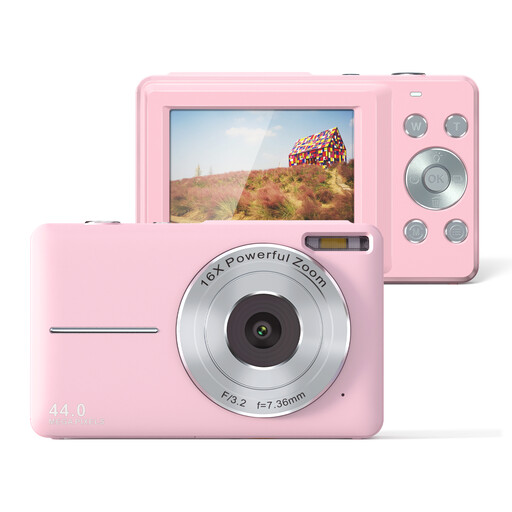 Image unavailable
The compact pocket-sized design makes it easy to take with you.
The stated 16× zoom is digital, not optical. That’s an important difference to consider if you want to frame a distant subject more tightly.
No. Canon lists 40× optical zoom for the PowerShot SX740 HS Lite Edition, and 80× ZoomPlus separately. When choosing, compare the optical range of 24–960 mm equivalent.
Start with a wide view and zoom in only as far as you need to show the subject clearly. Check the image on the screen or in the viewfinder; the Consumers’ Association of the Netherlands notes that it becomes harder to keep a subject in the frame at high zoom.
Check which battery is included, the charging method and what comes in the box for the exact version you’re buying. Canon lists a battery and battery charger for the PowerShot SX740 HS Lite Edition, and states that USB charging isn’t supported.
Report the fault to the seller. According to the Dutch government, the seller must provide a solution if a product is faulty; there’s no fixed statutory warranty period in the Netherlands that applies to all products. What you could reasonably expect from the product and the cause of the fault both matter.
Check the relevant privacy rules: according to the Dutch Data Protection Authority, identifiable people in images are personal data. Photos kept for private use are exempt when used for personal or household purposes, but this doesn’t automatically apply to public posts or business use. Processing images in those circumstances requires a lawful basis under the GDPR.