Start with the distance available between the lens and the desk lamp you’ve repaired. A short minimum focusing distance helps with small details, while a wide-angle setting can help you fit the whole lamp in the frame. Choose based on the shot that matters most to you, and check the focusing distance at the zoom setting you plan to use. Specifications from OM Digital Solutions, Canon, Panasonic, Ricoh and Sony can help you make a choice, but they aren’t a comparative test of the finished photos. A stable setup and suitable lighting matter too.
Who is this choice relevant to?
Capturing repair details
You want to take clear photos of small parts or the completed repair. The stated focusing distance is an important factor to consider; OM Digital Solutions, Canon and Sony list different distances for their models and zoom settings.
Photographing a lamp on a small table
You want to fit the whole desk lamp in the frame without moving the camera too far back. The available space and angle of view both matter; Canon, Panasonic and Ricoh publish different wide-angle capabilities for the models mentioned.
Taking repeatable product photos
You’re taking several overview and detail shots and want to control the framing and lighting. Canon recommends using a tripod for consistent composition in its general product photography tips. On a small table, you’ll also need to make sure any support fits into your setup.
What should you look for when choosing?
First decide whether you mainly want to photograph a small repair detail or the whole lamp. Then check whether the camera and any support will fit on the available table space.
| What to consider |
What should you check? |
Who is this important for? |
| Focusing on small details |
Check the focusing distance at your preferred zoom setting and where that distance is measured from. Canon lists 5 cm at wide angle and 40 cm at telephoto for the PowerShot G7 X Mark III, measured from the front of the lens. Sony lists approximately 8 cm at wide angle and approximately 100 cm at telephoto for the RX100 VII, also measured from the front of the lens. |
If I want to photograph a small repaired part close up, I focus on the minimum focusing distance for the framing I’ve chosen. Around 36% of consumers say small repair details are their top priority. |
| Fitting the whole lamp in the frame |
Compare the wide-angle setting with the distance available on your table. Canon and Panasonic list a 24 mm-equivalent wide-angle setting for the models mentioned; Ricoh lists a fixed 28 mm-equivalent angle of view for the GR IV. |
If I want to photograph the base and shade together but can’t move the camera far away, I look at the angle of view and framing from the position I’ll actually be shooting from. Around 29% of consumers say fitting the whole lamp in the frame is their top priority. |
| A repeatable setup |
Check whether you can see the screen from where the camera will be positioned, and whether the camera, any support and the lighting will fit on the table. Canon recommends using a tripod for consistent product composition; this is general photography advice, not a guarantee that a particular support will fit your table. |
If I want to take several overview and detail shots, I want to be able to control the framing and lighting between shots without overcrowding the table. Around 21% of consumers prioritise repeatable shots. |
| Using the camera for other subjects too |
Decide what else you want to photograph, then compare the range of the exact model. Panasonic lists a 24–720 mm equivalent range for the DC-TZ99, Sony lists 24–200 mm equivalent for the RX100 VII, and Ricoh lists a fixed 28 mm-equivalent focal length for the GR IV. |
If I want to use the camera for other subjects too, I weigh that up against the focusing distance and the setup around the lamp. Around 14% of consumers say broader camera use is their top priority. |
Avoid common buying mistakes
-
Assuming maximum zoom is suitable for close-up details on a table
The focusing distance can change with the zoom setting. Sony lists approximately 8 cm at wide angle and approximately 100 cm at telephoto for the RX100 VII; Canon also lists different minimum distances for each zoom setting on the G7 X Mark III.
Check the focusing distance at the zoom setting you plan to use for the repair detail.
-
Comparing only the camera’s dimensions
The lamp, camera and any accessories all need to fit around the small table. A fixed position can help you take repeatable product photos, but it leaves little room if you haven’t factored in the rest of your setup.
Plan where the lamp and camera will go, then work out the angle of view you need from that position.
A support or extra lighting can take up space and may need to be bought separately.
-
Treating a fixed wide-angle lens and a zoom camera as interchangeable
According to Ricoh, the GR IV has a fixed 28 mm-equivalent angle of view. Canon and Panasonic list variable optical zoom ranges for the models discussed.
Choose a fixed angle of view only if you can get both overview and detail shots from the camera positions available to you.
Camera brands to consider
OM SYSTEM
The Tough TG-7 is worth considering if you mainly want to photograph small repair details close up.
- OM Digital Solutions lists a minimum focusing distance of 1 cm and a 25–100 mm-equivalent lens.
- These are manufacturer specifications, not an independent image quality test. Check separately whether the whole lamp will fit in the frame from your shooting position.
Canon
Canon says the PowerShot G7 X Mark III combines a wide-angle setting, optical zoom and a tilting screen.
- Canon lists a 24–100 mm-equivalent range and focusing from 5 cm at wide angle.
- At telephoto, Canon lists a minimum focusing distance of 40 cm from the front of the lens. In its general product photography tips, Canon recommends using a tripod for consistent composition.
Panasonic
The LUMIX DC-TZ99 may be a good fit if you want to use the camera for subjects at a range of distances as well as for your desk lamp.
- Panasonic lists a 24–720 mm-equivalent range, a tilting screen and focus stacking.
- The Dutch product page checked showed the variants mentioned as unavailable; check the specific offer separately.
Ricoh
The GR IV is a fixed wide-angle option for anyone who mainly wants to take an overview shot.
- Ricoh lists a fixed 28 mm-equivalent focal length and an APS-C format sensor for this model.
- There’s no optical zoom for changing the framing without moving the camera. The European product page checked doesn’t list a minimum macro focusing distance.
Sony
The RX100 VII is a compact zoom camera to consider if you also want to use it away from your work table.
- Sony lists a 24–200 mm-equivalent range.
- Sony lists a focusing distance of approximately 8 cm at wide angle and approximately 100 cm at telephoto, measured from the front of the lens.
Cameras at Joybuy
This Joybuy selection includes pocket and portable digital cameras. For lamp details, check the minimum focusing distance and angle of view for the exact model; the product details below don’t specify these shooting limits.
 No image available
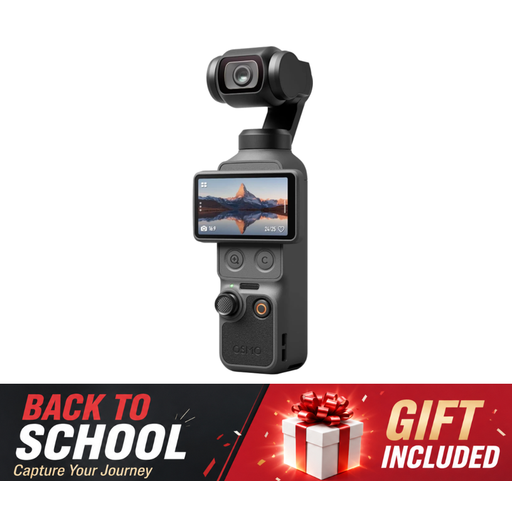
DJI Osmo Pocket 4 Standard Combo
The rotating screen may come in handy if you want to check the framing from an awkward camera position.
The product title lists 1″ CMOS, 4K/240fps, 3-axis stabilisation, 2× lossless zoom, 107GB built-in storage and a 2″ rotating screen.
Joybuy
 No image available
KOMERY G7-A 4K, pink
The product title describes this as a portable point-and-shoot camera; check the shooting distance and angle of view for your lamp setup.
The product title lists 80MP UHD and 18X zoom.
Joybuy
 No image available
KOMERY G7 5K without SD card, pink
The product title describes this as a portable point-and-shoot camera; check the shooting distance and angle of view for your lamp setup.
The product title lists 80MP UHD and 18X zoom. No SD card is included.
Joybuy
 No image available
DJI Osmo Pocket 3
The rotating touchscreen can help you check the framing from an awkward camera position.
The product title lists 1″ CMOS, 4K/120fps, 3-axis stabilisation and a 2″ rotating touchscreen.
Joybuy
Frequently asked questions
Is the minimum focusing distance enough to photograph the whole desk lamp?
No. The minimum focusing distance tells you how close the camera can be to the subject and still focus; it doesn’t tell you how much of the lamp will fit in the frame. Check the angle of view too, and try out the framing at the distance available on your table.
How can I make sure successive photos of the repair look consistent?
Keep the framing and background the same. In its general product photography tips, Canon recommends using a tripod for consistent composition. On a small table, first check that a support and your chosen lighting will fit alongside the lamp.
Do I need to buy an extra warranty package for my statutory guarantee?
No. According to the Dutch government, when you buy as a consumer, you’re entitled to a product that conforms to the contract. A manufacturer’s or seller’s guarantee is an additional benefit. If a product is faulty, you should be able to contact the seller for a solution. There is no fixed statutory guarantee period in the Netherlands that applies to all products.
Do I have a cooling-off period when buying online in the Netherlands?
According to the Dutch government, when you buy from a business at a distance, you usually have a 14-day cooling-off period. Check that you’re buying from a business and find out which terms apply to your order; online purchases from a private seller aren’t covered by the distance-selling rules described here.


