For repeatable photos of a repaired desk lamp, it’s more important to have a camera you can position securely and use to recreate your framing and settings than one with a wide zoom range. If your main aim is to capture small repair details, compare the focusing distance and close-up features. If you’re photographing the lamp while it’s switched on, pay attention to white balance and exposure too. For comparison photos, keep the camera, lamp, background and lighting in as similar a position as possible.
Who is this camera for?
Repeat repair photos
You want to photograph the lamp from the same angle before and after work has been done. A fixed camera set-up and control over the settings matter more to you than extra zoom. Canon Europe recommends using a tripod to achieve consistent product framing.
Photographing small parts
You want to capture connections, screws or repaired areas clearly. Compare the focusing distance and close-up capabilities of the specific model; Canon Netherlands and OM SYSTEM describe options available on particular models.
Photographing the lamp while it’s switched on
You want to capture the illuminated lamp without unintended differences in colour between shots. Nikon’s guide to white balance shows how different white balance settings can render the same scene differently.
What should you look for when choosing?
Start by deciding whether you mainly want to recreate the same composition or show small parts close up. Colour control and using the camera away from your fixed lamp set-up can help you narrow down your choice further.
| What to consider |
What should you check? |
Who should consider this? |
| Recreating the composition |
Check that you can position the camera securely and reuse the same settings. Also consider how you’ll start the shot without disturbing the set-up. |
If I want to compare photos of different repair stages later, I need to photograph the lamp from the same angle and against the same background. Around 36% of consumers prioritise repeatable framing. |
| Focusing on small details |
Compare the minimum focusing distance at the zoom setting you plan to use. Also check whether the exact model offers focus bracketing or focus stacking. |
If I want to show a screw, connection or repaired area clearly, a usable close-up distance matters more than simply taking an overall shot. Around 29% of consumers prioritise sharp repair details. |
| Colour and exposure |
Check which white balance settings are available, and keep the light sources and camera settings the same for comparison photos. |
When I photograph the lamp while it’s switched on, I want to be able to assess colour differences between shots without the lighting changing unnecessarily. Around 21% of consumers put colour and exposure first. |
| Using the camera away from the set-up too |
Decide whether you’ll photograph subjects further away. If so, compare both the zoom range and the focusing distance at the zoom setting you choose. |
If I want to use the same camera in other places too, size and range matter as well as taking fixed lamp photos. Around 14% of consumers prioritise versatile use. |
Common buying pitfalls
-
Choosing the biggest zoom for a lamp that always stays in the same place
Zoom range doesn’t tell you how close a camera can focus at a particular zoom setting. Canon and Sony list different focusing distances for wide-angle and telephoto.
First, decide how far away you’ll be taking the shot and how large you want the detail to appear. Then compare the focusing range at the zoom setting you plan to use for the lamp.
-
Assuming a close-up mode guarantees repeatable photos
A close-up feature can help when photographing small parts, while a fixed set-up helps keep the composition consistent between shots. These are separate things to consider when choosing a camera.
Assess the focusing options and how securely the camera can be positioned separately. Also check whether a suitable camera support is included.
You may still need a stable camera support; check whether one is included with the version you choose.
-
Assuming a brand name replaces all your other purchase checks
A model specification or conformity document doesn’t automatically tell you about the identity and documentation of the specific item you’re buying.
Check the full model name, what’s included in the offer and the required product marking. Cameras sold in the Netherlands must comply with the applicable EU product requirements; the Dutch Authority for Digital Infrastructure outlines the requirements for CE marking.
Camera brands to consider
Canon
The PowerShot G7 X Mark III is a compact option to consider for overall shots and detail photos taken from a fixed set-up.
- Canon Netherlands lists manual focusing, focus bracketing and a minimum focusing distance of 5 cm at the wide-angle setting.
- At the telephoto setting, Canon lists a minimum focusing distance of 40 cm. These model specifications alone can’t predict how a particular lamp photo will turn out.
OM SYSTEM
The Tough TG-7 is particularly worth considering if capturing small repair details is your main reason for choosing a camera.
- The OM SYSTEM manual describes a microscope mode for shots from 1 cm away, as well as focus bracketing.
- The stated distance applies to that specific mode and won’t necessarily be the most practical distance for every part or lighting set-up.
Sony
The DSC-RX100M7 may suit you if you also want to use the same compact camera for subjects at a range of distances.
- Sony lists a 24–200 mm-equivalent zoom range and manual focusing.
- Sony lists a minimum focusing distance of around 8 cm at the wide-angle setting and around 100 cm at the telephoto setting. The zoom range doesn’t prove that this camera will perform better for these close-ups.
Panasonic
The LUMIX DC-TZ99 is worth a look if you also want to photograph subjects at a distance and find Focus Stacking useful.
- Panasonic lists 30× optical zoom and a Focus Stacking feature.
- If your lamp always stays in the same place, extra zoom won’t necessarily be a decisive advantage.
Joybuy camera option
This Joybuy listing is for a portable camera designed for video recording. Check whether the version listed meets your needs for repeatable still photos of the lamp.
 No image available
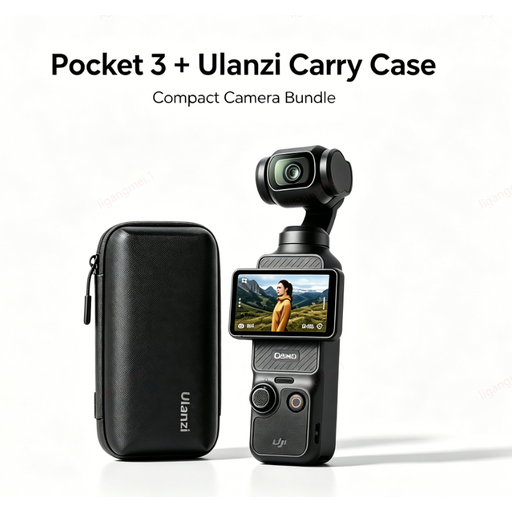
DJI Pocket 3 Camera with Ulanzi Custom Storage Carry Case
The listing presents the DJI Pocket 3 as a portable video camera. Before buying, check whether this version suits your needs for repeatable still photos. The product title mentions a Ulanzi Custom Storage Carry Case.
View at Joybuy
Frequently asked questions
How can I take almost exactly the same photo of the lamp again later?
Leave the camera and lamp in fixed positions, or mark where they go. Keep the background, zoom setting and lighting the same, and check the framing before taking another photo. Canon Europe recommends a fixed camera support to help you take consistent product photos.
Do I need to hold the camera right up to a small repaired part?
No. The minimum focusing distance is a limit for a specific setting, not a recommended distance for every shot. Compare the distances for each zoom setting and choose a position that leaves enough room for the lighting too.
How can I stop the lampshade appearing a different colour in every photo?
Keep the light sources as consistent as possible and, if your camera supports it, use a suitable fixed or measured white balance. Nikon shows how automatic white balance and white balance set using a white card can render the same scene differently.
What should I check on the CE marking of a camera with Wi-Fi or Bluetooth?
A camera sold in the Netherlands must meet the applicable EU product requirements and carry the required CE marking. Wireless features are also subject to the applicable requirements for radio equipment. Check the marking and model documentation for the item you’re buying; CE marking is not an independent performance test.
Can I switch on the repaired desk lamp for the photo?
A camera or its CE marking doesn’t confirm that a repaired lamp is electrically safe. The Netherlands Food and Consumer Product Safety Authority classifies lamps as electrical appliances that must meet safety requirements. If you’re unsure about the repair, ask a qualified professional to assess whether it’s safe to switch the lamp on.


