
Photographer capturing the whole courtyard
You want to capture the paving, façades and surrounding space together. The Consumers’ Association highlights zoom range and image quality as factors to consider when choosing a camera.


To capture the whole courtyard from a limited distance, a sufficiently wide-angle lens matters more than a long telephoto reach. Canon specifies a 24 mm equivalent wide-angle setting for the PowerShot G7 X Mark III. In overcast conditions, exposure and shutter speed are also worth considering, as Nikon USA advises.
You want to capture the paving, façades and surrounding space together. The Consumers’ Association highlights zoom range and image quality as factors to consider when choosing a camera.
You want to capture the texture and lines in the paving and value the option to crop or edit your images. Fujifilm and Ricoh specify fixed angles of view for their models, so check that they suit where you’ll be standing.
You take handheld photos in overcast conditions and want to weigh up exposure, shutter speed and depth of field. Nikon USA points out that overcast skies mean less light.
Best for: capturing both the courtyard and details from one spot. Canon specifies a 24 mm full-frame equivalent focal length and 4.2× optical zoom for the PowerShot G7 X Mark III.
Trade-off: its stated zoom range is shorter than that of the Sony RX100 VII; this alone says nothing about measured image quality.
Best for: choosing one angle of view and editing RAW files. Fujifilm specifies a fixed 35 mm full-frame equivalent lens and RAW storage for the X100VI.
Trade-off: without optical zoom, you can’t widen the frame if the courtyard won’t fit from where you’re standing.
Best for: capturing details at greater distances with the same camera. Panasonic specifies a 24–360 mm full-frame equivalent range for the LUMIX TZ300.
Trade-off: extra telephoto reach won’t widen an angle that’s too narrow; also check that the size and controls suit the way you’ll use it.
Start with the widest angle of view you need from the spot where you’ll be taking photos. Then compare zoom, exposure settings and editing options.
| What to consider | What should you check? | Who should prioritise this? |
|---|---|---|
| Will the whole courtyard fit in the frame? | Compare the widest angle of view, expressed as a full-frame equivalent, with the distance you can stand from your subject. The Consumers’ Association highlights zoom range as a factor to consider when choosing a camera. | If I want to frame the paving and façades together from one spot, a wide-angle lens is my top priority. Around 36% of consumers give the overall view of the courtyard the most weight when making this choice. |
| Taking photos in overcast conditions | Check each model’s exposure settings and image stabilisation. After taking a test shot, check the histogram and highlights; Nikon USA highlights reduced light as a factor to consider in overcast conditions. | If I’m shooting handheld, I want to balance shutter speed and exposure without losing too much detail in the paving. Around 29% of consumers prioritise control over light when making this choice. |
| Detail and editing | Check whether the camera has a fixed or zoom lens, the stated sensor resolution and RAW support for the exact model. Fujifilm and Ricoh specify different fixed angles of view for their models. | If I mainly want to crop or edit patterns and paving joints, I look at the lens’s angle of view and the available shooting options. Around 21% of consumers put detail and editing first. |
| Portability and zoom | Compare the optical zoom range with the wide-angle setting, and check the dimensions. Sony and Panasonic specify different zoom ranges for the models mentioned here. | If I also want to take the camera with me and photograph distant details, zoom range matters alongside the ability to frame the whole courtyard. Around 14% of consumers give portability and zoom range top priority. |
Telephoto reach can help with distant details, but it won’t fix a wide-angle setting that’s too narrow.
First check the widest angle of view and where you can stand. Then compare the telephoto reach.
Stabilisation doesn’t remove the need to balance light, shutter speed, ISO and depth of field, and it can’t guarantee a sharp shot.
Take a test shot, check the exposure and sharpness, then adjust the settings to suit your position and subject.
Ricoh states that the GR III and GR IIIx have different lens angles of view. The Panasonic TZ300 is also a different model from the TZ99.
Before buying, check the full model name and the lens specifications for that version.
The PowerShot G7 X Mark III is a compact wide-angle zoom for capturing the whole scene and closer details.
The RX100 VII combines a compact camera with a stated 24–200 mm equivalent range.
The X100VI is an option if you want to shoot with one fixed angle of view and use RAW.
The GR IIIx is better suited to selected areas and patterns in a courtyard than to capturing the whole scene from a restricted position.
The LUMIX TZ300 is a travel zoom option if you also want to capture details at greater distances with the same camera.
This selection includes pocket, travel and action cameras for anyone comparing camera options for courtyard photography. Check that each model’s angle of view, controls and stated features suit the composition you have in mind.
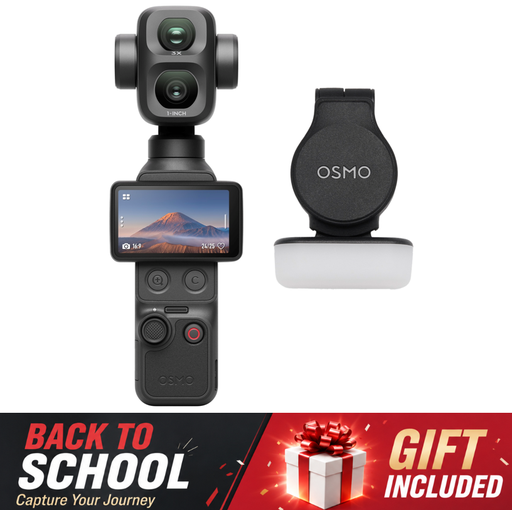 No image available
The stated wide-angle lens may be useful for a broad composition; check whether its angle of view captures the whole courtyard from where you’ll be standing.
Stated features: 20 mm f/2 lens and 1-inch CMOS sensor.
 No image available
A zoom camera may suit you if you want to try different compositions from one spot; check that the widest setting captures the whole courtyard.
Stated features: 80 MP and 18× zoom. Check whether the zoom is optical or digital.
 No image available
The stated zoom may come in handy if you want to frame distant details as well as capture the whole scene.
Stated features: 80 MP and 18× optical zoom. Also check that the wide-angle setting suits where you’ll be standing.
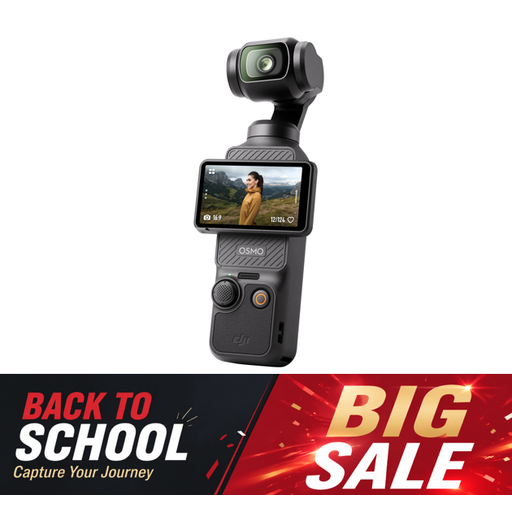 No image available
This pocket-sized model is also listed as supporting still photography; check that its controls suit the way you want to take photos.
Stated features: 1-inch CMOS sensor, 3-axis mechanical stabilisation and a weight of 179 g.
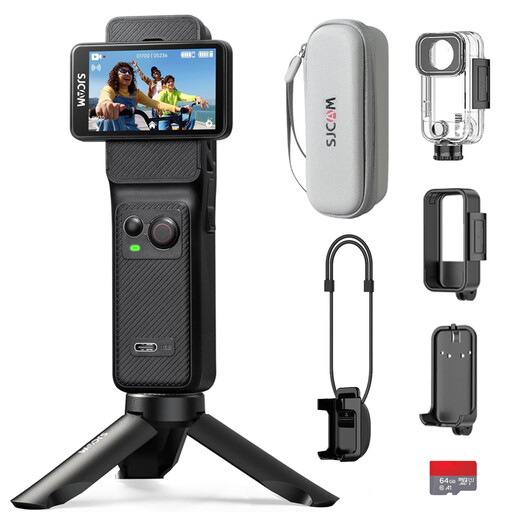 No image available
An action camera may be worth considering if you’re looking for a wide angle of view; check how the courtyard will appear in the frame first.
Stated features: 154° wide-angle lens, adjustable ISO from 100–3200 and photos up to 16 MP.
Take a test shot and check the histogram and highlights. If you’re shooting handheld, balance shutter speed, ISO and the depth of field you want for the paving; there’s no single setting that works for every courtyard. Nikon USA points out that overcast skies mean less light.
Before you leave, check the battery and a suitable memory card, and consult the manual for card compatibility and cleaning instructions. Fujifilm refers X100VI users to its own compatibility information for storage media; don’t use this as evidence for other models.
Contact the seller. According to the Dutch Government, the Netherlands has no fixed statutory guarantee period; what you can expect from a product depends, among other things, on the product itself, its price and the sales information. When you buy online from a business, you’ll generally also have a 14-day cooling-off period. This is a separate right from your guarantee.
First consider how and where you plan to share the photos. The Dutch Data Protection Authority distinguishes between images that remain private and those shared more widely. The GDPR applies when identifiable people are featured in professional or commercial publications, and you need a lawful basis for processing; this doesn’t automatically mean that every publication is permitted.