Who is this choice relevant to?

Photographing light and shadow

You want to balance bright areas of the courtyard with shaded paving in a single image, and adjust the exposure or edit the image afterwards. The Consumers’ Association (Consumentenbond) highlights setting options as something to consider when choosing a camera.

Capturing the whole courtyard

You have a limited choice of shooting positions and want to know whether the wide-angle view will fit the entire courtyard into the frame. The Consumers’ Association advises taking your intended use and field of view into account.

Capturing stonework details

You want to photograph pointing, patterns or architectural details across the courtyard on their own, and need the right framing or zoom. The Consumers’ Association highlights zoom range as something to consider when choosing a camera.

What should you look for?

Compact camera with a fixed wide-angle lens

Best for: a fixed composition where you choose your position and framing in advance.

Bear in mind: you can’t adjust the field of view optically, so check that the courtyard fits in the frame from where you’ll be standing.

Compact camera with a short zoom

Best for: anyone who wants to frame the courtyard and its details from different positions.

Bear in mind: its reach for distant details is more limited than a travel zoom’s; check the wide-angle setting too.

Compact camera with a travel zoom

Best for: anyone who regularly wants to isolate distant details as well as photograph the courtyard.

Bear in mind: the maximum aperture can vary at different zoom settings. Greater telephoto reach does not guarantee better photos in low light.

What to consider What to look for when buying Who this matters to
Exposure in changing daylight Check exposure compensation, metering modes and whether the exact model supports RAW or exposure bracketing. If I’m photographing bright façades and dark stone in one composition, I want to choose which area takes priority. Around 36% of consumers give exposure control their top priority.
Fitting the whole courtyard into the frame Compare the field of view in 35mm equivalent and assess the framing from the position where you’ll actually be shooting. If I can’t move further back, the wide-angle view needs to be wide enough to capture the whole courtyard. Around 29% of consumers prioritise getting a complete view.
Stonework and architectural details Compare optical zoom, the maximum aperture at your preferred zoom setting and the focusing distance at that setting. If I want to frame patterns or details across the courtyard separately, zoom range will influence my choice. Around 21% of consumers give capturing details their top priority.
Easy to carry Compare dimensions and weight, including the battery. Check water or dust resistance for the exact model only if you need it. I want a camera that’s easy to carry on a walk; I’ll consider rain or dust protection separately. Around 14% of consumers give portability their top priority.

Common buying mistakes

  • Choosing the biggest zoom range when the courtyard won’t fit in the frame

    Telephoto reach helps you make distant details appear larger, but for a complete view, it’s the wide-angle setting from your shooting position that matters.

    Compare the stated wide-angle field of view and, if possible, try the framing from the spot where you plan to take photos.

  • Assuming stabilisation solves every problem caused by changing light

    Stabilisation and exposure settings do different things. A bright façade and dark paving may still call for a considered exposure. Nikon describes exposure bracketing as taking multiple shots at different exposure levels.

    As well as stabilisation, check the metering modes, exposure compensation and RAW or exposure bracketing options on the exact model.

  • Assuming a fixed 35mm-equivalent lens will always be wide enough

    According to Fujifilm, the Fujifilm X100VI has a fixed 35mm-equivalent field of view. Without optical zoom, you can’t widen the frame on the spot.

    Try the composition you want from the position where you’ll actually be standing.

Camera brands to consider

Canon

The PowerShot G7 X Mark III is a short-zoom option, while the SX740 HS Lite Edition focuses on telephoto reach.

  • Canon says the G7 X Mark III has a 1.0-type sensor, a 24–100 mm-equivalent zoom and an f/1.8–2.8 aperture.
  • The SX740 HS Lite Edition offers 24–960 mm equivalent and has a 1/2.3-type sensor. These specifications are not an independent comparison of image quality.

Sony

The RX100 VII pairs a compact camera with a zoom lens for both wide views and distant details.

  • Sony specifies a 1.0-type sensor and a 24–200 mm-equivalent zoom.
  • According to Sony, the maximum aperture ranges from f/2.8 at wide angle to f/4.5 at telephoto. A short focusing distance at wide angle does not automatically apply at telephoto.

Ricoh

The GR IV is a compact camera with a fixed wide-angle lens for a carefully planned composition.

  • Ricoh lists an APS-C sensor, a fixed 28 mm-equivalent f/2.8 lens and five-axis sensor stabilisation.
  • Without optical zoom, your shooting position needs to suit the framing you want.

Fujifilm

The X100VI is aimed at photographers who want a fixed, less wide field of view and manual exposure options.

  • Fujifilm specifies an APS-C sensor, a fixed 35 mm-equivalent f/2 lens, RAW and sensor stabilisation.
  • Its fixed field of view may be too narrow for an enclosed courtyard, so assess it from where you’ll be taking photos.

Panasonic

The Lumix TZ99 is a compact travel zoom for anyone who wants to frame the courtyard as well as details further away.

  • Panasonic lists a 1/2.3-type sensor, 30× optical zoom and RAW for photos.
  • The stated aperture ranges from f/3.3–6.4 and becomes smaller towards telephoto. Manufacturer specifications don’t prove how a camera performs in low light.

Leica

The Q3 has a fixed 28mm wide-angle lens for anyone who values resolution more than optical zoom.

  • Leica lists a 60-megapixel full-frame sensor, a fixed 28mm f/1.7 lens and optical stabilisation.
  • The digital framing options from 28 to 90 mm are not optical zoom. The fixed field of view calls for a suitable shooting position.

Cameras at Joybuy

These Joybuy products range from compact digital cameras to a vlog camera and an instant camera. Before choosing, compare the exact model’s field of view and controls with your shooting position.
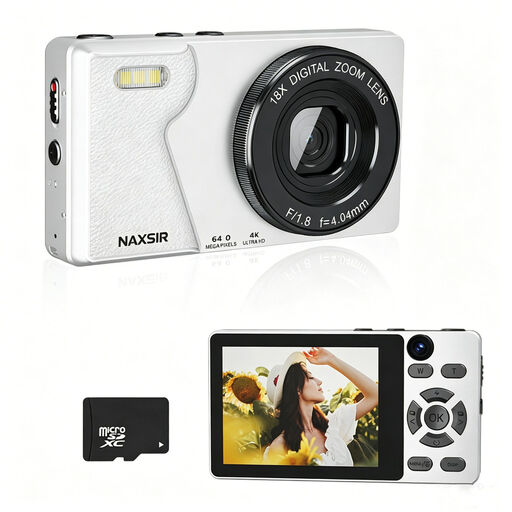
NAXSIR digital camera

NAXSIR digital camera, 4K, 64 MP

For anyone looking for a compact camera for photography and video on the go.

The product name lists 18× digital zoom and a 32 GB memory card.

View at Joybuy
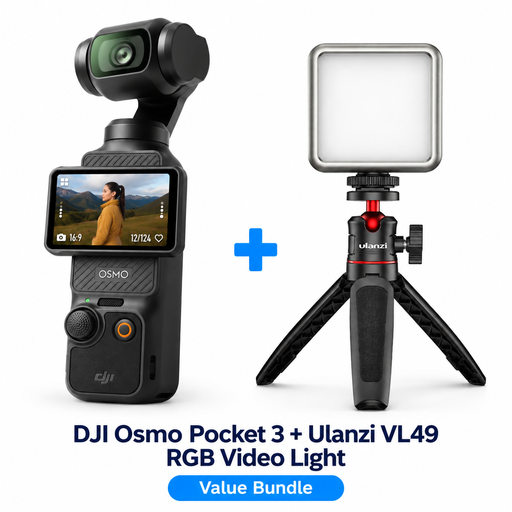
DJI Osmo Pocket 3 Creator Combo with Ulanzi VL49 RGB LED light

DJI Osmo Pocket 3 Creator Combo with Ulanzi VL49 RGB LED light

A bundle with a camera and RGB LED light for anyone who wants to take both along for photography and video work.

View at Joybuy
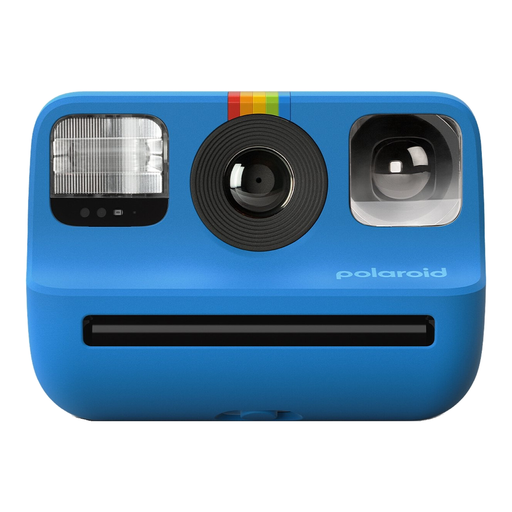
Polaroid Go Gen 2 instant camera, blue

Polaroid Go Gen 2, blue

For anyone who wants to keep photos as physical prints straight away, rather than only in digital form.

Uses Polaroid Go film and produces prints measuring 66,6 × 53,9 mm.

View at Joybuy

Songdian pocket camera, pink

Songdian pocket camera, 4K, 44 MP, pink

For anyone looking for a pink pocket camera for photography and video.

The product name lists 4K, 44 MP and 16× zoom.

View at Joybuy
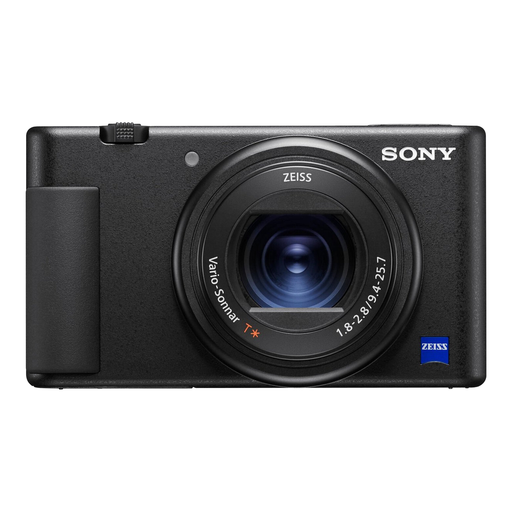
Sony ZV-1 compact vlog camera

Sony ZV-1 compact camera

For anyone looking for a compact camera that’s described as suitable for vlogging.

View at Joybuy

Frequently asked questions

How do I photograph a bright façade and dark paving in one image?

Choose which area you want correctly exposed, then check the metering or exposure compensation. For a stationary scene, you can take several shots at different exposures and combine them later. Check that the exact camera model has the function you need.

Should I prepare my camera before taking photos in the courtyard?

Before you leave, check that the battery is charged and that you have a suitable memory card. Once you’re there, try framing the scene at wide angle and reassess the exposure if the light changes.

Who should I contact if a camera bought in the Netherlands turns out to be faulty?

If a product is faulty, contact the seller about your statutory guarantee. According to the Dutch government, there is no fixed statutory guarantee period for all products in the Netherlands; what you can expect depends, among other things, on the product and the information provided.

Can I photograph identifiable visitors and publish the photo online?

It depends on how you use the photo. According to the Dutch Data Protection Authority, private use or sharing with a very limited group may fall under the exception for personal or household use. This exception does not apply to wider sharing, for example on a public page, so consider which legal basis for processing applies. This does not mean that every photo of visitors is automatically allowed or prohibited.
