
Dune landscape photographer
You want to capture sweeping dunes and changing light on a morning walk without carrying a large camera bag.


Choose a camera to suit what you want to photograph from the walking trail: a sweeping dune landscape, distant details or scenes in sandy, damp conditions. Then compare the angle of view, optical zoom range, lens and sensor performance in the morning light, and the protection offered by the exact model. These features are not interchangeable.
You want to capture sweeping dunes and changing light on a morning walk without carrying a large camera bag.
You stick to accessible paths and want to bring distant subjects closer with optical zoom.
You prioritise protection over maximum zoom range when you regularly take photos in sandy or wet conditions.
A good fit if: you mainly photograph dune lines and nearby landscapes, and are happy to work with a single angle of view.
Trade-off: Ricoh specifies a fixed lens equivalent to around 28 mm for the GR IV; that means you cannot optically zoom in on distant details.
A good fit if: you want to switch between wide views and nearby details, and also consider lens aperture in less bright morning light.
Trade-off: Canon specifies a 24–100 mm equivalent range and f/1.8–f/2.8 for the PowerShot G7 X Mark III; its telephoto reach is shorter than that of the zoom models discussed here.
A good fit if: you want to frame both wide dune scenes and distant subjects, and value an electronic viewfinder.
Trade-off: Sony specifies a 24–200 mm equivalent range for the RX100 VII, with a maximum aperture that changes from f/2.8 at the wide-angle end to f/4.5 at the telephoto end.
A good fit if: you want to frame details at a greater distance from the walking trail.
Trade-off: Panasonic specifies a 24–720 mm equivalent range for the LUMIX DC-TZ99 when taking 4:3 photos, alongside a 1/2.3-inch sensor and f/3.3–f/6.4. The stated range also depends on the aspect ratio and settings.
A good fit if: protection from sand and moisture matters more than a long telephoto range.
Trade-off: OM SYSTEM describes the Tough TG-7 as dustproof and waterproof to 15 m; this manufacturer specification does not remove the need for careful maintenance.
| What to consider | What should you look for? | Who should pay particular attention? |
|---|---|---|
| Dune landscapes and morning light | Compare the wide-angle setting in mm equivalent, sensor type and maximum aperture at the focal length you use. A smaller aperture can help keep more of the landscape in focus, but lets in less light. | If I mainly want to capture broad dune lines from where I’m standing, I look at the angle of view and settings for the available light. Around 36% of consumers put landscapes and morning light at the top of their list of buying priorities. |
| Distant details from the trail | Compare the optical telephoto range in mm equivalent for the photo setting you want. Panasonic gives a 24–720 mm equivalent range for the DC-TZ99 when taking 4:3 photos; a longer range alone does not tell you how the camera performs in low light. | If I want to frame distant subjects more closely without leaving the trail, I focus mainly on optical zoom. Around 29% of consumers put distant details at the top of their list of buying priorities. |
| Sand, moisture and maintenance | Check the stated dust and water protection for the exact model, and follow the maintenance instructions. Sand caught between moving lens parts can cause damage. | When I’m walking regularly along sandy and wet routes, protection matters more to me than maximum zoom range. Around 21% of consumers name protection from sand and damp conditions as their top buying priority. |
| Comfort when carrying it on a walk | Compare weight and dimensions on a like-for-like basis, for example including the battery and memory card if that is how the manufacturer lists them. Also decide whether you need a fixed lens or a zoom. | If I want to carry the camera for the whole walk, a manageable size matters as well as the angle of view I need. Around 14% of consumers put ease of carrying at the top of their list of buying priorities. |
The stated range of the Panasonic LUMIX DC-TZ99 applies to 4:3 photos; other aspect ratios and video settings may produce different ranges. Its sensor and maximum aperture also differ from those of the 1.0-type zoom cameras discussed here.
Compare the equivalent optical range in the shooting mode you plan to use, along with the lens and sensor specifications.
Sand caught between moving lens parts can cause damage. The protection specified by OM SYSTEM for the Tough TG-7 does not automatically apply to other compact cameras.
Check the protection offered by the exact model, store the camera in a clean case and remove sand carefully, following the maintenance instructions.
Ricoh specifies a fixed lens equivalent to around 28 mm for the GR IV. Zoom models offer a different way to frame distant subjects from the same permitted spot.
Before buying, decide whether you mainly want to photograph sweeping views or distant details.
The PowerShot G7 X Mark III is a compact zoom option for switching between wide dune views and nearby details.
According to Sony, the RX100 VII combines an optical zoom range with an electronic viewfinder in a compact model.
The LUMIX DC-TZ99 is a compact travel zoom for framing distant details from a path.
The Tough TG-7 is a rugged compact camera for anyone who prioritises protection on coastal walks.
The GR IV is a fixed wide-angle option for photographers who are happy to work with a single angle of view.
This selection includes compact cameras for photography on the go, including an action camera. Check which features suit your dune photography for each model, and make sure you understand the conditions attached to any stated zoom or water protection.
 No image available
A pocket gimbal camera for photography and video on the go, according to the product title.
The title lists a 1-inch CMOS sensor, 4K/240fps, 2× lossless zoom, 107 GB of built-in storage and a 2-inch rotating screen.
 No image available
A portable digital camera designed for photography and vlogging, according to the product title.
The title lists 4K, 80 MP and 18× zoom. The product information warns that the camera should be kept away from water and moisture.
 No image available
A portable digital camera designed for photography and vlogging, according to the product title.
The title lists 5K, 80 MP and 18× zoom. The product information warns that the camera should be kept away from water and moisture.
 No image available
A pocket camera for photography and video, according to the product title.
The title lists 4K and 44 MP. The stated 16× zoom is digital, not optical.
 No image available
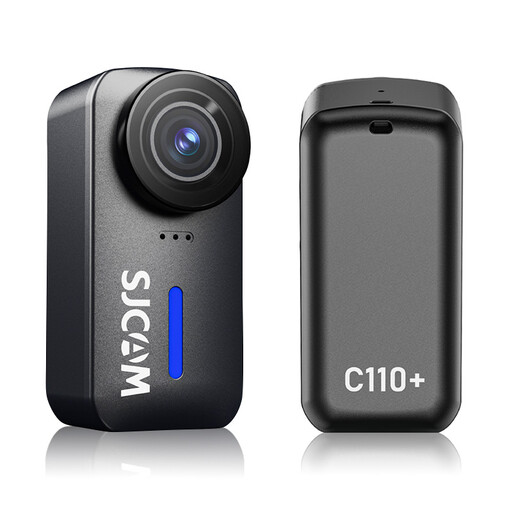
A compact action camera for photos and video on the go, as described in the product information.
The information lists an ultra-wide-angle 170° lens and photos up to 20 MP. The stated waterproof rating of up to 30 m applies when used with the housing.
First, compare the wide-angle setting in 35 mm equivalent from the spot where you’ll be taking photos. Then look at the sensor, maximum aperture and whether you can choose an aperture that keeps enough of the landscape in focus. The widest aperture is not automatically the right setting for every landscape photo.
Keep the camera in a clean case or bag and follow the model’s maintenance instructions. The Consumentenbond advises removing grains of sand promptly, as they can cause damage if they get between moving lens parts; clean the lens carefully.
In the Netherlands, there is no fixed statutory guarantee period; what you can expect from a product depends, among other things, on the product and the circumstances. The Dutch government advises that you contact the seller if a product is faulty; damage caused by your own actions does not automatically entitle you to a free repair.
No, don’t assume you can go anywhere: the rules and signs for the area in question determine which paths are open. PWN states that a dune pass is required for the Noordhollands Duinreservaat; Staatsbosbeheer asks visitors to the Schoorlse Duinen to stay on the paths. Check the conditions for your own route.
First, check which privacy rules apply to the way you plan to share the photo. According to the Dutch Data Protection Authority, photos kept private or shared only within a very limited circle are exempt when used for personal purposes; wider publication may require a lawful basis under the GDPR. This is not a blanket ban on photographing dune landscapes.