
Photographers who want to capture the whole square
You want to fit the square and the surrounding buildings into a single composition. The Consumers’ Association recommends starting with the location and subject when choosing a camera.


Start with what you usually photograph. For a wide view of a square, the wide-angle setting matters most; for architectural details in the distance, look at the optical telephoto range; and for low-light photos, consider the sensor and lens aperture together. The Consumers’ Association highlights zoom range, image quality and size as key considerations. Sony, Panasonic and Canon’s specifications also show that more zoom doesn’t automatically make a camera the best choice in low light.
You want to fit the square and the surrounding buildings into a single composition. The Consumers’ Association recommends starting with the location and subject when choosing a camera.
You want to photograph something such as a tower or architectural detail from one spot. Compare the optical telephoto range and consider whether you can still frame your subject comfortably at high zoom levels.
You carry your camera on an afternoon out and want to keep using it as the light fades. The Consumers’ Association recommends weighing up size, zoom and image quality; also compare the sensor and lens aperture at the zoom setting you use.
A good fit if: you switch between wide views of the square and close-ups during a walk, without needing an exceptionally long telephoto range. Sony specifies a 24–200 mm equivalent range for the RX100M7.
The trade-off: the range is shorter than on the travel zoom models we looked at; Sony lists the lens aperture as f/2.8–4.5.
A good fit if: you want to fill the frame with a distant tower or an ornament from the edge of the square. Panasonic specifies a 24–720 mm equivalent range for the TZ99, while Canon lists 24–960 mm equivalent for the SX740 HS Lite Edition.
The trade-off: both models mentioned have a 1/2.3-type sensor. If you’ll be shooting in low light, also consider the lens aperture and how easy the camera is to handle at high zoom levels.
A good fit if: you prefer to find your composition as you walk and are happy to shoot with a fixed field of view. Ricoh specifies a 28 mm equivalent lens for the GR IV, while Fujifilm lists 35 mm equivalent for the X100VI.
The trade-off: you can’t optically zoom in on a detail across the square. Decide in advance whether the fixed field of view will suit your position.
A good fit if: you mostly take photos nearby and want a wide aperture for shots later in the day. Canon specifies a 24 mm wide angle, 4.2× zoom and f/1.8–2.8 for the G7 X Mark III.
The trade-off: the zoom range is shorter than on a travel zoom; check that the exact version is available before you order.
| What to consider | What to look for | Who is this important for? |
|---|---|---|
| The whole square in one shot | Compare the wide-angle setting in full-frame equivalent and check the framing from a realistic viewpoint. | If I can’t step any further back and want to get the whole square in the frame, a wide composition matters most to me. Around 28% of consumers put a wide view of the square at the top of their list. |
| Details in the distance | Compare the telephoto end of the zoom range in full-frame equivalent, and keep optical zoom separate from digital magnification. | If I want to photograph a tower or architectural detail from the same spot, I focus on usable optical reach. Around 22% of consumers give distant details top priority. |
| Low-light photos | Compare the sensor size and maximum aperture at the zoom settings you use. | If I also take photos in the shade or later in the day, I want to assess the sensor and lens aperture alongside the zoom range. Around 22% of consumers prioritise taking photos in lower light. |
| Carrying and handling | Compare dimensions and weight on the same basis; also consider the screen, viewfinder and controls. | If I’m carrying the camera for the whole walk, I want it to be easy to carry and frame my shots. Around 17% of consumers prioritise portability and handling. |
| Accessories and charging | Check what’s included in the exact package, and find out about the memory card and charging method. | If I want to get ready for my day out without missing anything, I check what else I’ll need and how the battery is charged. Around 11% of consumers prioritise the overall purchase and the accessories they need. |
Canon distinguishes between 40× optical zoom and ZoomPlus on the SX740 HS Lite Edition. These terms don’t describe the same thing.
Compare the optical range in full-frame equivalent millimetres, and assess digital magnification separately for the photos you take.
The travel zoom models we looked at have a 1/2.3-type sensor. A wide zoom range alone doesn’t tell you how well a camera will suit low-light photography.
Compare the sensor size and lens aperture at the zoom setting you expect to use, and decide whether you need the extra telephoto reach.
Canon states that the SX740 HS Lite Edition doesn’t support USB charging. What’s included in the package may affect what else you need.
Before buying, check what’s included with the exact version, and find out about the memory card and charging method.
The RX100M7 we looked at is an option if you want to capture both wide views and details at moderate distances while exploring a city.
The LUMIX DC-TZ99 we looked at is a travel zoom for anyone who wants to switch between a wide view of a square and distant details on a city walk.
The PowerShot SX740 HS Lite Edition we looked at offers a wide optical range; the G7 X Mark III is a separate model with a shorter zoom.
The GR IV is an option if you want to photograph the city with a fixed, wide field of view.
The X100VI is an alternative if you prefer to compose deliberately with a fixed 35 mm equivalent field of view.
This selection includes pocket and digital cameras described in their product titles as being for photography, travel or vlogging. For each model, compare the controls and framing options with what you need for wide views of squares or distant details.
 No image available
The product title describes this as a pocket gimbal camera for photography; check whether its controls suit the way you want to frame shots in the square.
The title lists a 1″ CMOS sensor, 3-axis stabilisation, 2× lossless zoom, built-in storage and a 2″ rotating screen.
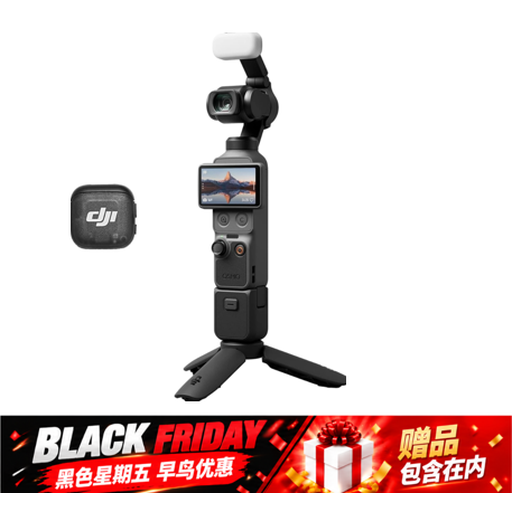 No image available
According to the product title, this is a pocket gimbal camera for vlogging; compare its controls and features with the way you take photos on a day out.
The title lists a 1″ CMOS sensor, 3-axis stabilisation, 2× lossless zoom, 14-stop dynamic range, 107 GB of built-in storage and a handle with a 1/4″ thread.
 No image available
The product title describes this model as a portable point-and-shoot camera for travel and photography; check whether its size and controls suit your walk.
The title lists 80 MP photo resolution, 4K video and 18× zoom.
 No image available
The product title describes this model as a portable point-and-shoot camera for travel and photography; compare its controls with how you want to capture the square.
The title lists 80 MP photo resolution, 5K video and 18× zoom.
 No image available
The title describes this as a digital camera for photography; consider whether its zoom range suits the subjects you want to frame on your day out.
The title lists 12× optical zoom, 4K video, Wi-Fi and a 64 MP camera.
No. For a wide view of a square, focus on the wide-angle setting; a long optical range is designed to bring distant details closer. High zoom can make it harder to frame your shot from a distance.
Charge the battery, check you have a suitable memory card, and try out the controls and framing beforehand. Don’t assume every model supports USB charging: Canon states that the SX740 HS Lite Edition we looked at doesn’t.
Contact the retailer. ACM ConsuWijzer explains that statutory guarantees in the Netherlands depend on what you could reasonably expect from the product; there isn’t one fixed period that applies to every product.
Not necessarily. The Dutch Data Protection Authority says that identifiable people in photos count as personal data. If you keep photos private or share them with only a very small group, the exception for personal or household use may apply; it doesn’t apply to wider publication. Consider each planned publication separately, and don’t assume you have permission just because the photo was taken in a public square.