If you mainly want to capture a quick view of the square or a spontaneous street moment, a fixed wide-angle lens could suit you if you can frame your shot with its angle of view. Choose a compact camera with zoom if you also want to photograph architectural details from the same spot. Check that its wide-angle setting takes in the square you want to capture, and that its controls, lens aperture and size suit the way you plan to use it.
Who is this choice relevant to?
The spontaneous square photographer
You want to grab your camera during a short stop and quickly capture a general view or a street moment. A familiar angle of view and responsive controls matter more than lots of zoom. Ricoh Imaging Europe specifies a start-up time of 0.6 seconds for the GR IV; the Consumers' Association notes that compact cameras offer a range of zoom capabilities.
Photographing the square and its details
You want to switch between the whole square and individual façades or objects from one spot. So look at both the wide-angle setting and the optical zoom range. Canon Netherlands, Sony Netherlands and Panasonic Netherlands publish these specifications for the cameras discussed here.
The evening walker
You also take photos as the light fades and want to weigh up the lens aperture and sensor size alongside portability. Specifications alone cannot guarantee a particular result in low light, so compare them for the model and focal length you plan to use.
What should you look for when choosing?
First decide whether speed and a familiar angle of view matter more to you than zooming in from the same spot. Then compare the wide-angle setting and the telephoto range you need. If you also take photos in the evening, consider the lens aperture and sensor size too.
| What to consider |
What to look for when buying |
Who is this important for? |
| Getting started quickly |
Try the whole process: take out the camera, switch it on, frame your shot and take the photo. Ricoh gives a start-up time of 0.6 seconds for the GR IV; this is not the total time until the photo is taken. |
If I only stop at the square for a short time, I want to be able to get my camera out and take the first shot quickly. Around 36% of consumers rank speed as their top buying priority. |
| Fitting the whole square into the frame |
Compare the wide-angle setting in 35mm equivalent and test the framing from where you can actually stand. The zoom models discussed here start at 24 mm; the Ricoh GR IV has a fixed lens with an angle of view equivalent to around 28 mm. |
If I want to capture buildings and open space together, the wide-angle setting needs to suit where I’m standing. Around 29% of consumers give capturing the whole square top priority. |
| Distant details |
Compare the optical telephoto range in mm equivalent; digital zoom does not add to the lens’s optical reach. Panasonic lists a range of 24–720 mm equivalent at 4:3 for the TZ99. |
If I want to frame a detail on a façade across the square from the same spot, the telephoto end matters. Around 21% of consumers put distant details at the top of their buying priorities. |
| Taking photos as the light fades |
Compare the maximum lens aperture at the focal length you use, and check the stated sensor size too. These specifications alone do not guarantee the result of a shot. |
If I want to photograph the square in the evening too, I want to know which lens aperture and sensor suit the way I’ll use the camera. Around 14% of consumers rank low light as their top buying priority. |
Common buying mistakes
-
Choosing based only on the highest zoom factor
A long telephoto range won’t give you a wider view if the wide-angle setting is too tight for where you’re standing. The sensor size and maximum lens aperture also differ between the models discussed here.
First check the 35mm-equivalent wide-angle setting for where you’ll be standing, then decide how much telephoto reach you need.
-
Confusing start-up time with the time it takes to take your first photo
Ricoh’s stated start-up time of 0.6 seconds for the GR IV doesn’t include taking the camera out, pointing it and choosing your framing.
Try the whole process using the settings and carrying method you actually plan to use.
-
Assuming the zoom gives the same angle of view at every aspect ratio
Panasonic lists different equivalent focal lengths for the TZ99 at 4:3, 3:2 and 16:9, among other aspect ratios.
Compare focal lengths at the same aspect ratio and check the setting you plan to use for your photos.
Camera brands to consider
Ricoh
The GR IV is a fixed wide-angle option for quickly capturing a square or street moment.
- Ricoh Imaging Europe specifies an angle of view equivalent to around 28 mm, an APS-C-format sensor and a start-up time of 0.6 seconds for the GR IV.
- The fixed lens has no optical zoom for architectural details.
Canon
The PowerShot G7 X Mark III combines a wide view with a relatively short zoom range.
- Canon Netherlands specifies 24–100 mm equivalent, a 1.0-type sensor and a maximum lens aperture of f/1.8–2.8 for this model.
- Its telephoto reach is shorter than that of the Sony RX100 VII and Panasonic TZ99 discussed here.
Sony
The RX100 VII combines a wide view, mid-range zoom and a built-in electronic viewfinder.
- Sony Netherlands specifies a 24–200 mm-equivalent range and an electronic viewfinder for the RX100 VII.
- According to Sony, the maximum lens aperture ranges from f/2.8 at the wide-angle end to f/4.5 at the telephoto end.
Panasonic
The Lumix DC-TZ99 is an option if you want to frame both a view of the square and distant details with one camera.
- Panasonic Netherlands specifies 30× optical zoom and 24–720 mm equivalent at a 4:3 aspect ratio.
- Panasonic lists a 1/2.3-inch sensor and f/3.3–6.4 for the TZ99. The equivalent focal lengths change with other aspect ratios; these specifications do not automatically apply to other Lumix cameras.
Joybuy products
The Joybuy products shown range from instant photography to digital cameras with a stated zoom. Check that each model suits your need for a quick shot in a city square.
 No image available
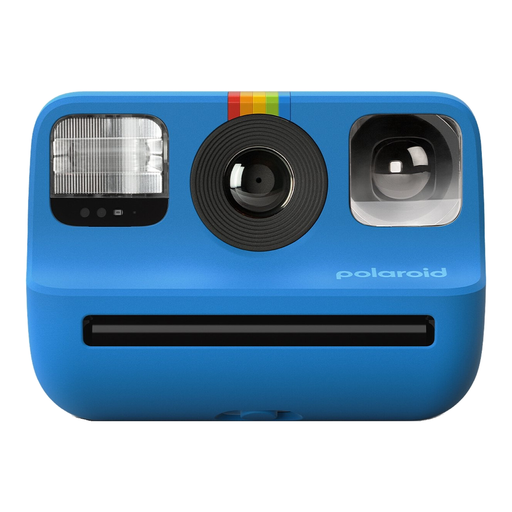
Polaroid Go Gen 2, blue
If you want to take an instant photo on the square, you’ll need Polaroid Go film.
Polaroid Go film is required to make prints.
The product information lists a flash and double exposure.
View at Joybuy
 No image available
KOMERY G7-A, pink
If you want to frame subjects at a distance, the product title lists 18× zoom.
The product title also mentions 4K and 80MP.
View at Joybuy
 No image available
KOMERY G7 5K, white
If you want to zoom in on distant subjects from the same spot, the product information lists 18× optical zoom.
The product title mentions 5K and 80MP.
View at Joybuy
 No image available
Komery W6
If you want to zoom in while framing your shot, the product title lists 12× optical zoom.
The title also mentions 4K, Wi-Fi and 64MP.
View at Joybuy
 No image available
Songdian 5K, black
If you want to frame subjects at a distance, the product title lists 10× optical zoom.
The product title also mentions 5K and 56MP.
View at Joybuy
Frequently asked questions
How can you take a photo of the whole square without a lot of preparation?
Decide in advance where you’ll be able to take photos, then try the widest lens setting and automatic shooting mode from that spot. The zoom models discussed here start at 24 mm equivalent; the Ricoh GR IV has a fixed lens with an angle of view equivalent to around 28 mm. Whether the whole square fits in the frame also depends on where you’re standing.
How do you keep a compact camera ready to use during a city walk?
Check the battery and storage space beforehand, and keep the camera protected but within easy reach. The Consumers' Association recommends using a case or camera bag to protect it from dust and dirt, and carefully cleaning the lens and body.
What if the camera develops a fault shortly after purchase during normal use?
Contact the seller. According to ACM ConsuWijzer, your statutory rights sit alongside any manufacturer’s or seller’s guarantee. If a product develops a fault sooner than you could reasonably expect during normal use, the seller must resolve the issue free of charge under the applicable terms. There is no single fixed statutory guarantee period that applies to every camera in the Netherlands.
Can you publish a photo of the square showing identifiable passers-by?
Not necessarily. The Dutch Data Protection Authority distinguishes between images kept private or shared with a very limited circle and wider publication. The GDPR may apply when people are identifiable; the exception for personal or household use does not cover business use. Consider how you plan to use the image before publishing it.


