If you mainly photograph chips, crazing or maker’s marks, compare close-up capabilities first. If you want to show complete bowls and vases, check whether they fit in the frame from the distance you have available. Manufacturers specify different focusing distances for different zoom settings, and a camera won’t correct colour casts or reflections on its own: your lighting and setup matter too.
Who is this choice relevant to?
Sellers who need to show signs of wear
If you want to capture chips, crazing or maker’s marks as well as overview shots, close-up capabilities are useful. OM Digital Solutions Corporation and Ricoh Imaging Europe specify a macro or close-up range starting at 1 cm for the OM SYSTEM Tough TG-7 and PENTAX WG-90 respectively.
Sellers with a small photo table
If you want to photograph a complete bowl or vase without stepping far back, consider the angle of view and focusing distance together. Canon Netherlands lists different minimum focusing distances for wide-angle and telephoto on the PowerShot G7 X Mark III.
Sellers of glazed or coloured ceramics
If you want colours and surfaces to look true to life, you also need to consider reflections, your lighting setup and white balance. Canon Netherlands explains how different light sources can cause a colour cast.
Which buying considerations matter most?
Compact camera for close-ups
Choose this option: if you mainly want to show small marks or maker’s marks individually.
The trade-off: a short close-up focusing distance doesn’t guarantee that you can frame a whole vase from the same spot.
Camera for overviews and details
Choose this option: if you want to photograph both the whole object and individual details.
The trade-off: the focusing distance can change with the zoom setting. For the Canon PowerShot G7 X Mark III, Canon specifies 5 cm at wide-angle and 40 cm at telephoto.
Travel zoom for a range of subjects
Choose this option: if you want to use the camera for a variety of subjects as well as ceramics.
The trade-off: a wide zoom range alone doesn’t tell you whether you can focus sharply on small objects from the distance available at your table.
Adjust your current setup first
Choose this option: if inconsistent framing, reflections or colour casts are your main problem.
The trade-off: a fixed camera setup and adjusted lighting can’t make up for a lack of close-up capability or a suitable angle of view.
| Consideration |
What to look for when buying |
Who is this most relevant to? |
| Showing small flaws and maker’s marks |
Compare the close-up range at each zoom setting. OM Digital Solutions Corporation and Ricoh Imaging Europe specify a range starting at 1 cm for the Tough TG-7 and WG-90. |
If I want to show small signs of wear clearly, close focusing is my priority. Around 33% of shoppers put detailed photos first. |
| Framing a whole object in a small space |
Measure the distance between the lens and the object, then check the angle of view and focusing distance at your preferred zoom setting. Canon Netherlands lists 5 cm at wide-angle and 40 cm at telephoto for the G7 X Mark III. |
If you want to photograph a complete bowl or vase without placing the camera far from the table, focus on the combination of distance and framing. Around 27% of shoppers have this priority. |
| Showing colour and glossy glaze |
Check whether you can adjust the white balance and have room to reposition the lighting. Canon Netherlands explains that different light sources can cause a colour cast. |
If I photograph coloured or glossy ceramics, I want to assess the colour and surface without relying on the camera alone. Around 20% of shoppers prioritise colour and reflections. |
| Taking consistent product photos |
Check whether a fixed support will fit and whether the screen is easy to use from your shooting angle. Canon Netherlands recommends a tripod for consistent composition. |
If you want to photograph lots of objects with similar framing, a setup you can use the same way each time will be especially useful. Around 20% of shoppers put a repeatable workflow first. |
Common buying mistakes
-
Comparing only the minimum focusing distance
With a zoom camera, the minimum focusing distance can vary between zoom settings. This distance also doesn’t tell you whether a whole object will fit in the frame from that spot.
Check wide-angle and telephoto separately, and compare the stated distances with your object’s dimensions and the space available.
-
Assuming built-in macro lighting will automatically show glossy glaze well
Ricoh Imaging Europe lists six adjustable macro LEDs for the WG-90, but that doesn’t tell you how the light will fall on your glossy ceramics.
Look at a test shot of both matte and glossy ceramics, and consider whether you’ll need to reposition the light.
-
Confusing extra zoom with suitability for a small table
A camera may have a long telephoto range but still need a greater minimum focusing distance at that zoom setting. Sony specifies approximately 8 cm at wide-angle and approximately 100 cm at telephoto for the RX100 VII.
Choose based on your actual shooting distance and desired framing, not just the zoom range.
Camera brands to compare
OM SYSTEM
The Tough TG-7 is a compact option for photographing individual small details on ceramics.
- OM Digital Solutions Corporation specifies a close-up range of down to 1 cm.
- That model specification doesn’t prove that a large vase will fit in the frame from the distance you have available, or that colours will be reproduced accurately.
PENTAX
The WG-90 is worth comparing if you want to photograph individual details close up.
- Ricoh Imaging Europe specifies macro from 1 cm and six adjustable macro LEDs.
- Assess how the lighting looks on glossy glaze, and whether you’ll need additional light.
Canon
The PowerShot G7 X Mark III is worth considering if you want to take both overview shots and close-ups with one compact camera.
- Canon Netherlands specifies a 24–100 mm equivalent range.
- Canon lists a minimum focusing distance of 5 cm at wide-angle and 40 cm at telephoto, so the minimum distance doesn’t apply across the entire zoom range.
Panasonic
The LUMIX TZ99 is a travel zoom worth comparing if you also want to use the camera away from your ceramics setup.
- Panasonic lists a 24–720 mm equivalent range, a tilting screen and a Focus Stacking function.
- Check separately whether the minimum focusing distance suits your subject and zoom setting.
Sony
The RX100 VII is a compact zoom option worth comparing if you’re looking for a wider zoom range.
- Sony Netherlands specifies a 24–200 mm equivalent range.
- Sony lists a minimum focusing distance of approximately 8 cm at wide-angle and approximately 100 cm at telephoto. That telephoto distance is an important trade-off for detail shots on a small table.
Cameras to consider for this setup
The models below are described as cameras for photography in their product titles. For ceramics, check the close-up distance and angle of view separately; the product title alone doesn’t confirm that they’re suitable.
 No image available
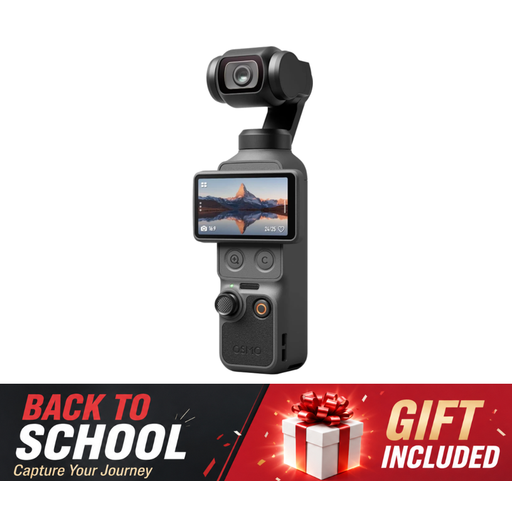
DJI Osmo Pocket 4 Standard Combo
The product title describes this as a video camera for photography. For ceramic details, check whether the lens can focus close enough and capture the framing you want.
The product title lists 1″ CMOS, 4K/240fps, 2× zoom and 107GB of built-in storage.
Joybuy
 No image available
KOMERY G7-A 4K Digital Camera, Pink
The product title describes this model as a point-and-shoot camera for photography. Check whether its focusing distance and angle of view suit your small table.
The product title lists 4K, 80MP UHD and 18X zoom.
Joybuy
 No image available
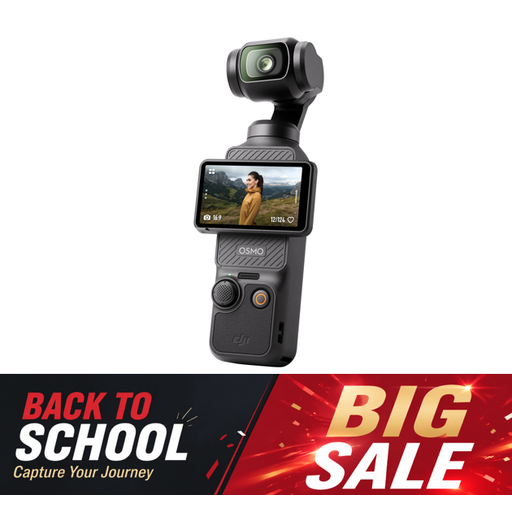
DJI Osmo Pocket 3
The product title describes this as a small video camera for photography. Before buying, check whether the close-up distance suits the details you want to show.
The product title lists 1″ CMOS and 4K/120fps.
Joybuy
 No image available
Songdian Pocket Camera, Pink
The product title describes this model as a pocket camera for photography and video. Check whether the lens can focus close enough to capture small signs of wear.
The product title lists 4K, 44MP and 16X zoom.
Joybuy
Frequently asked questions
Is the minimum focusing distance enough to photograph my whole vase on a small table?
No. Also check whether the vase fits fully in the frame from the distance available and at your chosen zoom setting. For the Canon PowerShot G7 X Mark III, Canon Netherlands lists 5 cm at wide-angle and 40 cm at telephoto.
How do I get started with a repeatable photo setup?
Keep the positions of the camera, background and object as consistent as possible. Canon Netherlands recommends using a tripod for product photography to keep the composition and background consistent; check whether a support will fit on or beside your table.
What can I do if white glaze looks yellow or green in a photo?
First check the light source, then adjust the white balance if needed. Canon Netherlands explains that different light sources can cause a colour cast. Assess your photos under the same lighting you use to photograph your other objects.
What are my rights in the Netherlands if I buy a camera online and want to return it?
According to ACM ConsuWijzer, online consumer purchases generally come with a statutory cooling-off period of up to 14 days after delivery, with some exceptions. Your statutory guarantee also still applies: if a camera doesn’t perform as you could reasonably expect under normal use, the retailer is responsible for providing a solution. A manufacturer’s guarantee doesn’t replace this statutory right.


