Choose according to the smallest mark you want to show and how much room you’ll have to light the surface: a short focusing distance alone doesn’t guarantee a close-up that fills the frame or is well lit. For textured ceramics, also consider focusing at different distances, keeping the camera in a fixed position and controlling the white balance. The specifications for models from OM SYSTEM, Canon, Sony and Panasonic show that focusing distances and features vary by model and zoom setting.
Who is this relevant to?
Sellers who want to show signs of wear
You want to photograph small chips, crazing, maker’s marks or glaze marks individually. Check the close-focusing distance and how much room you’ll have to light the surface; don’t assume the shortest focusing distance will fill the frame.
Collectors with textured pieces
You photograph ceramics with parts at different distances from the camera. A stable set-up and a suitable focusing range may be more important than extra zoom.
Anyone creating consistent product photos
You want to create overview and detail shots of several pieces with similar framing and true-to-life colours. Consider your working space, tripod use, lighting and white balance.
What should you look for when choosing?
Start with the smallest detail you want to show, then check whether you can light it from the distance you need. Consider the zoom setting, depth of field and set-up together: one specification on its own won’t tell you what the finished photo will look like.
| What to consider |
What should you check? |
Who is this important for? |
| Fine surface marks |
Compare the focusing distance with the corresponding zoom setting and the point from which the distance is measured. If possible, take a test shot framing the smallest detail that matters. |
If I want to show a chip or crazing clearly, I need to know whether the detail will fit in the frame and still be possible to light. Around 36% of consumers give visible surface marks top priority. |
| Sharpness across textured surfaces |
Check whether the camera offers focus bracketing or focus stacking, and whether the images need to be combined in the camera or afterwards. |
For a highly textured piece, I want to capture decoration and damage at different distances clearly. Around 29% of consumers prioritise sharpness across textured surfaces. |
| Colour and lighting |
Check the white balance and take test shots under the lighting you plan to use. If you’re buying a kit, check which lighting accessories are included. |
If the glaze colour and surface need to look true to life, I want to be able to assess the lighting and colour reproduction. Around 21% of consumers give colour and lighting top priority. |
| Overview and detail shots |
Measure the available working distance and test the overview and detail framing separately. Check that there’s room for a tripod and background. |
When I’m selling several pieces, I want to take overview and detail photos with consistent framing. Around 14% of consumers prioritise this kind of product photography. |
Common pitfalls
-
Comparing the shortest focusing distance without considering the zoom setting
Canon lists a focusing distance of 5 cm at the wide-angle end and 40 cm at the telephoto end for the PowerShot G7 X Mark III. For the RX100 VII, Sony lists approximately 8 cm at the wide-angle end and approximately 100 cm at the telephoto end. So you can’t assess the distance without considering the setting you’re using to take the photo.
Check the distance, the point it’s measured from and the framing at the exact setting you plan to use to photograph a mark.
-
Assuming focus bracketing automatically combines images
Canon lists focus bracketing for the G7 X Mark III, while Panasonic describes Focus Stacking for the TZ99. These aren’t the same feature descriptions.
Before buying, check what steps you’ll need to take to get the final photo you want with your chosen model.
A workflow involving several shots may take extra time, as you’ll need to select or combine the images.
-
Assuming every camera is supplied with a macro kit
OM SYSTEM lists the LG-1 light guide with specific TG-7 kits; it isn’t automatically included with every version.
Check the exact version and what’s in the box against the accessories your set-up needs.
-
Expecting the same returns policy with every second-hand camera purchase
The Dutch government distinguishes between buying from a business at a distance and buying from a private individual. This can determine which cancellation rights apply.
Check who the legal seller is and assess the camera’s condition and the applicable terms before paying.
Camera brands to consider
OM SYSTEM
The Tough TG-7 is a fixed-lens camera with a microscope mode for capturing small ceramic details.
- OM SYSTEM lists a focusing distance of 1 cm in microscope mode and 12 MP for the TG-7.
- The short shooting distance can make it harder to position your lighting. The LG-1 light guide is included with specific kits, but not necessarily with the camera on its own.
Canon
The PowerShot G7 X Mark III combines a short built-in zoom with manual focusing and focus bracketing.
- Canon specifies a 1.0-type sensor and approximately 20.1 effective megapixels for this model.
- According to Canon, the minimum focusing distance is 5 cm at the wide-angle end and 40 cm at the telephoto end, measured from the front of the lens.
Sony
According to Sony, the RX100 VII has a 24–200 mm equivalent zoom range, making it an option if you also take photos from further away.
- Sony specifies a 1.0-type sensor and a 24–200 mm equivalent range for this model.
- The stated minimum focusing distance ranges from approximately 8 cm at the wide-angle end to approximately 100 cm at the telephoto end. The telephoto range is therefore no substitute for a controlled macro composition.
Panasonic
The LUMIX TZ99 combines a built-in zoom with a Focus Stacking feature described by Panasonic.
- Panasonic describes Focus Stacking as combining images taken at different focusing distances.
- Panasonic links the feature to its 4K workflow. Don’t treat the stated 8-megapixel equivalent for 4K PHOTO as the resolution of a standard photo.
Ricoh
According to Ricoh, the RICOH GR IV has a fixed 28 mm equivalent angle of view and approximately 25.74 effective megapixels.
- The fixed angle of view may suit you if you’d also use the same framing for other types of photography.
- A fixed angle of view doesn’t offer the zoom flexibility of the zoom cameras mentioned above. So check whether the working distance and framing will suit your ceramics.
Cameras at Joybuy
Below are cameras for photography and video. For ceramic photography, check whether the focusing distance, close-up framing and lighting suit the detail you want to capture for each model and lens.
 No image available
KINSI Mini Vlog Camera 4K
The listed rotating lens may be useful if you want to point the camera at an object from different angles. Check separately whether the close-up framing is suitable for ceramics.
The product name lists 64 MP, Wi-Fi, a 330° rotating lens and a 1.72-inch touchscreen. A mini tripod is listed as part of the set.
Joybuy
 No image available
KOMERY G7 5K Digital Camera, White
This point-and-shoot camera is described as being for photography. Before choosing it, check whether the focusing distance and framing will work for small glaze marks.
The product name lists 80 MP, 18X zoom and a portable design. The zoom specification doesn’t say whether it’s optical zoom.
Joybuy
 No image available
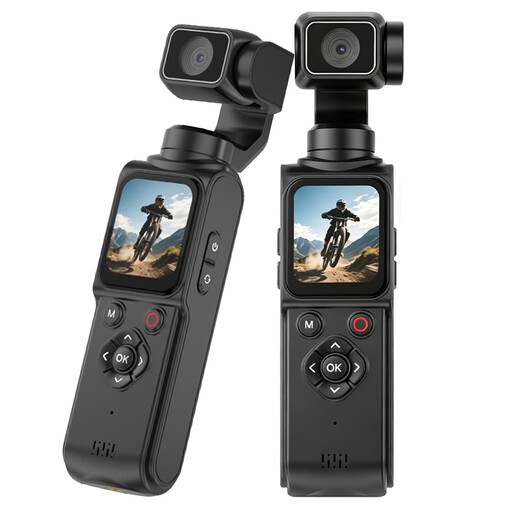
DJI Osmo Pocket 3
This camera is described as being for photography and video. If you plan to use it for ceramics, first check its close-up capabilities for your subject.
The product name lists a 1-inch CMOS sensor, 4K/120fps video, 3-axis stabilisation, fast focusing and a 2-inch rotating touchscreen.
Joybuy
 No image available
Sony ZV-E10 + 16-50mm Zoom, Black
The supplied zoom lens may be useful if you want to take overview and detail shots. Check the focusing distance you need for your subject at each focal length.
The product information lists a supplied 16–50mm zoom lens and 24.2 MP.
Joybuy
 No image available
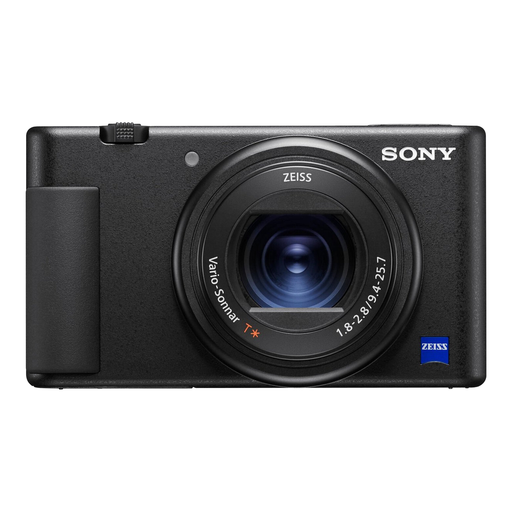
Sony ZV-1 Compact Camera
This compact camera may suit you if you’re looking for one with a built-in zoom. Assess its close-up framing for ceramics separately.
The product information lists 20 MP and 2.7x optical zoom.
Joybuy
Frequently asked questions
Is a focusing distance of 1 cm automatically enough to take a sharp photo of crazing?
No. OM SYSTEM lists 1 cm for the TG-7’s microscope mode, but you also need to check whether the surface you want to photograph will fit in the frame and leave enough room for lighting. The minimum distance can also vary between zoom settings on zoom cameras.
Why should I also consider the zoom setting for close-ups?
Because the minimum focusing distance can vary between zoom settings. Canon lists 5 cm at the wide-angle end and 40 cm at the telephoto end for the PowerShot G7 X Mark III. Sony lists approximately 8 cm at the wide-angle end and approximately 100 cm at the telephoto end for the RX100 VII. In both cases, the distance is measured from the front of the lens.
Is focus bracketing the same as Focus Stacking?
The feature descriptions aren’t the same. Canon lists focus bracketing for the G7 X Mark III, while Panasonic describes Focus Stacking on the TZ99 as combining images taken at different focusing distances. Check what steps you’ll need to take to create the final image you want.
How can I make photos of different ceramic pieces look consistent?
Where possible, use the same camera position and background, perhaps with a tripod, and check the white balance under the lighting you’ll use. Canon describes using a tripod to create consistent product shots; Nikon explains that white balance affects colour reproduction.
Do I always have 14 days to change my mind when buying a second-hand camera online?
No. The Dutch government says that when you buy from a business at a distance, you generally have 14 days to change your mind, including for second-hand products. The same rules don’t apply to online purchases from private individuals, so check who the legal seller is first.


