
Sellers who want to represent colours accurately
Window light can make the colour of glazed or painted ceramics look different. Adjustable white balance and a consistent lighting set-up help you assess colours as you take photos.


To capture colours accurately, control over white balance and a stable set-up are important. For maker’s marks and damage, what matters most is whether the camera can focus at the distance you’ll actually be shooting from. So choose based on your overview and detail shots, and check the focusing distance at each zoom setting rather than relying solely on megapixels or maximum zoom range.
Window light can make the colour of glazed or painted ceramics look different. Adjustable white balance and a consistent lighting set-up help you assess colours as you take photos.
A separate detail shot is often useful for maker’s marks, crazing or damage. Check that the camera can focus and frame the shot at the distance you’ll actually be photographing the item from.
If you photograph different items one after another, a fixed set-up and consistent framing can make the process easier. You won’t need to adjust the background and camera position as often.
| Point to consider | What to look for | Who is this most relevant to? |
|---|---|---|
| Colour of the glaze and decoration | Check whether you can adjust the white balance, and take a test shot in the window light you plan to use. | If you mainly want to show the colour of glazed or painted ceramics accurately, this is worth looking at; around 36% of consumers make colour their top buying priority. |
| Maker’s marks and damage | Compare the focusing distance at each zoom setting and test whether the detail appears large enough in the frame at your actual working distance. | If you want to capture small maker’s marks, crazing or damage separately, focus and framing are key; around 29% of consumers give these details top priority. |
| A series of consistent photos | Check whether you can position the camera securely and repeat the lighting set-up and framing. | If you want to photograph several items for sale using the same set-up, consistency comes first; around 21% choose this as their main consideration. |
| Flexible framing | Check the focusing distance at both wide-angle and telephoto settings, at the distances your workspace allows. | If you want one small camera to frame items of different sizes from different distances, pay particular attention to both the zoom range and focusing; an estimated 14% of consumers prioritise this above all else. |
That short distance may apply only at the wide-angle setting. At the telephoto setting, the same camera may need to be considerably further from the subject.
Check the focusing distance at each zoom setting and, if possible, test the framing of a maker’s mark from the distance you’ll be working at on your table.
A wide zoom range alone doesn’t tell you whether the camera can focus at close range. The framing, distance and focusing ability all determine whether a small detail will appear clearly in the shot.
Compare all three at the working distance you expect to use for your ceramic photos, rather than looking at the zoom figure alone.
For photos you take regularly, consistent framing and similar lighting can be just as important to your workflow as the camera’s features.
Check what comes with the camera and think about where you can position the camera and lighting securely.
You may need to buy a memory card, a stable support or a simple reflector separately; check the details of the specific offer.
The PowerShot G7 X Mark III is a compact zoom option for overview shots and the occasional detail.
The Tough TG-7 is worth considering if very small surface details are your main focus.
The LUMIX DC-TZ99 combines a wide zoom range with RAW shooting and focus stacking.
The RX100 VII could suit you if you also want to frame subjects from further away, as well as photographing ceramics.
This Joybuy selection includes compact camera options to consider for overview and detail shots of ceramics. Check whether the focusing and framing on each model suit the distances in your set-up.
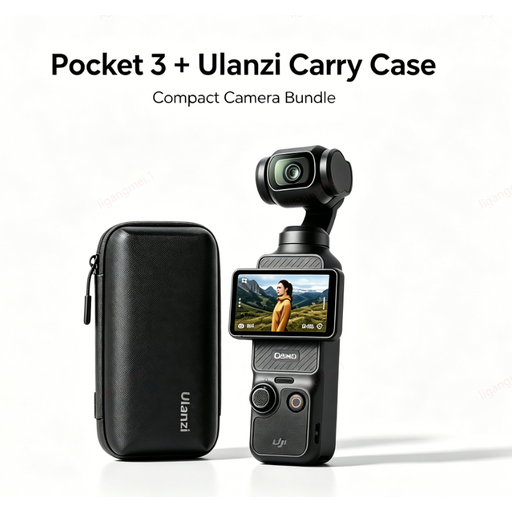 No image available
Check whether this camera offers the framing and focusing distance you need for your ceramic photos.
The product name mentions a Ulanzi storage case.
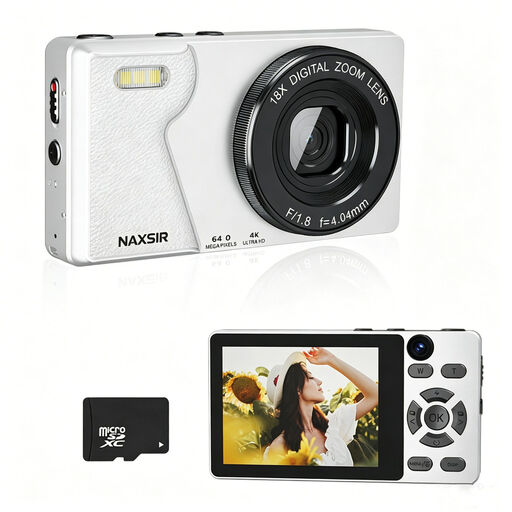 No image available
Check that the camera focuses at your working distance and frames the ceramic detail at a suitable size.
The product name lists 4K Ultra HD, 64 MP photo resolution, 18x digital zoom, autofocus and a 32 GB memory card.
Take a test shot in the light you’ll be using and check the white balance against a neutral reference. Keep the background and lighting set-up as consistent as possible between items. If reflections are distracting, try changing the position of the item or camera, then check the result.
No, a tripod isn’t always necessary. A tripod or a sturdy surface can help keep the camera and framing steady, especially when you’re photographing several items using the same set-up.
Check what comes with the specific camera and whether you’ll also need a suitable memory card, battery or stable support. What you need can vary depending on the camera and set-up.
For eligible distance sales to consumers, you generally have 14 days from delivery to change your mind; ACM ConsuWijzer also includes second-hand products. You’re also entitled to a legal guarantee covering what you could reasonably expect from the product, with the seller as your point of contact. If you’re buying the camera mainly for business use, don’t automatically assume consumer protections apply: ACM ConsuWijzer distinguishes between contracts according to how they are used.