Who is this buying guide for?

Sellers of glossy ceramics

If you want to show the glaze colour and condition of a piece clearly, you also need to consider reflections from lamps, windows and the photographer. Orbitvu Nederland describes these reflections on ceramics and porcelain.

Sellers documenting signs of wear

If you want to photograph marks, crazing or small chips separately, compare the close-up mode and focusing distance at the framing you want. OM Digital Solutions’ manual describes a close-up mode for the TG-7.

Sellers with a small photo table

If you create several listings in the same limited space, it helps to have a frame that suits the object without having to keep moving your whole setup. Canon Nederland recommends using a tripod to create a consistent product photography setup.

What should you look for when choosing?

Compact standard zoom

Best for: mainly overview shots of vases, bowls and tableware, with the occasional detail. Canon lists a 24–100 mm equivalent range for the PowerShot G7 X Mark III.

Keep in mind: the stated minimum focusing distance varies by zoom setting: 5 cm at the wide-angle end and 40 cm at the telephoto end, measured from the front of the lens (Canon Nederland).

Compact camera with close-up mode

Best for: small stamps, crazing or chips that need to be shown separately. OM Digital Solutions’ manual describes the Tough TG-7’s microscope mode, which lets you shoot from 1 cm away.

Keep in mind: shooting close up can leave less room for lighting. Also check that you can frame the whole piece without distracting reflections.

Compact travel zoom

Best for: anyone who also wants to use the camera away from the photo table. Sony lists a 24–200 mm equivalent range for the RX100 VII, while Panasonic lists 24–720 mm equivalent for the LUMIX DC-TZ99.

Keep in mind: a longer telephoto range doesn’t necessarily mean better close-ups. Sony lists a focusing distance of around 8 cm at the wide-angle end and around 100 cm at the telephoto end, measured from the front of the lens.

Compact camera with a fixed wide-angle lens

Best for: anyone who wants to work with a fixed angle of view and no optical zoom. Ricoh lists an equivalent focal length of around 28 mm for the GR IV.

Keep in mind: to change the framing, you’ll need to move the camera or the object, or crop the photo afterwards.

What to consider What should you check? Who should consider this?
Glaze, colour and reflections Check whether you can adjust the exposure and white balance, and whether there’s room around the object for soft lighting. If I sell glossy ceramics, I want to show their colour and condition without distracting bright spots. Around 36% of consumers give glaze, colour and reflections top priority.
Small marks and chips Compare the focusing distance and framing at the zoom setting you want to use for the detail. When a mark or chip needs to be assessed separately, I want to know how large it will appear in the image. Small details about an item’s condition are the top priority for around 29% of consumers.
The whole object in a small space Compare the angle of view in 35 mm equivalent and try framing your largest object from the camera distance you have available. On a small photo table, I want to show the whole piece without having to rearrange my setup each time. Around 21% of consumers put this kind of framing first.
A repeatable workflow Check that the screen is easy to read from where you’ll be setting up, and that the camera fits the tripod you want to use. If I’m creating several listings, I want to be able to repeat the framing and setup easily. This matters most to around 14% of consumers.

Common buying mistakes

  • Looking only at the minimum focusing distance

    The focusing distance can vary considerably depending on the zoom setting. Canon lists 5 cm at the wide-angle end and 40 cm at the telephoto end for the PowerShot G7 X Mark III. For the Sony RX100 VII, Sony lists around 8 cm and around 100 cm respectively.

    Compare the distance and framing at the setting you’ll actually use to photograph a mark or chip.

  • Assuming the camera will eliminate reflections by itself

    Lamps, windows and the photographer can show up in glazed surfaces, as described by Orbitvu Nederland. A camera with a close-up mode won’t automatically remove these light reflections.

    Plan the camera position, space for lighting and background together. Check a test shot for reflections and visible details about the item’s condition.

  • Confusing a wide zoom range with better close-ups on a table

    A long telephoto range and the ability to focus close up are two different things. For the Sony RX100 VII, Sony lists a focusing distance of around 100 cm at the telephoto end.

    If you’ll mainly use the camera on a table, prioritise the framing, working distance and lighting you need. Choose extra telephoto reach mainly if you’ll use it for other subjects too.

Camera brands compared

Canon

The PowerShot G7 X Mark III and SX740 HS Lite Edition offer different zoom and close-up options for anyone looking to combine overview shots with details.

  • Canon specifies a 24–100 mm equivalent range for the G7 X Mark III, with a minimum focusing distance of 5 cm at the wide-angle end and 40 cm at the telephoto end.
  • For the SX740 HS Lite Edition, the stated 1 cm distance applies only at the wide-angle end in macro mode. It doesn’t tell you how a detail will appear at the telephoto end.

OM SYSTEM

The Tough TG-7 is worth comparing if small details about an item’s condition are the most important shots.

  • OM Digital Solutions’ manual describes shooting from 1 cm away and focus bracketing in close-up mode.
  • This distance applies to that mode and doesn’t guarantee that glossy ceramics will be well lit or captured without reflections.

Panasonic

The LUMIX DC-TZ99 is a travel zoom worth comparing if you also want to use the camera away from the photo table.

  • Panasonic specifies a 24–720 mm equivalent range and describes Focus Stacking for macro shots.
  • The versions shown on the Dutch product page we consulted were listed as unavailable. This doesn’t tell you what other sellers have to offer.

Sony

The RX100 VII is a compact zoom option to take with you when extra reach comes in handy away from the photo table.

  • Sony specifies a 24–200 mm equivalent range.
  • According to Sony, the focusing distance is around 8 cm at the wide-angle end and around 100 cm at the telephoto end, measured from the front of the lens. More zoom doesn’t automatically mean better close-ups at short range.

Ricoh

The GR IV is a fixed wide-angle alternative for anyone who doesn’t need optical zoom.

  • Ricoh lists a fixed angle of view equivalent to around 28 mm.
  • To change the framing, you’ll need to move the camera or the object, or crop the photo.

Joybuy cameras for a compact setup

These Joybuy cameras are portable point-and-shoot and zoom models to compare if you’re looking for a compact camera setup.
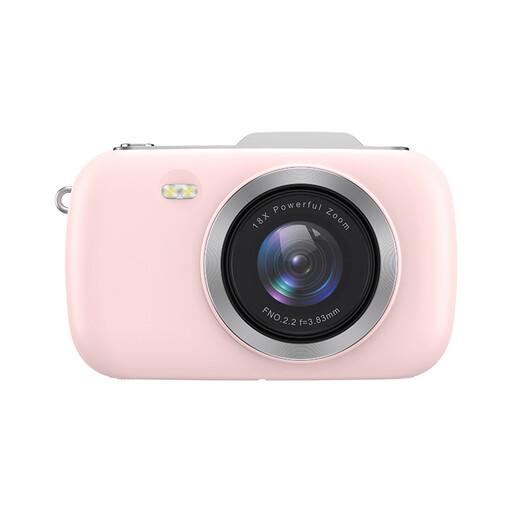
KOMERY G7-A 4K digital camera, pink

KOMERY G7-A 4K digital camera, pink

The product title describes a portable point-and-shoot camera. Check that the framing and working distance suit your ceramic photography.

The product title lists 4K, 80 MP and 18× zoom. It doesn’t specify whether the zoom is optical.

View at Joybuy

KOMERY G7 5K digital camera, white

KOMERY G7 5K digital camera, white

The product title describes a portable point-and-shoot camera. Compare the framing and working distance with the space where you’ll be taking photos.

The product title lists 5K, 80 MP and 18× zoom. It doesn’t specify whether the zoom is optical.

View at Joybuy

Komery W6 digital camera with 12× optical zoom

Komery W6 digital camera

The product description calls it a portable camera for travel. Its zoom could be useful if you want to adjust the framing without moving the camera.

The product description lists 12× optical zoom, 4K, 64 MP and Wi-Fi.

View at Joybuy

Songdian 5K digital camera with 10× optical zoom, black

Songdian 5K digital camera, black

The product title describes a digital camera for photography. Check that the zoom and framing suit the space available around your photo table.

The product title lists 5K, 56 MP and 10× optical zoom.

View at Joybuy

Frequently asked questions

Is a camera with a 1 cm focusing distance always suitable for ceramics?

No. That distance doesn’t automatically apply in every mode or to every type of shot. According to its manual, the OM SYSTEM Tough TG-7’s 1 cm distance applies in microscope mode. Also check that you have room for lighting without distracting reflections, and that you can frame the whole piece.

How can I make photos of different ceramic pieces look consistent?

Keep the camera, background and lighting in much the same place. In its product photography guide, Canon Nederland recommends using a tripod to keep the framing consistent. Adjust the white balance again if the ambient light changes.

What warranty and cooling-off period apply when buying a camera?

For a consumer purchase in the Netherlands, a product must meet the standards you’re entitled to expect. The retailer is your point of contact if there’s a problem, according to the Dutch government. For qualifying online purchases from a business, you generally have a 14-day cooling-off period. According to the Dutch government, purchases from private individuals aren’t covered by the rules for distance selling. If you’re buying as a business for commercial purposes, you can’t automatically assume these consumer rights apply, so check the relevant terms and conditions.

Can I use someone else’s photos in my listing for ceramics?

Don’t assume you can. Business.gov.nl says that original photos may be protected by copyright from the moment they’re taken. It’s best to take your own photos or get permission to use someone else’s images.
