
Reflection photographer
You want to frame the canal and the reflected subject together deliberately, and decide for yourself how much of the reflection to show.


A fixed lens is a good fit if you want to work deliberately with one angle of view from a suitable spot. A compact zoom gives you more freedom if you also want to frame details from the same canal-side position. If you often take photos at dusk, consider the sensor, aperture and stabilisation too. A polarising filter can reduce the reflection you’re trying to capture.
You want to frame the canal and the reflected subject together deliberately, and decide for yourself how much of the reflection to show.
You take photos after sunset too, and want to weigh up aperture, sensor and stabilisation against the zoom range you need.
You can’t get closer to a façade or detail, so optical zoom range is your main consideration.
First decide whether you mainly want to capture a wide composition or frame details from the same canal-side spot. Then consider performance in fading light if you also take photos at dusk.
| What to consider | What should you check? | Who is this important for? |
|---|---|---|
| Reflection and composition | Compare the angle of view from your usual spot. Check whether a tilting screen would help with low-angle shots, and make sure any filter you need is compatible with the model. An ND filter is not the same as a polarising filter. | If I want to frame both the façade and its reflection from where I’m standing, I want to decide for myself how much water remains in the shot. Around 36% of consumers prioritise having this control over composition. |
| Taking photos in fading light | Compare the maximum aperture at the wide-angle and telephoto ends, the sensor type and the stabilisation. Stabilisation reduces camera shake, but it won’t freeze moving water. | When the light fades during a photography club walk, I want to consider aperture, sensor and stabilisation. Around 29% of consumers prioritise taking photos at dusk. |
| Details on the opposite bank | Compare the optical telephoto range in 35mm-equivalent focal lengths; don’t treat digital zoom as offering the same range. | If I can’t get closer to the façade, I want to frame distant details from where I’m standing. Around 21% of consumers prioritise optical zoom range for this. |
| Taking it with you in changeable weather | Check the weight and dimensions, and find out what moisture protection applies to each model. Fujifilm’s weather resistance rating for the X100VI depends on a specific combination of adapter ring and filter. | For a walk, I want to take a camera that suits the conditions, even if the weather changes. Around 14% of consumers prioritise portability and protection from wet conditions. |
A polarising filter can reduce reflections on water. That works against your aim if the reflection itself is the subject.
First decide whether you want to see through the water or capture the reflection. Then check that the filter is compatible with your chosen model.
You may need a model-specific mount as well as the filter.
These types of zoom aren’t the same: a digital zoom figure doesn’t describe the lens’s optical range.
Compare the optical focal lengths in 35mm equivalents, based on your usual spot by the canal.
Moisture protection varies by model. Fujifilm says the X100VI’s weather resistance requires a specific combination of adapter ring and filter; OM SYSTEM specifies the TG-7’s waterproof rating separately.
Read the conditions for the exact model and chosen accessories before taking photos in wet weather.
For the X100VI’s stated weather resistance, Fujifilm specifies an adapter ring and filter.
The RX100 VII is a compact zoom camera worth comparing if you want to switch between a wide view and a tighter crop.
The PowerShot G7 X Mark III and PowerShot SX740 HS Lite Edition offer different zoom options; specifications apply to each model individually.
The X100VI suits anyone who wants to work deliberately with a fixed angle of view from a suitable spot.
The LUMIX DC-TZ99 is a travel zoom option worth comparing if you want to frame distant details from one spot.
The Tough TG-7 is an outdoor compact worth considering if protection from wet conditions is your main priority.
The Joybuy picks below are digital cameras for photography. Check the zoom type listed for each model, especially if you want to frame details from one spot by the canal.
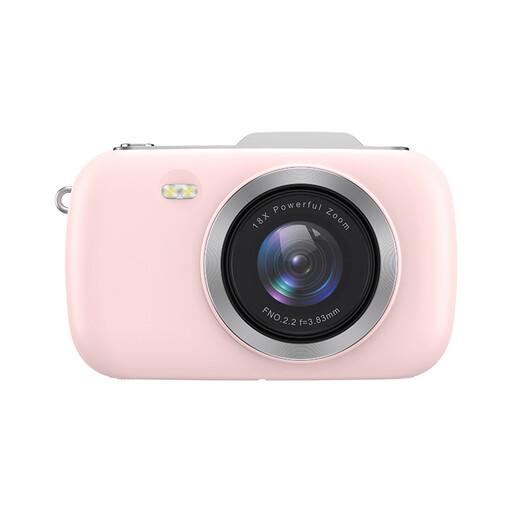 Image unavailable
The stated 18× optical zoom can help you adjust your framing from one spot.
The product name lists 80 MP and 4K video. The product information advises keeping the camera away from water and damp conditions.
 Image unavailable
The stated 12× optical zoom gives you more framing options from one spot.
The product name lists 64 MP, 4K video and Wi-Fi.
 Image unavailable
The product description lists 10× optical zoom for framing details from one spot.
The product name lists 56 MP and 5K video. The product description mentions electronic image stabilisation with a 6-axis gyroscope.
 Image unavailable
The tilting screen can be useful when you’re framing a shot from a low angle.
The listed specifications include a 1-inch sensor, a maximum aperture of f/1.8, 2.7× zoom and 24–70 mm. The product information advises avoiding exposure to water and excessive humidity.
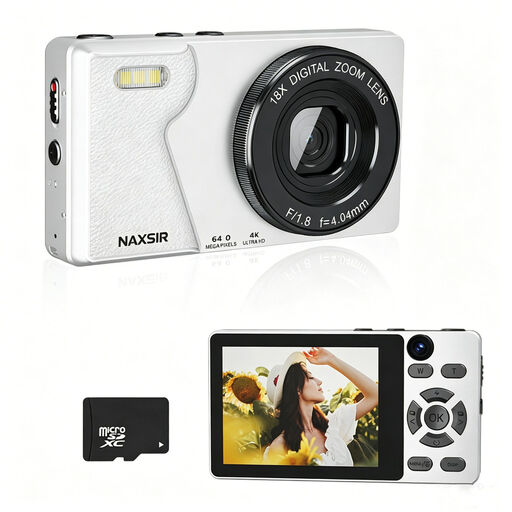 Image unavailable
The camera lists autofocus and digital zoom for adjusting your crop.
The product name lists 64 MP, 4K video and 18× digital zoom. Digital zoom isn’t the same as optical magnification for capturing details on the opposite bank.
Not necessarily: a polarising filter can reduce reflections on water. If you want to keep the reflected façade in the shot, first consider how the filter will affect your composition and check that it’s compatible with your camera model.
That depends on the model’s exposure options and how you want the water to look. Image stabilisation reduces camera shake, but it won’t freeze moving water. Check the settings on the specific model and consider using a stable support.
Check which battery, memory card and any filter mount you’ll need. When you buy as a consumer in the Netherlands, the product must be of satisfactory quality, and the seller is your point of contact if it isn’t. According to the Dutch government, there’s no fixed statutory warranty period in the Netherlands; a manufacturer’s warranty is separate from this legal right.
Not automatically. According to the Dutch Data Protection Authority, identifiable people are personal data. The exception for strictly personal use doesn’t automatically apply when photos are shared more widely or published on behalf of an organisation; an applicable GDPR legal basis is required. Whether publication is allowed depends on the photo, how it’s used and that legal basis.