Start with the field of view you need from the canal bank: a wide-angle zoom gives you room to frame a building and its reflection together, while a prime lens means choosing your position more carefully. A travel zoom brings details on the opposite bank closer, but that alone says nothing about how well it performs in low light. For a clear reflection, your position and the state of the water matter; for long exposures, you’ll also need a stable support and possibly an ND filter.
Who is this guide for?
Canal-view photographer
You want to capture buildings and their reflections together. Canon Netherlands points out that still water can create a calm, mirror-like effect, so choose a field of view and shooting position that suit the place where you’re taking photos.
Light-packing city walker
You’ll be carrying your camera for a while and want to decide in advance whether a fixed field of view will be enough or a built-in zoom would be more convenient. The Consumers’ Association lists size, ease of use and zoom range among the things to compare when choosing a camera.
Considered evening photographer
You sometimes want to use a slower shutter speed and are thinking about support and an ND filter. With a long exposure, camera shake can also blur stationary surroundings, as Nikon explains in its advice on photographing water.
What should you look for when choosing?
| Consideration |
What to look for |
Who is this important for? |
| Framing the canal and reflection |
Compare the wide-angle setting in full-frame equivalent terms and assess the frame from the position you plan to shoot from. A polarising filter can reduce reflections on water. |
If I want to capture the building and its reflection together, I start by considering the frame from the canal bank. This is estimated to be the main priority for around 36% of consumers who want to photograph reflections. |
| Carrying your camera |
Compare dimensions and weight on the same basis, for example including the battery and memory card. Also consider whether a fixed field of view will suit your walk. |
When I’m carrying my camera for a long time, I want a complete kit that suits the crops I expect to make. Portability is the main consideration for around 29% of consumers. |
| Long exposures |
Check whether the camera has an ND filter and whether you want to bring a stable support. Compare maximum apertures at different zoom settings, as these can vary between models. |
If I’m deliberately using a slower shutter speed, I weigh up the extra support against what I want to capture. Around 21% of consumers are estimated to prioritise long exposures. |
| Details on the opposite bank |
Compare the optical zoom range in full-frame equivalent terms with the sensor size and maximum aperture at the telephoto end. A wide zoom range isn’t automatically the right choice for every lighting situation. |
If I want to frame a bridge detail more closely from the same spot on the canal bank, optical zoom range is my first consideration. Around 14% of consumers give distant details top priority. |
Common buying mistakes
-
Buying a polarising filter to make the reflection stronger
A polarising filter can actually reduce reflections on water. That may work against you when the reflection itself is your subject.
First decide whether you want to preserve the reflection or reduce glare. Then check whether a suitable filter can be attached to the camera or lens.
You may need an extra filter or adapter, and that additional equipment may not suit the lightweight kit you want.
-
Confusing the Ricoh GR IIIx HDF with the standard GR IIIx
According to Ricoh, the GR IIIx HDF has a diffusion filter instead of the ND filter found on the standard GR IIIx. The two versions are therefore not equivalent if that ND filter matters to your choice.
Compare the full model name and check which filter function comes with the version you’re considering.
-
Assuming maximum zoom is the answer in every lighting situation
A wide zoom range helps you frame distant details, but it doesn’t tell you on its own how a camera performs in low light. Sensor size and maximum aperture also vary between models.
Choose extra reach if you really need it, and also compare the sensor size and maximum aperture at the telephoto end.
Camera brands to consider
Canon
The PowerShot G7 X Mark III combines a compact zoom with a built-in ND filter, while the SX740 HS Lite Edition is designed for a longer optical zoom range.
- Canon lists a 1.0-type sensor, f/1.8–2.8 and a 24–100 mm-equivalent range for the G7 X Mark III. For the SX740 HS Lite Edition, Canon lists a 1/2.3-type sensor and a 24–960 mm-equivalent range.
- These are model specifications, not an independent test of photos taken around canals. The two models differ in zoom range and sensor size.
Sony
The RX100 VII is an option if you’re looking for a 24–200 mm-equivalent zoom and an electronic viewfinder in a compact camera.
- Sony lists a 1.0-type sensor and a maximum aperture of f/2.8–4.5.
- Sony doesn’t list a built-in ND filter for this model. The stated features don’t prove that the camera will take better canal photos in every situation.
Fujifilm
The X100VI is designed for those who want a fixed 35 mm-equivalent field of view and a built-in ND filter.
- Fujifilm specifies an APS-C sensor, a fixed 23 mm lens and a 4-stop ND filter.
- The fixed field of view calls for a suitable shooting position; you can’t zoom in or out optically to change the frame.
Ricoh
The GR IIIx has a fixed 40 mm-equivalent field of view for those who want a tighter street or detail shot.
- Ricoh lists an APS-C sensor and image stabilisation for the GR IIIx.
- According to Ricoh, the GR IIIx HDF has a diffusion filter instead of the ND filter found on the standard version. So check the full model name.
Panasonic
The LUMIX TZ99 is designed for those who value a built-in 30× travel zoom.
- For the TZ99, Panasonic lists a 24–720 mm-equivalent range at 4:3, a 1/2.3-inch sensor and f/3.3–6.4.
- The telephoto range helps you frame distant details, but it doesn’t prove that the camera will deliver the results you want in low light.
Joybuy products for this topic
The products below include compact cameras, pocket gimbal cameras and a camera with a 16–50mm kit zoom. For each model, compare the stated use and specifications with the field of view and portability you need for canal photography.
 No image available
DJI Osmo Pocket 4 Standard Combo
A pocket gimbal camera for those looking for a compact device with zoom and a rotating screen.
The product title lists a 1-inch CMOS sensor, 4K/240fps video, 3-axis stabilisation, 2× lossless zoom, 107GB of built-in storage and a 2-inch rotating screen.
Joybuy
 No image available
KOMERY G7 5K Digital Camera
A portable point-and-shoot camera for those who want to take a variety of shots while out walking.
The product information lists 18× optical zoom, 80MP and 5K video.
Joybuy
 No image available
DJI Osmo Pocket 3
A pocket camera with a rotating touchscreen for those who want to carry a compact device with them.
The product information lists a 1-inch CMOS sensor, 4K video at up to 120 fps, 3-axis stabilisation, a 2-inch rotating touchscreen and a weight of 179 g.
Joybuy
 No image available
Sony ZV-E10 + 16-50mm Zoom Black
The supplied zoom lens offers a choice of fields of view; check that the camera and lens together suit the compact kit you want to carry.
The product information lists a 24.2 MP APS-C sensor, a 16–50mm zoom lens and a body weight of 343 g.
Joybuy
 No image available
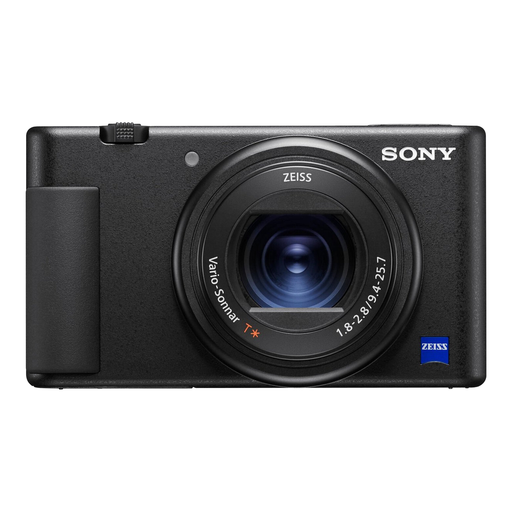
Sony ZV-1
A compact camera with a zoom lens for those who want to choose between different fields of view without carrying a second lens.
The product information lists a 1-inch sensor, a 24–70 mm lens range, a tilting screen and a weight of 267 g.
Joybuy
Frequently asked questions
Will a polarising filter help me photograph a canal reflection?
Not necessarily: a polarising filter can reduce reflections on water. If the reflection is your subject, first consider whether that effect suits your image and check whether a suitable filter can be attached to the camera or lens.
Do I always need a tripod for a sharp reflection?
No, not for every shot. Start with a suitable shooting position and calm water. If you’re deliberately using a slow shutter speed, stable support is important because camera shake can also blur buildings and canal banks.
What if recognisable passers-by appear in my canal photo?
The Dutch Data Protection Authority distinguishes between photos for personal or household use and images shared more widely or for business purposes. Recognisable people may count as personal data; the GDPR may apply to wider or business use, in which case you’ll need an appropriate legal basis. This doesn’t mean every street photo is automatically permitted or prohibited.
What are my rights if a camera bought in the Netherlands breaks down too soon or an online purchase isn’t suitable?
If a camera develops a fault during normal use, the seller must put it right, according to ACM ConsuWijzer; the legal guarantee isn’t automatically limited to two years. Online product purchases generally come with a 14-day cooling-off period after delivery, subject to exceptions that you should check in advance.


