Who is this buying guide for?

Spontaneous canal walker

You want to take a camera with you and capture an unexpected reflection without too much fuss. The Consumers’ Association (Consumentenbond) highlights size, ease of use and zoom range as things to consider when choosing a camera.

Photographer of distant details

You often stop on a bridge or quay and want to switch between a wide view and details on the opposite bank. The specifications from Sony Netherlands and Panasonic Netherlands show the zoom ranges offered by these models.

Photographer of light and water

You want to frame and expose shots yourself from a low position or in changing light. Canon Europe also recommends varying your camera height when photographing reflections.

What should you look for when choosing?

Fixed wide-angle lens

Choose this option: if you usually want to capture a wide canal in a single shot without first choosing a zoom setting. The Ricoh GR IV has a fixed angle of view equivalent to approximately 28 mm; the Fujifilm X100VI is equivalent to approximately 35 mm.

Bear in mind: there’s no optical zoom, so check whether the fixed angle of view is wide enough from where you usually take photos.

Compact zoom camera

Choose this option: if you want to frame both the entire stretch of water and a reflected detail from the same quay. The Canon PowerShot G7 X Mark III offers 24–100 mm equivalent; the Sony RX100 VII offers 24–200 mm.

Bear in mind: according to Sony Netherlands, the Sony’s maximum aperture ranges from f/2.8 at the wide-angle end to f/4.5 at the telephoto end.

Travel zoom

Choose this option: if details on the opposite bank are often more important than simply getting a wide shot. Panasonic Netherlands lists the TZ99 as offering 24–720 mm equivalent at 4:3; Canon Netherlands lists the SX740 HS Lite Edition as offering 24–960 mm equivalent.

Bear in mind: according to their manufacturers, the models mentioned have a 1/2.3-type sensor. A greater zoom range alone doesn’t tell you how a shot will turn out in low light.

What to consider What to look for Who it suits
Taking a shot quickly Try out the controls and size; for fixed lenses, compare options such as 28 mm and 35 mm equivalent. If I want to capture an unexpected reflection quickly while out walking, I need to be able to use the camera straight away. Around 36% of consumers prioritise being able to take a shot quickly.
Wide views and distant details Compare the optical zoom range and equivalent focal lengths; for the Panasonic TZ99, check that 24–720 mm applies to 4:3 shots. If I want to photograph both the entire canal and details on the opposite bank from one bridge, the flexibility to reframe is important. Around 29% of consumers prioritise this option.
Low angles and changing light Check which way the screen tilts and which exposure modes are available; try framing a shot from the camera height you normally use. If I want to photograph close to the water and adjust the exposure, I need to be able to see my frame clearly. Around 21% of consumers prioritise shooting position and exposure control.
Capturing the movement of water Decide whether you want a sharp snapshot or motion blur; check the ND function on the exact camera variant. If I want to choose how moving water looks, I’m happy to accept that a longer exposure may require more time and stability. Around 14% of consumers prioritise control over how water is rendered.

Which buying mistakes can you avoid?

  • Choosing based only on the biggest zoom figure

    Zoom range isn’t the same as low-light performance. The zoom cameras listed also differ in sensor size and aperture.

    Compare the angle of view and aperture at the zoom setting you actually want to use by the canal.

  • Treating a polarising filter and an ND filter as the same thing

    According to Nikon, a polarising filter can reduce reflections on water, while an ND filter limits the light and can allow you to use a longer shutter speed. They have different effects.

    First decide whether you want the reflection to remain visible or whether you want to try a longer exposure. Check the filter options for the exact camera variant.

  • Buying a fixed lens without checking its angle of view

    The Ricoh GR IV, equivalent to approximately 28 mm, and the Fujifilm X100VI, equivalent to approximately 35 mm, will give you different framing from the same spot. Neither has optical zoom.

    Check whether you can fit the whole canal and its reflection into the frame from your usual bridge or quay.

Which camera brands are worth considering?

Canon

The PowerShot G7 X Mark III and SX740 HS Lite Edition offer different zoom options for compact cameras.

  • Canon Netherlands lists the G7 X Mark III as having a 24–100 mm equivalent zoom, tilting screen, 1.0-type sensor and f/1.8–2.8 lens.
  • According to Canon Netherlands, the SX740 HS Lite Edition has 40× optical zoom and a 1/2.3-type sensor. Its greater range alone doesn’t indicate low-light performance.

Sony

The RX100 VII combines a wide-angle setting with telephoto reach for buyers who want to take different shots from one spot.

  • Sony Netherlands specifies 24–200 mm equivalent, a 1.0-type sensor and a maximum aperture of f/2.8–4.5.
  • The RX100 VII specifications don’t list a built-in ND filter; check the exact version if this feature matters to you.

Ricoh

The GR IV and GR IIIx offer fixed angles of view for anyone who knows in advance how wide they want the frame to be.

  • RICOH IMAGING specifies an APS-C sensor and fixed lens equivalent to approximately 28 mm for the GR IV; Ricoh Imaging Europe lists an APS-C sensor and approximately 40 mm equivalent for the GR IIIx.
  • Neither model has optical zoom. Filter functionality varies by version, so check the details for the GR IV, GR IV HDF or GR IIIx separately.

Panasonic

The Lumix TZ99 is a travel zoom option for anyone who wants to switch between a wide view and distant details from one spot.

  • Panasonic Netherlands lists 30× optical zoom, 24–720 mm equivalent for 4:3 shots and a tilting screen.
  • The specifications list a 1/2.3-type sensor; the equivalent focal length changes with a different aspect ratio.

Fujifilm

The X100VI is for anyone who deliberately chooses a fixed 35 mm equivalent angle of view and built-in exposure features.

  • Fujifilm specifies an APS-C sensor, a fixed f/2 lens and a built-in 4-stop ND filter.
  • There’s no optical zoom; to capture a detail on the opposite bank, you’ll need to move closer or crop the image.

Joybuy products for this purpose

This Joybuy selection includes portable cameras with stated zoom or wide-angle features. When comparing them, note the difference between optical and digital zoom, and check which angle of view is right for your usual shooting spot.

KOMERY G7 5K digital camera, white

KOMERY G7 5K digital camera, white

The stated zoom may come in handy if you want to take different shots from one spot.

18× optical zoom; 80MP photos.

Joybuy

KOMERY W6 digital camera

KOMERY W6 digital camera

Optical zoom lets you adjust the framing from the same spot.

12× optical zoom; 64MP; 4K video.

Joybuy
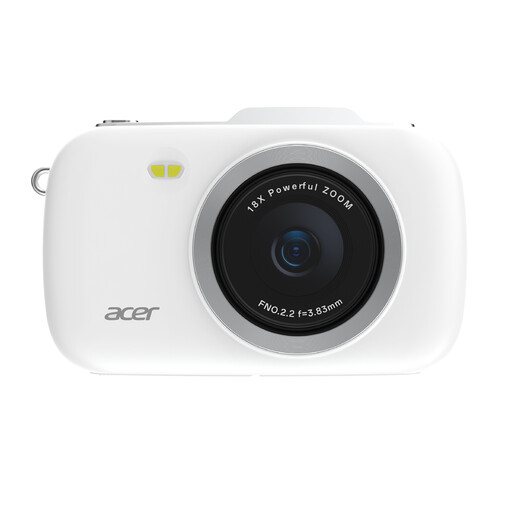
KOMERY G7-A 4K digital camera, white

KOMERY G7-A 4K digital camera, white

The stated zoom is useful if you want to change your framing from a fixed spot.

18× zoom; 80MP; 4K video.

Joybuy

Songdian pocket camera, pink

Songdian pocket camera, pink

This model lists digital zoom for adjusting the framing; digital zoom is different from optical zoom.

16× digital zoom; autofocus; 44MP photos.

Joybuy
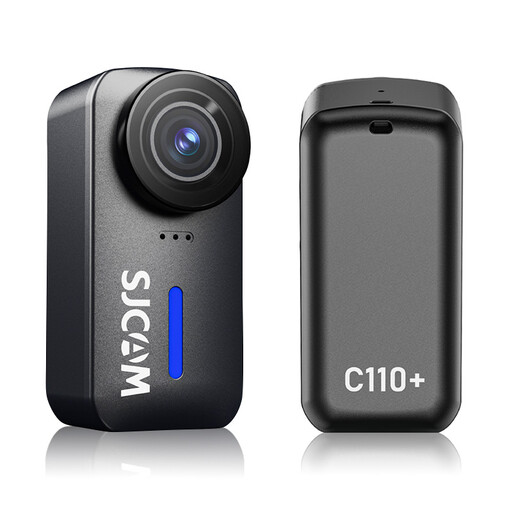
SJCAM C110+ 4K action camera

SJCAM C110+ 4K action camera

The stated ultra-wide-angle lens may suit anyone who wants to capture a wide scene in a single frame.

170° ultra-wide-angle lens; 20MP photos; f/1.8 aperture.

Joybuy

Frequently asked questions

How can I get a clearer reflection without extra accessories?

Look for still water and change your camera height to see where the reflection appears most clearly in the frame. Canon Europe recommends this as a shooting technique, but it can’t guarantee a perfectly still reflection on every canal.

Can a polarising filter help me see reflected buildings more clearly?

Not always: according to Nikon, a polarising filter can reduce reflections on water. If the reflection itself is your subject, check the effect before using one.

What should I check about accessories and the warranty?

For the exact version, check which battery, charger and memory card are included or supported. ACM ConsuWijzer explains that statutory guarantees in the Netherlands don’t have a fixed two-year limit: what you can expect depends on factors including the product and its price, and you should contact the seller to make a claim. For online purchases, you generally have a statutory cooling-off period of up to 14 days after delivery; check which exceptions and returns terms apply to your purchase.

Can I share a canal photo publicly if passers-by are recognisable?

It depends on how you use the photo. According to the Dutch Data Protection Authority (Autoriteit Persoonsgegevens), the exception for personal or household use doesn’t apply when you share photos more widely, for example on a public social media page. In that case, you need a legal basis under the GDPR to process images of identifiable people; don’t assume that taking photos outdoors automatically gives you the right to publish them.
