
Photographer creating exhibition prints
You want to assess the autumn colours and tree structure at the final print size, even after cropping the photo. Adobe explains how print size, resolution and viewing distance are related.


If you mainly want to capture the line of trees, the water and their surroundings, a fixed wide-angle lens is a good fit if you can change your position. For details on the opposite bank, optical zoom is more useful. Then compare the file after your intended crop with the print size. The greatest zoom range isn’t automatically the best choice: sensor size, aperture and the conditions you’ll be shooting in all matter too.
You want to assess the autumn colours and tree structure at the final print size, even after cropping the photo. Adobe explains how print size, resolution and viewing distance are related.
You want to capture the trees, water and surroundings together from an available vantage point. The wide-angle end of the lens matters here; Canon, Sony, Ricoh and Panasonic publish the angles of view for their models.
You’re staying by the canal and want to bring branches or autumn leaves on the opposite bank closer in the frame. Compare optical telephoto reach with sensor size and aperture, as the Consumentenbond recommends when assessing cameras with a high zoom range.
First decide whether you want to capture the surroundings in a single frame, get closer to details from the same spot, or simply need a usable file for an exhibition. The percentages below reflect these four different priorities.
A good fit if: you mainly photograph the trees, canal and reflections as a wide scene, and can change your position.
Trade-off: Ricoh gives the GR IV a fixed angle of view equivalent to around 28 mm on a full-frame camera; from the same spot, you can’t use optical zoom to bring a distant tree closer.
A good fit if: you want to switch between a wide canal view and less distant details from one spot.
Trade-off: Canon specifies a 24–100 mm full-frame equivalent lens with an f/1.8–2.8 aperture for the PowerShot G7 X Mark III; its telephoto reach is shorter than that of the Sony and Panasonic models mentioned here.
A good fit if: you want to frame details on the opposite bank but also start with a wide angle of view.
Trade-off: Sony specifies a 24–200 mm lens with an f/2.8–4.5 aperture for the RX100 VII; the maximum aperture gets smaller as you zoom in.
A good fit if: capturing distant details from a fixed position is a priority.
Trade-off: Panasonic gives the LUMIX DC-TZ99 a 24–720 mm full-frame equivalent range at 4:3, with a 1/2.3-inch sensor and an f/3.3–6.4 aperture; a long zoom range alone says nothing about print quality.
A good fit if: ease of use matters more to you than an extensive telephoto range.
Trade-off: Kodak PIXPRO specifies a 28–140 mm full-frame equivalent range for the FZ55 and JPEG as its photo file format; assess a sample file at your intended print size.
Adobe cites 300 ppi as a common benchmark for high-quality prints viewed up close. Larger prints viewed from further away can also work at a lower ppi, so the intended paper size and viewing distance still matter.
| Buying concern | What to look for when buying | Who is this important to? |
|---|---|---|
| File for printing | Check the pixel count after cropping at your chosen paper size, and take the viewing distance into account. | When I crop a photo for an exhibition, I want to know whether the file will still have enough detail at the final size. Around 33% of consumers prioritise having a usable file for printing. |
| Wide view of the trees and canal | Compare the angle of view at the wide-angle end. Canon, Sony and Panasonic specify 24 mm; Ricoh gives the GR IV a fixed angle of view of around 28 mm. | I want to fit the line of trees, the water and the surroundings into one frame from the spot available to me. Around 27% of consumers prioritise this wide view. |
| Details on the opposite bank | Compare the equivalent telephoto focal length, sensor and aperture. Canon specifies 100 mm, Sony 200 mm and Panasonic 720 mm at 4:3; the Consumentenbond warns that a high zoom range often goes hand in hand with a smaller sensor and makes framing more difficult. | When I want to capture a distant branch in more detail from the canal bank, optical telephoto reach matters more to me than simply having plenty of room to crop. Around 20% of consumers prioritise distant details. |
| Changeable autumn light | Compare the stated maximum aperture at the focal length you’ll use, and look at sample photos taken in similar light. A specification can’t guarantee results at dusk. | I want to be able to assess the exposure settings my camera offers as the daylight changes. Around 20% of consumers prioritise being able to shoot in changeable light. |
The Consumentenbond warns that a high zoom range often goes hand in hand with a smaller image sensor, and that it can be harder to keep a subject in frame when zoomed in heavily.
Compare zoom range, sensor size and aperture separately. Also assess a sample file after cropping at your intended print size.
A disappointing test print could mean spending extra time taking new photos.
Cropping leaves fewer original image pixels for the print; digital zoom is also not the same as optical zoom.
Compare the optical focal lengths and make a test print from a file cropped as you actually intend to use it.
Ricoh gives the GR IV a fixed angle of view equivalent to around 28 mm on a full-frame camera. From the same spot, you can’t use optical zoom to bring a distant treetop closer.
Check whether you can frame both the wide view and the details you want from accessible locations.
ACM ConsuWijzer distinguishes between statutory guarantees and the terms set by a seller or manufacturer. If a product is faulty, the seller is responsible; what you can expect from a product depends, among other things, on normal use.
Keep your proof of purchase and discuss any fault with the seller. Assess the situation in light of the specific circumstances.
An extended warranty or repair may involve costs, which you can discuss with the seller first.
The PowerShot G7 X Mark III is a compact zoom for wide canal views and less distant details.
According to Sony, the RX100 VII combines a wide angle of view with greater telephoto reach than the Canon G7 X Mark III.
The GR IV is a compact camera with a fixed wide-angle lens, suited to wide views when you can change your position.
The LUMIX DC-TZ99 is a pocket-sized travel zoom for anyone who wants to frame distant details from one spot.
The FZ55 is a simple compact camera to compare if ease of use matters more to you than an extensive zoom range.
These Joybuy product picks are compact cameras described in their product titles as suitable for photography. For each model, compare the stated type of zoom and check whether it suits the crop and print you have in mind.
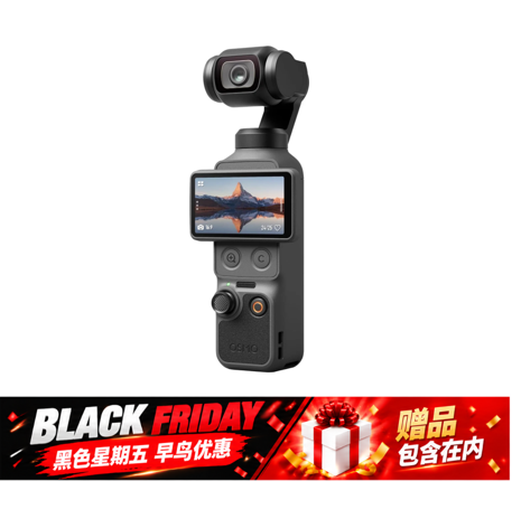 No image available
The product title describes this model as a pocket camera for photography; check whether its controls and framing suit still photos of the canal.
The title lists a 1-inch CMOS sensor and 2× zoom.
 No image available
The product description lists landscapes and close-ups as possible uses; compare the stated zoom with the distance to the trees you want to photograph.
The product title lists 12× optical zoom and 64 MP.
 No image available
The product title mentions photography and video; for distant tree details, it’s important to distinguish between types of zoom.
The title lists 16× digital zoom. Digital zoom is not the same as optical zoom.
 No image available
The product description mentions photography and optical zoom; check the file after any cropping at the final print size.
The product information lists 10× optical zoom. The stated 56 MP is interpolated; the description also lists 16 MP for the front sensor and 12 MP for the rear camera.
Find out the intended paper size and viewing distance, then assess the file after its final crop. Divide the number of pixels across the print width by that width in inches to calculate the ppi. Adobe cites 300 ppi as a common benchmark for high-quality prints viewed up close; larger prints viewed from further away can also work at a lower ppi.
Check the battery and memory card, then try out both the widest angle of view and the telephoto setting you want from your chosen spot. In changeable light, test the exposure settings on the exact model. The Consumentenbond points out that it can be harder to keep a subject in frame when zoomed in heavily.
No. ACM ConsuWijzer explains that the seller is responsible for the statutory guarantee on a faulty product; the manufacturer’s warranty doesn’t replace those rights. Whether a specific fault is covered depends, among other things, on what you could reasonably expect from the product under normal use.
First consider who took the photo and how it will be shared. The Dutch Data Protection Authority considers recognisable people to be personal data. When an organisation photographs recognisable visitors and publishes the images, it needs a lawful basis under the GDPR; according to the Dutch Data Protection Authority, consent is often the most obvious basis. Whether a particular photo can be displayed depends on how recognisable the people are, who took it, who organised the exhibition and how the photo is shown.