What to consider when choosing
Zoom camera
A good fit when: you want to frame both a wide view and details across the water from the same spot on the towpath.
Trade-off: Sony, Panasonic and Canon specify different zoom ranges. Those specifications alone don’t tell you which camera performs better in low light.
Fixed wide-angle lens
A good fit when: you usually photograph the towpath, buildings and reflections together, and don’t need much telephoto reach.
Trade-off: Ricoh specifies a fixed 28 mm equivalent lens for the GR IV, while Fujifilm specifies a fixed 35 mm equivalent lens for the X100VI. You can’t optically zoom in from the same spot.
The main things to consider are the angle of view you want, shooting as the light fades, reach across the water and control over moving water.
| What to consider |
What should you look for? |
Who is this for? |
| Full canal scene |
Compare the 35 mm equivalent wide-angle focal length and the weight including the battery. Consider whether a fixed angle of view is wide enough from your usual position. |
If I want to go for a walk with minimal kit and keep both banks in the frame, portability and a wide view come first; around 33% of consumers prioritise this combination. |
| Shooting at twilight |
Compare sensor size, the maximum aperture at the zoom setting you’ll use and manual shutter speed. Also consider whether you want to bring a stable support. |
In the evening, I want to weigh up which settings suit my scene without carrying unnecessary equipment; around 27% of consumers prioritise shooting in low light. |
| Distant details |
Compare the optical telephoto reach in 35 mm equivalent and the sensor size. Think about how often you’ll capture details from the same spot on the towpath. |
If I can’t get closer to a building or reflection, I want to be able to zoom in optically; around 20% of consumers prioritise reach across the water. |
| Movement in the water |
Check for manual shutter speed, the option to use a stable support and a filter mount. Use a polarising filter only if you deliberately want to reduce reflections. |
If I want to change how moving water looks, I’ll weigh up shutter speed and stability without unintentionally losing sight of my subject; around 20% of consumers prioritise control over how water appears. |
Joybuy camera options
Use these Joybuy camera options as a starting point for your comparison, and check the listed zoom, angle of view and controls for each model against the spot you have in mind.
 No image available
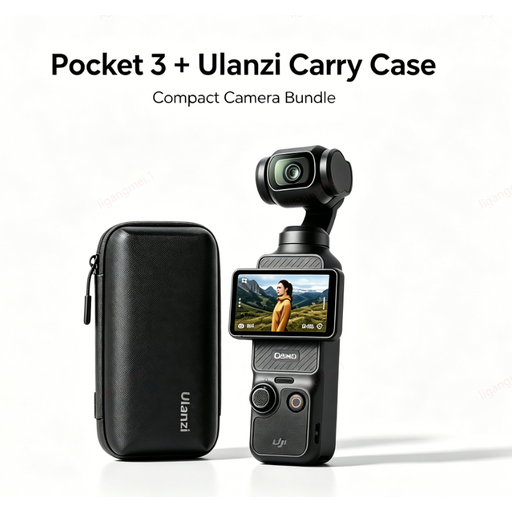
DJI Pocket 3 camera with Ulanzi storage case
The product title lists the camera with a Ulanzi storage case. Check whether this version suits the angle of view and controls you need for canal photography.
View at Joybuy
 No image available
KOMERY G7-A 4K camera, 80MP, 18X zoom, pink
The product title lists 18X zoom. If you want to reframe from one spot on the towpath, check which type of zoom and angle of view this version offers.
The title also lists 4K and 80MP. Treat these as product claims and check which features matter for how you plan to use the camera.
View at Joybuy
 No image available
KOMERY G7 5K camera, 80MP, 18X zoom, white
The title lists 18X zoom, which could be useful if you want to reframe from the same spot. Check the angle of view and zoom specification for this version.
5K and 80MP are also listed in the product title. Compare the shooting and control options with how you intend to use the camera.
View at Joybuy
 No image available
Komery W6 camera, 12X optical zoom, 4K, WiFi, 64MP
The title lists 12X optical zoom, which lets you reframe from the same spot. Check whether the range and controls suit the framing you want.
The product title also lists 4K, WiFi and 64MP. Consider which of these stated features you actually need.
View at Joybuy
 No image available
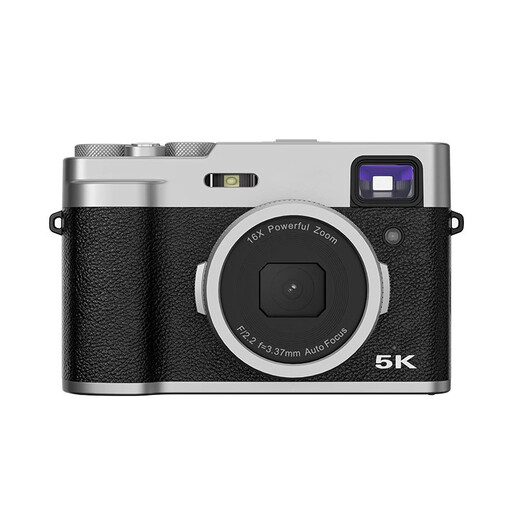
Songdian Retro 48MP camera, 5K, 2.8-inch LCD screen, optical viewfinder, black
The product listing mentions autofocus and an optical viewfinder. Check whether the viewfinder and controls suit the way you want to frame shots from the towpath.
The title also lists 48MP, 5K and a 2.8-inch LCD screen. These product claims distinguish this version.
View at Joybuy
Frequently asked questions
Which filter should I use if I want the reflection to remain in the photo?
Start without a polarising filter and check the reflection on the screen or in the viewfinder. Nikon Netherlands explains that a polarising filter can reduce reflections on water, so use one only if that’s the effect you want. An ND filter has a different purpose: reducing the light, for example to allow a longer shutter speed.
Is image stabilisation enough for a long exposure of canal water?
Not necessarily if you want a long exposure with the surrounding scene sharp and still: camera movement can blur the whole image. Nikon Netherlands advises using a stable setup for water photography. Only bring a suitable ND filter if you want to reduce the light for your chosen exposure.
What should I consider for charging and care while I’m out?
Check the manual and what’s included in the box for the exact version before planning to take a charging cable, charger or spare battery. Canon states that the PowerShot SX740 HS Lite Edition doesn’t support USB charging. Follow the model-specific manual if your camera gets wet or dirty, and don’t assume it’s water-resistant.
Is the statutory guarantee in the Netherlands always exactly two years?
No. According to ACM ConsuWijzer, the Netherlands’ statutory guarantee doesn’t have a fixed term of exactly two years; its duration depends on what you can reasonably expect from the product. If something goes wrong, the retailer is your point of contact. Any manufacturer’s warranty doesn’t replace your statutory rights.
Can I share canal photos publicly if passers-by are recognisable?
The exception for personal or household use doesn’t apply to wider distribution, such as publicly sharing photos in which people are recognisable. The Dutch Data Protection Authority says that the relevant GDPR legal basis depends on the purpose and circumstances. This isn’t blanket permission or a general ban on every photo taken in a public place.


