To capture trees, quaysides and reflections in one shot, a useful wide-angle setting is essential; for leaves and architectural details on the opposite bank, optical zoom matters more. In low light, lens speed and sensor size are worth considering, while weather resistance is a separate feature that varies by model.
Who is this guide for?
Canal-side walkers who want to capture the whole scene
You want to include trees, quaysides and their reflections without carrying a bag of interchangeable lenses. Start by considering the wide-angle setting and the size of camera you’ll actually want to carry.
Photographers capturing details on the opposite bank
You often stay on the same bank and want to bring leaves, branches or architectural details closer. Optical telephoto reach matters more here than a high digital zoom figure.
Photographers in changeable autumn weather
You take photos as the light fades or when it rains. Distinguish between a faster lens for low light and proven water resistance for use in wet conditions.
What to look for when photographing canals
| What matters |
What to look for |
Who will value this most? |
| A wide view of the canal |
Compare the 35mm-equivalent wide-angle setting and the camera’s size; try framing a shot from the distance you’d usually use. |
From a narrow quayside, I want to capture trees, water and reflections in one shot without bringing extra lenses. Around 36% of consumers prioritise a wide view and a portable set-up. |
| Details on the opposite bank |
Check the optical zoom range in mm equivalents; don’t count digital or extended zoom as extra optical reach. |
If I want to frame leaves or architectural details larger from the same bank, I focus on optical zoom. Around 29% of consumers prioritise capturing distant details. |
| Taking photos in low light |
Compare sensor size and maximum aperture across the zoom range, not just the megapixel count. |
As the autumn light fades, I want to know how the lens and sensor are specified for the angle of view I’ve chosen. Around 21% of consumers prioritise low-light photography. |
| Use in the rain |
Look for an explicit water-resistance rating for the exact model and follow the instructions for covers and seals. |
If I want to keep taking photos in wet weather, I won’t assume a camera is protected based on a general description of it as suitable for outdoor use. Around 14% of consumers prioritise weather resistance. |
Common pitfalls when buying a compact camera
-
Assuming the biggest zoom figure means greater optical reach
Alongside optical zoom, manufacturers may also list digital or extended zoom. These terms don’t mean the same thing.
Compare the optical mm equivalents and sensor size of the exact models.
-
Choosing a fixed focal length camera without trying the framing
With a fixed angle of view, you can’t optically zoom out from the same bridge to capture a wider reflection.
Check from your intended shooting distance whether the trees, quay and water all fit in the frame.
-
Assuming a standard compact camera is waterproof
The stated water resistance of the OM SYSTEM Tough TG-7 applies to that specific model, not to compact cameras in general.
Check the protection rating for the exact model and follow the care instructions.
-
Confusing an extended warranty package with your statutory rights
According to the Dutch government, your statutory rights remain in place alongside the manufacturer’s warranty and any additional warranties.
Read what additional cover the package offers before deciding whether to buy it.
Camera brands at a glance
Canon
The PowerShot G7 X Mark III and SX740 HS Lite Edition offer two different zoom options.
- Canon lists a 24–100 mm-equivalent range and f/1.8–2.8 for the G7 X Mark III, and a 24–960 mm-equivalent range and 40× optical zoom for the SX740 HS Lite Edition.
- The SX740 HS Lite Edition has a 1/2.3-type sensor. These specifications apply to these models and aren’t a judgement on all Canon cameras.
Sony
The RX100 VII combines a stated 24–200 mm-equivalent range with a built-in electronic viewfinder.
- Sony specifies a 1.0-type sensor and 8× optical zoom for this model.
- Sony gives the maximum aperture as f/2.8 to f/4.5; these specifications aren’t a real-world test in twilight.
Panasonic
The LUMIX TZ99 is a travel zoom worth considering if you want to frame a range of shots from the quayside.
- Panasonic specifies 30× optical zoom and a 1/2.3-inch sensor.
- The stated equivalent angle of view varies by aspect ratio; the specifications don’t prove low-light performance.
Fujifilm
The X100VI is an option if you compose your shots using a fixed angle of view.
- Fujifilm specifies an APS-C sensor and a fixed 35 mm-equivalent lens.
- The lens doesn’t offer optical zoom for details on the opposite bank.
Ricoh
The GR IIIx is worth considering if its fixed angle of view suits the framing you want.
- Ricoh specifies an APS-C sensor and a fixed 40 mm-equivalent angle of view for the GR IIIx.
- Without optical zoom, you can’t quickly switch from the same spot to a much wider canal composition or distant details.
OM SYSTEM
The Tough TG-7 is designed for use in conditions where water protection matters.
- OM Digital Solutions specifies that the TG-7 is waterproof to 15 m and has a 25–100 mm-equivalent range.
- The protection rating applies to the TG-7 and shouldn’t be assumed to apply to other models.
Joybuy cameras for compact photography
This selection includes compact zoom cameras, a wide-angle action camera and a camera kit with a 16–50mm kit zoom. Check that the stated framing and conditions of use suit your viewpoint along the canal.
 No image available
Komery W6 camera with 12× optical zoom
The stated optical zoom is worth considering if you want to reframe your shot from a single viewpoint.
12× optical zoom; 4K mentioned in the product name.
View at Joybuy
 No image available
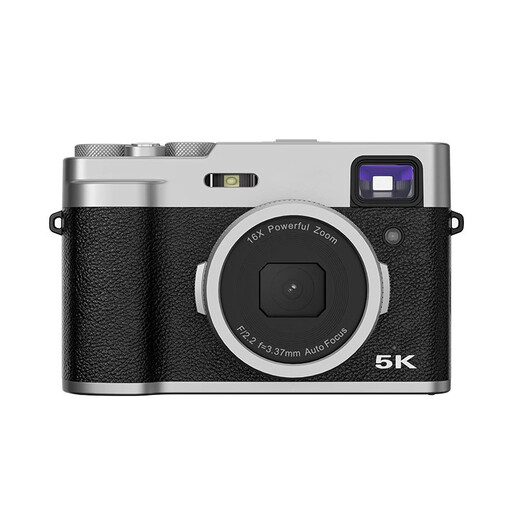
Songdian Retro 48MP Compact Camera, black
The optical viewfinder and autofocus are listed in the product name; check that the fixed angle of view suits the canal scene you want to capture.
5K Ultra HD listed; 2.8-inch LCD; optical viewfinder; autofocus.
View at Joybuy
 No image available
Songdian 5K 56MP camera with 10× optical zoom, black
The stated optical zoom is useful if you want to frame details from a single viewpoint.
10× optical zoom; front and rear cameras.
View at Joybuy
 No image available
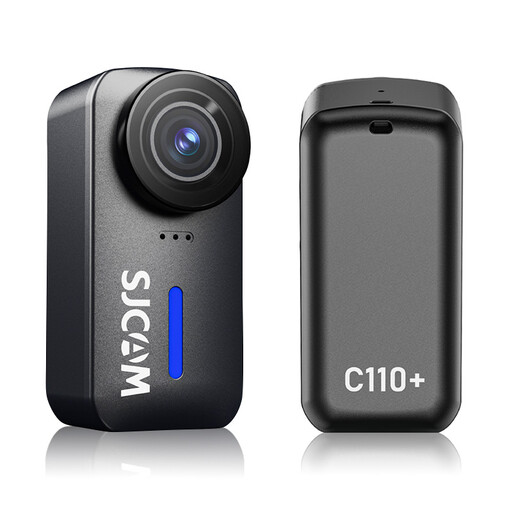
SJCAM C110+ 4K action camera
The stated ultra-wide angle may suit wide scenes; check that the field of view works for the photo you want to take.
170° ultra-wide-angle lens; f/1.8; 20MP photo mode listed; waterproof to 30 m with housing, according to the product name.
View at Joybuy
 No image available
Sony ZV-E10 with 16–50mm zoom lens, black
The kit zoom gives you a range of framing options without changing lenses; bear the moisture warning in mind.
16–50mm power zoom kit lens; product information lists a 24.2 MP APS-C sensor. Do not expose to moisture.
View at Joybuy
Frequently asked questions
How can I stop a reflection affecting the exposure?
Check a test shot and adjust the exposure compensation if needed. Canon notes that a bright reflection on the water can result in an underexposed photo; the correction required depends on the scene.
What do I need to get started after buying the camera?
Check what’s in the box, which memory card is compatible and how to charge the battery. Canon lists a battery and a separate battery charger in the box for the SX740 HS Lite Edition, and says that USB charging isn’t supported; this doesn’t automatically apply to other models.
What are my warranty rights in the Netherlands if my camera develops a fault?
When you buy a product, you’re entitled to expect it to be of satisfactory quality, and the seller must provide a solution if there’s a qualifying fault. According to the Dutch government, the Netherlands has no fixed statutory warranty period; a manufacturer’s warranty or an extended warranty you buy doesn’t replace those rights.
Can I post a canal photo publicly if passers-by are recognisable?
Not necessarily: the exception for personal or household use doesn’t apply to wider publication of photos in which people are recognisable, and you need a lawful basis under the GDPR. The Dutch Data Protection Authority distinguishes between this kind of publication and photos that stay private or are shared only with a very limited group; a photo without recognisable people needs to be assessed differently.


