
Façade explorer
You want to frame an entire canal house or street scene as you walk, without carrying lots of equipment. How much room you have to step back will determine how wide an angle you need.


Start with where you’ll be taking your photos: a wide-angle lens lets you frame an entire façade from a narrow canal-side path, while optical zoom is useful for capturing details on the opposite bank. Then compare the aperture at the zoom setting you’ll use and check the stabilisation. In the rain, only rely on protection specified for the exact model, and remember that no single specification guarantees a successful photo.
You want to frame an entire canal house or street scene as you walk, without carrying lots of equipment. How much room you have to step back will determine how wide an angle you need.
You’re staying on the public path and want to capture brickwork or ornaments on the opposite bank. Optical reach and the lens’s brightness at your chosen zoom setting will both matter.
You take photos in changing morning light or keep walking when it’s wet. Consider image stabilisation and lens brightness separately from any explicitly stated water or weather resistance.
A good fit if: you mainly photograph façades and street scenes, and can choose a suitable spot on the canal-side path. Ricoh Imaging Europe lists the GR IV as having a fixed angle of view equivalent to approximately 28 mm on a full-frame camera.
Trade-off: a fixed lens won’t let you bring an ornament on the opposite bank closer with optical zoom. Fujifilm lists the X100VI as having a fixed angle of view equivalent to 35 mm, giving you a tighter frame from the same spot.
A good fit if: you want to switch between a façade and details from the same spot on the canal-side path. Canon specifies a 24–100 mm equivalent zoom for the PowerShot G7 X Mark III, while Sony specifies 24–200 mm for the RX100 VII.
Trade-off: Canon lists f/1.8–f/2.8, while Sony lists f/2.8 at the wide end and f/4.5 at the telephoto end. So compare lens brightness at the zoom setting you expect to use, not just the zoom range.
A good fit if: distant details on façades matter more to you than taking photos in low light. Panasonic specifies a 24–720 mm equivalent range for the LUMIX DC-TZ99.
Trade-off: a wide zoom range doesn’t guarantee a sharp photo at maximum telephoto in low light. Also compare lens brightness and consider whether you can keep the camera steady.
A good fit if: protection on rainy walks is your priority. OM SYSTEM specifies that the Tough TG-7 is waterproof to 15 m.
Trade-off: OM SYSTEM specifies approximately 12 megapixels; if you plan to crop heavily for distant details, weigh this up against sample photos from the exact model. Fujifilm states that the X100VI needs the AR-X100 adapter and PRF-49 filter for weather resistance.
| What to consider | What should you check? | Who should pay particular attention? |
|---|---|---|
| Framing an entire façade | Compare the wide-angle setting in full-frame equivalent mm and consider how much room you’ll actually have to choose where to stand. | If I’m standing on a narrow canal-side path, I want to fit the whole house in the frame without having to keep stepping backwards. Around 36% of consumers prioritise framing façades. |
| Changing morning light | Compare the maximum aperture at the zoom setting you’ll use, the image stabilisation and the exposure controls available. | In changing light, I want to take handheld photos of façades and have control over the exposure. Around 29% of consumers put morning light first. |
| Details on the opposite bank | Check the telephoto end in full-frame equivalent mm and the maximum aperture at that end. | If I want to capture ornaments or brickwork on the opposite bank, I want to be able to narrow the frame optically. Around 21% of consumers prioritise distant details. |
| Portability and rain protection | Compare the dimensions and weight of the exact version; for rain, check what protection is specified and whether accessories are needed. | On a walk, I want a camera that’s easy to carry, or to know that the version I choose is designed for wet weather. Around 14% of consumers put portability or rain protection first. |
On a narrow canal-side path, it’s the wide-angle setting that determines how much of a façade fits in the frame. A greater zoom range doesn’t automatically mean better photos in low light.
Compare both ends of the range in full-frame equivalent mm and check lens brightness at the zoom setting you expect to use.
Conditions vary from model to model. Fujifilm’s weather-resistance claims for the X100VI depend on the AR-X100 adapter and PRF-49 filter; OM SYSTEM specifies water protection for the TG-7.
Before using your camera in the rain, check the conditions for the exact version and whether any required accessories are included.
Resolution alone doesn’t determine how much detail you’ll capture from the opposite bank. Angle of view, lens, lighting and how much you plan to crop a photo all play a part.
Before choosing a fixed lens or a long zoom, compare the optical range and sample photos from the exact model in a similar situation.
The GR IV is a compact option with a fixed angle of view equivalent to approximately 28 mm, suited to façades and street scenes as you walk.
According to Canon, the PowerShot G7 X Mark III combines a 24–100 mm equivalent zoom with a compact body.
The RX100 VII is an option if you want to switch between wide-angle shots and more distant façade details with one compact zoom camera.
The LUMIX DC-TZ99 is a travel zoom option when distant details on façades are your main focus.
The Tough TG-7 is worth considering if you want explicitly stated water protection on a rainy walk.
The X100VI suits photographers who prefer a fixed angle of view equivalent to 35 mm and direct controls.
Browse the Joybuy products below, selected for compact cameras and photography on the go. Compare the listed version and specifications with what you need.
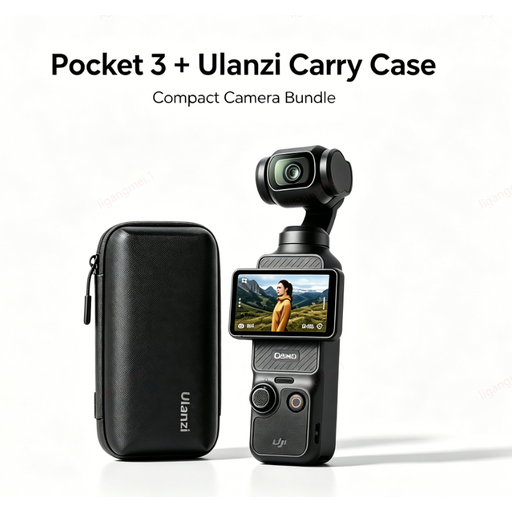 No image available
The product name describes a pocket camera with a storage case. Check that its size and controls suit the way you want to photograph façades.
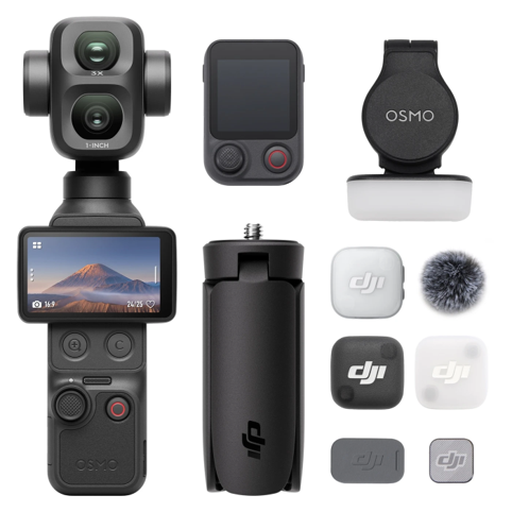 No image available
For a wide frame, the product description lists a 20 mm f/2.0 wide-angle lens. Check that its fixed angle of view suits the spot where you’ll be taking photos.
The product description lists a 1-inch sensor.
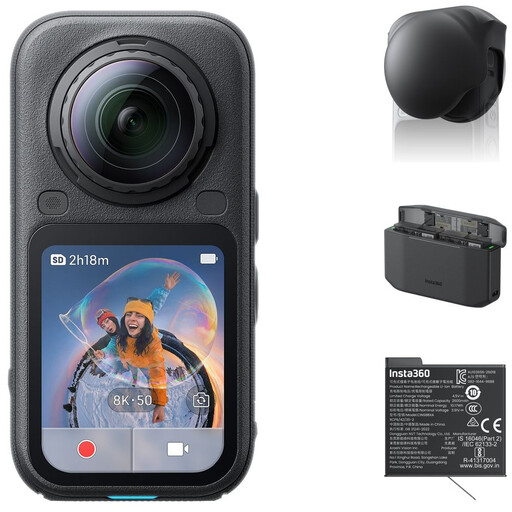 No image available
The bundle name lists a Standard Bundle, lens cap, Xtreme Battery and Fast Charge Case. Check that the contents suit what you want to carry.
The product description lists 8K video at 50 fps and a 170° field of view in action camera mode.
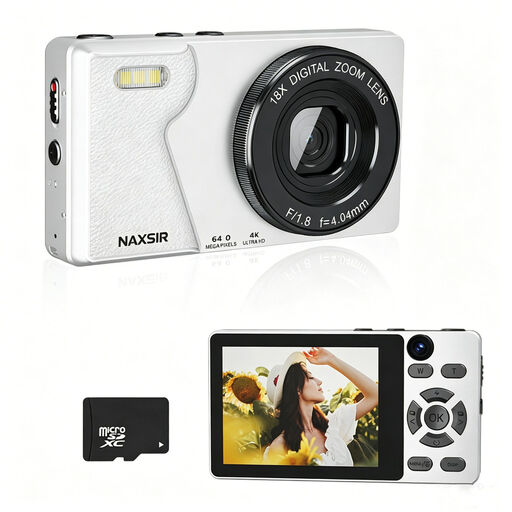 No image available
The product name describes a compact camera for beginners. Check that the controls suit the way you like to take photos.
The product name lists a 64 MP photo resolution, autofocus, 18× digital zoom and an included 32 GB memory card. The zoom is digital.
 No image available
The product name describes a pocket camera. Check that its shape and controls suit the way you like to take photos.
The product name lists a 1-inch CMOS sensor, 4K/240fps, 3-axis stabilisation and 2× lossless zoom.
It also lists 107 GB of built-in storage and a 2-inch rotating screen.
Check the angle of view from a spot you can actually use. If possible, try a different position as you walk, or deliberately choose a tighter frame; a greater zoom range won’t show you more of the façade from the same spot.
Before you leave, check the battery and make sure you have a suitable memory card. Only use a camera in the rain within the protection conditions specified for the exact model: Fujifilm specifically lists the AR-X100 and PRF-49 for the X100VI, while OM SYSTEM specifies water protection for the TG-7. After exposure to water, follow your camera’s care instructions and don’t assume other models are waterproof.
According to ACM ConsuWijzer, the seller is responsible for the statutory guarantee if a product, when used normally, doesn’t provide what you could reasonably expect. A manufacturer’s warranty doesn’t automatically cover the full period of that statutory right. Online purchases generally also come with a 14-day cooling-off period; this is different from a remedy for a faulty product.