
Walker looking for distant façade details
You’re staying on your side of the canal and want to frame an ornament, window or other small subject more closely without carrying a large bag.


Choose based on the composition you want: optical telephoto reach matters for a small subject on the opposite bank, while you’ll also need a wide-angle setting to capture an entire façade. Canon lists a 24–960 mm equivalent range for the PowerShot SX740 HS Lite Edition; Panasonic gives 24–720 mm equivalent for the Lumix DC-TZ99 when shooting 4:3 photos. A larger sensor with a shorter telephoto range, or a heavier bridge camera, may suit different priorities. However, zoom specifications don’t guarantee sharp photos.
You’re staying on your side of the canal and want to frame an ornament, window or other small subject more closely without carrying a large bag.
On a single walk, you switch between the full façade and a subject further away. The wide-angle setting, telephoto reach and portability all need to work together.
You also take photos later in the day and want to weigh up sensor size, lens aperture and stabilisation against the size of the distant subject in the frame.
| What to consider | What should you look for? | Who should prioritise this? |
|---|---|---|
| Framing distant details | Compare the optical telephoto range in 35mm equivalents. Canon lists 24–960 mm for the SX740 HS Lite Edition; Panasonic gives 24–720 mm for the TZ99 when shooting 4:3 photos. | If I can’t get closer, I want to frame a small ornament tightly. Around 36% of consumers put distant details first. |
| Capturing both the façade and the details | Check the wide-angle and telephoto endpoints in the same photo mode, and compare the weight including battery and card. Canon gives approximately 299 g for the SX740 HS Lite Edition; Panasonic gives approximately 322 g for the TZ99. | On a single walk, I want to frame both the whole façade and a detail. Around 29% of consumers prioritise this combination. |
| Taking photos in lower light | Compare the sensor type, lens aperture at the telephoto end and optical image stabilisation for each model. Sony lists a Type 1.0 sensor, f/2.8–4.5 and optical image stabilisation for photos on the RX100 VII. | On an evening walk, I prioritise taking photos in lower light over maximum telephoto reach. Around 21% of consumers have this priority. |
| A subject that’s exceptionally far away | Weigh up the zoom range against size and weight. Nikon lists 125× optical zoom, 24–3000 mm equivalent and approximately 1.4 kg for the COOLPIX P1100. | I’m happy to accept a larger camera if the subject is really far away and pocket-sized isn’t essential. Around 14% of consumers prioritise exceptional reach. |
Optical, intelligent and digital zoom are different terms. The quoted equivalent range for the Panasonic TZ99 also varies by aspect ratio and shooting mode.
Compare the optical endpoints for the same type of photo, and check which photo mode you want to use.
If you can’t step further back on a narrow quayside, the wide-angle setting also determines whether the whole façade will fit in the frame.
Compare both the wide-angle and telephoto endpoints before choosing based on the highest zoom figure.
Nikon lists the COOLPIX P1100 at approximately 1.4 kg, compared with approximately 299 g for the Canon PowerShot SX740 HS Lite Edition, including battery and card.
Choose a larger camera body only if the extra reach is worth the size and weight you’ll be carrying on a walk.
The PowerShot SX740 HS Lite Edition is a pocket-sized compact camera with a quoted range for capturing both wide façades and distant details.
The Lumix DC-TZ99 is a pocket-sized travel zoom camera; the FZ82D is a larger bridge camera for a different balance between reach and size.
The RX100 VII is a pocket-sized compact camera for weighing up a Type 1.0 sensor and viewfinder against a shorter telephoto range.
The COOLPIX P1100 is a larger bridge camera for situations where a subject is exceptionally far away and pocket-sized isn’t essential.
A selection of Joybuy products featuring zoom cameras. Check the type of zoom listed for each model and whether the camera suits the composition you’re after.
 No image available
The product title lists 18X zoom. Check whether it’s optical if you want to use the camera for distant façade details.
The title also lists 80MP and a white finish.
 No image available
The product title lists 12X optical zoom, a specification to bear in mind if you want to frame a subject at a distance.
The title also lists 4K, WiFi and 64MP.
 No image available
The title lists an 8X optical zoom lens; compare the quoted range with the distance to the subject you want to photograph.
The title also mentions 5K, 64MP, a dual lens and a white finish.
 No image available
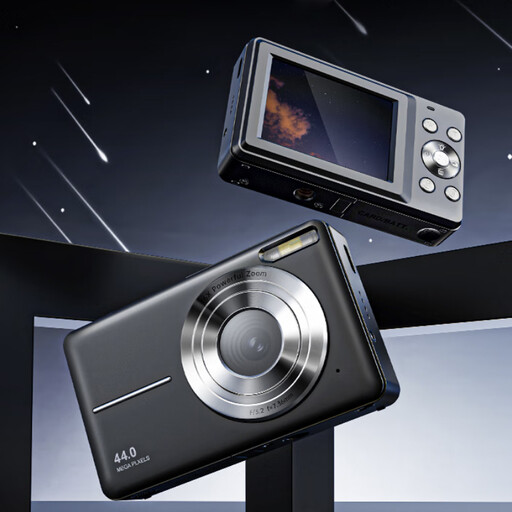
The title lists 16X zoom, but doesn’t specify whether it’s optical. Check the difference if you’re choosing the camera for distant details.
The title also lists 4K, 44MP and a black finish.
 No image available
The title lists 10X optical zoom. Check the quoted range against the way you want to frame distant façade details.
The title also lists 5K, 56MP, front and rear cameras, and a black finish.
No. First compare the optical telephoto endpoint in 35mm equivalents. The equivalent range for the Panasonic TZ99 depends on the aspect ratio and video mode; Panasonic lists digital zoom separately from optical zoom.
Take a wide shot first, then zoom in on the distant detail; check the screen for sharpness when shooting at the telephoto end. Sony’s general care instructions recommend a blower and a suitable cleaning cloth. Controls and included accessories vary by model.
For a standard online purchase, you’ll generally have a statutory 14-day cooling-off period after delivery, subject to exceptions, according to ACM ConsuWijzer. You’re also entitled to a legal guarantee if a product doesn’t do what you could reasonably expect during normal use; the retailer is your point of contact. Check the terms that apply to your specific purchase.
It depends on how you share the photo and on the privacy rights of anyone who can be recognised. The Dutch Data Protection Authority distinguishes between photos you keep private or share with a very limited group and wider publication; publication outside this private-use exception may require a legal basis. This is neither blanket permission nor a general ban on every photo.