
Façade detail enthusiast
You want to pick out mortar joints, brick patterns and decorative features. Compare the lens, effective image resolution and cropping options.


Start by considering where you’ll be standing: for a whole façade in a narrow street, a wide-angle setting is important. Optical zoom helps bring a detail on the other side of the street closer. A camera with a fixed lens may suit you if you frame carefully and want to crop your photos; a travel zoom offers more reach, but the Dutch Consumers’ Association says cameras with very high zoom ranges generally have smaller sensors. So compare the lens, sensor type and shooting settings of the exact model, rather than looking at the megapixel count alone.
You want to pick out mortar joints, brick patterns and decorative features. Compare the lens, effective image resolution and cropping options.
You want to frame a whole building from the pavement available, without carrying a large camera bag. Check that the angle of view is wide enough from where you usually stand.
You can’t get closer to details high up or across the street. Optical reach can help, but bear in mind the light and how steadily you can shoot at a long focal length.
First decide which shot you need to get from where you’ll be standing: the whole façade in one frame, or an ornament that would otherwise look small without zoom.
| What to consider | What to look for when buying | Who is this important for? |
|---|---|---|
| Brickwork detail and cropping | Compare effective pixels, the lens, RAW capability and sample images from the exact model with a similar crop. | If I want to examine mortar joints and brickwork closely later, I look at how much detail a crop can retain. Around 29% of consumers put fine brickwork texture first. |
| Framing the whole façade | Compare the wide-angle setting in 35 mm equivalent and check the angle of view from a realistic distance. | If I can’t step back any further, I want to know whether the whole building will fit in the frame. Around 23% of consumers prioritise framing the entire façade. |
| Distant details | Compare the optical range, not just digital zoom, and check the sensor type too. The Dutch Consumers’ Association points out that cameras with very high zoom ranges generally have smaller sensors. | If an ornament is high up or across the street, I want to bring it closer in the frame from where I’m standing. Around 18% of consumers name a distant façade detail as their top priority. |
| Taking photos in low light | Check the maximum aperture at the zoom setting you use and see which exposure settings are available. | When a façade is in shadow, I want to take the light and zoom setting into account. Around 18% of consumers prioritise low-light photography. |
| Taking it along on a walk | Compare the dimensions and weight of the exact version, including the battery and memory card, and check that it’s easy to use on the go. | If I’m walking around the city for a long time, it matters how easy the camera is to carry. Around 12% of consumers name portability as their top buying priority. |
The lens, sensor, framing and light also affect how brickwork texture is captured. A high megapixel count alone doesn’t tell you what a close-up will look like.
Compare sample images and the lens-and-sensor combination of the exact model with the crop you want to make.
For the Canon SX740 HS Lite Edition, 40× optical zoom, ZoomPlus and digital zoom are listed separately. These terms describe different ways of magnifying an image.
First compare the optical focal lengths in 35 mm equivalent, then assess digital crops separately.
A fixed 35 mm equivalent lens gives you a different frame from the same spot than a zoom lens that starts at 24 mm equivalent.
Before you buy, check whether the whole façade will fit in the frame from the pavement. Then decide how much telephoto reach you’ll also need.
The Sony RX100 VII combines wide-angle and telephoto reach in one compact zoom camera.
The PowerShot G7 X Mark III has a shorter, brighter zoom range, while the SX740 HS Lite Edition is a separate travel zoom option for more distant details.
The Fujifilm X100VI has a fixed angle of view and may suit you if you frame carefully and want room to crop your photos.
The Lumix TZ99 offers a travel zoom range for switching between a whole façade and more distant ornaments.
The Ricoh GR IV has a fixed wide-angle lens for façades and street scenes.
The Leica Q3 has a fixed lens and a high stated resolution for anyone who frames carefully and is considering cropping their photos.
This Joybuy selection includes compact digital cameras for photographing façades and subjects at different distances. Check whether the zoom listed for each model is optical or digital.
 Image unavailable
May suit you if you’re looking for a compact digital camera for façades and subjects at different distances.
The product title lists 80 MP and 18× zoom. Check which type of zoom this refers to before relying on it for optical reach.
 Image unavailable
May suit you if you’re looking for a digital camera for façades and subjects at different distances.
The product title lists 5K, 80 MP and 18× zoom. An SD card isn’t included, so check whether you’ll need one.
 Image unavailable
May suit you if you’re looking for a camera with optical zoom for subjects at different distances.
The product title lists 4K, 64 MP, 12× optical zoom and Wi-Fi.
 Image unavailable
May suit you if you’re looking for a pocket camera for façades and subjects at different distances.
The product title lists 4K and 44 MP. The 16× zoom is digital, not optical zoom for distant details.
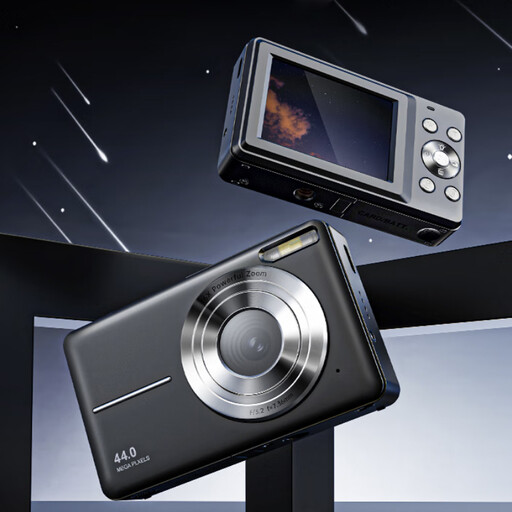 Image unavailable
May suit you if you’re looking for a pocket camera for façades and subjects at different distances.
The product title lists 4K and 44 MP. The 16× zoom is digital, not optical zoom for distant details.
No. Optical zoom can make a detail you can’t get closer to appear larger in the frame, but the Dutch Consumers’ Association says cameras with very high zoom ranges generally have smaller sensors. Choose the range you need from where you’ll be standing, and compare the image quality of the exact model too.
First frame the whole façade, then take a separate shot of a detail from a stable position. Keep the camera clean and take care when cleaning it; the Dutch Consumers’ Association also recommends looking after the battery. Check your model’s user manual before using cleaning products.
Check what’s included with the exact version, whether you need a suitable memory card or spare battery, and how the retailer handles repairs. The Dutch Consumers’ Association lists an extra battery and SD card as things to consider when buying a camera, and explains repairs during and after the warranty period.
Check the privacy rules that apply: according to the Dutch Data Protection Authority, identifiable people are personal data, and sharing privately is treated differently from publishing publicly. Public publication requires a valid legal basis under the GDPR; according to the Dutch Data Protection Authority, consent is required in most cases.