
Reflection enthusiast
You want to keep the reflected façade visible and be able to adjust the exposure in bright light. A polarising filter may work against that aim, so your position and exposure settings are important choices.


If you want to capture a canal house and its reflection together, start by considering the angle of view you need from the quayside. Optical zoom matters most if you want to frame architectural details from the same spot. A polarising filter can reduce reflections, but that may also weaken the mirror image, while a built-in ND filter serves a different purpose.
You want to keep the reflected façade visible and be able to adjust the exposure in bright light. A polarising filter may work against that aim, so your position and exposure settings are important choices.
You want to frame the building, its gable and the reflection together from the quayside. Compare the equivalent wide-angle setting and try out the framing from where you plan to take the shot.
You also want to capture individual windows or brickwork details without having to keep moving closer. Optical zoom can help you frame a tighter shot from the same position.
Best if: you want to switch between a façade with its reflection and a tighter crop. Canon Netherlands specifies a 24–100 mm equivalent focal length for the PowerShot G7 X Mark III.
Trade-off: a shorter zoom range won’t give you the same framing of distant details as a longer zoom.
Best if: you’d rather choose your position than zoom in optically. Ricoh Imaging Europe specifies a fixed angle of view equivalent to around 28 mm for the GR IV.
Trade-off: you can’t zoom in optically for a tighter crop, so check that you have enough room on the quayside.
Best if: you want to frame a specific part of the façade. Fujifilm specifies a fixed angle of view equivalent to 35 mm for the X100VI.
Trade-off: on a narrow quayside, the angle of view may be too limited to capture the whole building and its reflection together.
Best if: you also want to frame windows, gables or other details from the same spot. Sony Netherlands specifies a 24–200 mm equivalent focal length for the RX100 VII; Panasonic Netherlands lists 30× optical zoom for the TZ99.
Trade-off: compare the lens and sensor too: a longer zoom range alone tells you nothing about how well a camera performs in lower light.
| What to consider | What to look for | Who should pay particular attention? |
|---|---|---|
| Reflections and exposure | Compare exposure compensation and manual exposure; don’t confuse a built-in ND filter with a polarising filter. | I want to keep the mirror image while carefully exposing both the bright water and the dark façade. Around 29% of consumers give preserving the reflection their top priority. |
| Framing the façade and water together | Compare the equivalent angle of view at the aspect ratio you’ll use, and try out the framing from where you plan to take the shot. | I want to capture the whole building and its reflection in one image from the quayside. Around 24% of consumers prioritise this complete framing. |
| Taking photos in lower light | Compare sensor size and maximum aperture at the focal length you’ll actually use. | When I take photos in lower light, I want to weigh up the lens and sensor alongside my preferred zoom setting. Around 18% of consumers list low-light photography as their top purchasing priority. |
| Distant details | Check the optical zoom range and the aperture at the telephoto end. | I want to frame windows or brickwork details across the water more tightly without changing position. Around 17% of consumers prioritise this kind of optical framing. |
| Easy to carry | Compare the dimensions and weight, and check that the screen and controls work for you. | I want a camera that’s easy to carry on a walk, so I also consider how I’ll carry it. Around 12% of consumers put portability ahead of the other factors. |
A polarising filter can reduce reflections, including the reflection you want to photograph.
First decide whether you want to keep the mirror image or deliberately reduce reflections. Then check that the filter fits your exact camera model.
For a full building with its reflection, the wide-angle setting may matter more than the telephoto end. The equivalent angle of view on the Panasonic TZ99 also varies with the selected aspect ratio, according to Panasonic Netherlands.
Compare the equivalent wide-angle and telephoto settings in your chosen image format and from your usual shooting position.
An ND filter reduces the amount of light entering the camera; a camera’s ND filter specification doesn’t mean it’s designed to remove reflections.
Consider an ND filter, exposure control and any polarising filter as separate features.
The PowerShot G7 X Mark III is a compact zoom camera for anyone who wants control over exposure and is looking for a built-in ND filter.
The RX100 VII is worth considering if you want to frame both a wide canal view and tighter architectural details from one position.
The GR IV is an option for anyone who’d rather choose their position than zoom in optically.
The LUMIX TZ99 is a compact travel zoom for anyone who also wants to frame distant architectural details.
The X100VI is designed for anyone who wants to work deliberately with a single, fixed angle of view equivalent to 35 mm.
This selection includes pocket vlog cameras, a digital pocket camera and a mirrorless camera with a kit zoom lens. Not every model is a compact camera for photographing façades, so check the camera type and stated zoom carefully.
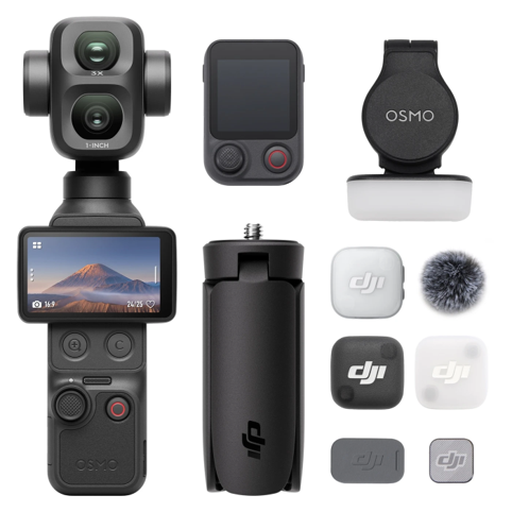 No image available
The product name describes this model as a vlog camera; check whether it suits your needs for a compact camera to photograph façades.
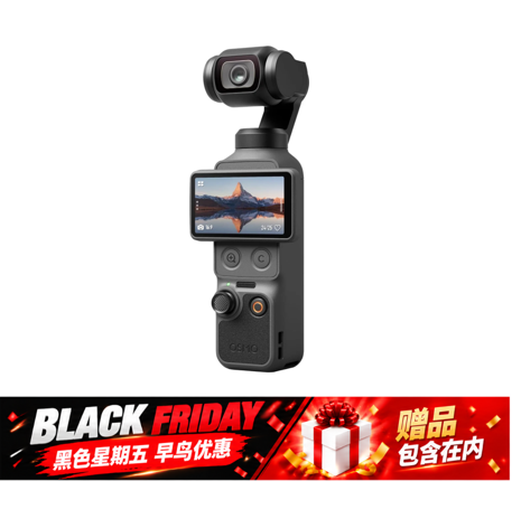 No image available
This is a pocket gimbal vlog camera; consider whether this type suits your needs for a camera to take still photos of façades.
The product name lists a 1-inch CMOS sensor and 2× lossless zoom.
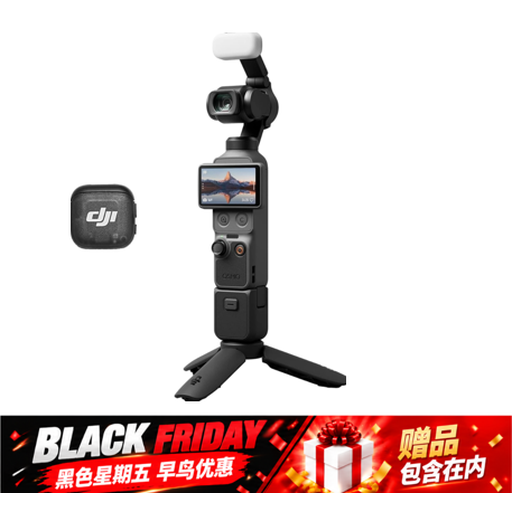 No image available
The product name describes this model as a pocket gimbal vlog camera; check whether this type of camera suits the photos you plan to take.
The product name lists 2× lossless zoom and a handle with a 1/4-inch thread.
 No image available
The product name describes a pocket camera for photos and video; check that its angle of view suits your planned composition.
The stated 16× zoom is digital, not optical zoom for framing architectural details more tightly from the same position.
 No image available
This is a mirrorless camera with a kit zoom lens, not a compact camera. The product name lists a 16–50 mm zoom lens; bear the difference in camera type in mind when making your choice.
Not necessarily: a polarising filter can reduce reflections on water, which you may want to preserve. First try different camera heights and positions. If you still want to use a filter, check that it’s compatible with your camera.
Canon Netherlands recommends finding a sheltered spot or waiting for the wind to drop. Your camera position also affects how the reflection appears in the composition; camera specifications can’t guarantee still water.
No. A built-in ND filter reduces the amount of light entering the camera; according to Canon Netherlands, a polarising filter can reduce reflections, including those on water. These filters serve different purposes.
According to the Dutch government, you should contact the seller if a product is faulty. The Netherlands has no fixed statutory warranty period; what you can expect from a product depends on the product and the sales information. An additional warranty is most relevant if its terms give you extra rights.
The Dutch Data Protection Authority distinguishes between private use and wider publication. For recognisable people, wider publication isn’t covered by the exception for personal or household use and requires a lawful basis under the GDPR. This isn’t a general ban on photographing canal houses.