
Façade and light photographer
You photograph the same brick façades in changing light and weather, and want to adjust the exposure and framing with confidence.


Start with the shot you want to take from your usual spot: to fit an entire façade in the frame, you’ll need a suitable wide-angle lens, while optical zoom helps bring distant details into view. Then compare the exposure controls and the lens and sensor specifications. Zoom or stabilisation alone won’t guarantee a successful shot in changing daylight.
You photograph the same brick façades in changing light and weather, and want to adjust the exposure and framing with confidence.
You want to photograph an entire building from across the canal without constantly changing equipment or carrying too much.
You want to bring ornaments and higher-up façade details closer, even when shooting from a fixed spot.
Choose this when: you mainly photograph street scenes and façades, and can fit enough in the frame from your usual spot.
Trade-off: without optical zoom, you can’t bring distant details closer from the same spot. Ricoh lists a fixed 28 mm-equivalent angle of view for the GR IV; Fujifilm lists 35 mm-equivalent for the X100VI.
Choose this when: you switch between wide shots of façades and tighter shots of details.
Trade-off: Canon Netherlands lists a 24–100 mm-equivalent lens and f/1.8–2.8 for the PowerShot G7 X Mark III. Its zoom range is shorter than the Sony RX100 VII’s.
Choose this when: you want to frame higher-up or more distant parts of a façade larger from a single spot.
Trade-off: Sony lists an aperture range of f/2.8 at the wide-angle end to f/4.5 at the telephoto end for the RX100 VII; Panasonic lists f/3.3–6.4 for the TZ99. A high zoom range alone doesn’t tell you how a shot will turn out in lower light.
| What to consider | What should you check? | Who should pay particular attention? |
|---|---|---|
| Changing daylight | Check whether the exact model offers exposure compensation, manual exposure or RAW; consider stabilisation as a separate feature. | If the sun disappears behind clouds, I want to be able to adjust the exposure myself or edit my shot later. Around 36% of consumers rank control in changing light as their top priority. |
| Fitting the whole façade in the frame | Compare the wide-angle setting and assess the framing from the distance you’ll actually be shooting at. | If I want to capture the whole building from my usual spot, the angle of view is crucial. That’s why around 29% of consumers rank framing the entire façade as their top priority. |
| Distant details | Compare the optical zoom and maximum aperture at the telephoto end of the exact model. | If I want to photograph ornaments or an upper floor in more detail from the same spot, I focus on optical zoom range. This is the top priority for around 21% of consumers. |
| Taking it on a walk | Compare the dimensions and weight, including the battery and memory card; decide whether a fixed angle of view or zoom suits you better. | If I want to walk around the city without changing lenses, I want a camera that suits the way I take photos. Around 14% of consumers prioritise portability. |
The Panasonic LUMIX TZ99 combines a stated 30× optical zoom with a 1/2.3-inch sensor and f/3.3–6.4. The zoom factor alone doesn’t tell you how your shots will turn out as daylight fades.
Compare the zoom range you need for façade details with the aperture at the focal length you’ll use and the sensor specifications of the exact model.
Ricoh lists a fixed 28 mm-equivalent angle of view for the GR IV, while Fujifilm lists 35 mm-equivalent for the FUJIFILM X100VI. Without optical zoom, you can’t change the framing from the same spot.
Check whether the entire façade fits in the frame from your usual spot, and decide whether distant details matter to you.
In the Netherlands, an extended warranty is in addition to your statutory rights. The Dutch government says there is no fixed statutory warranty period and that you can contact the seller if a product is faulty.
Check what an extended warranty covers and keep your proof of purchase and warranty documents.
The PowerShot G7 X Mark III is a zoom compact for switching between wide shots of façades and closer details.
The RX100 VII is a zoom compact for framing both street scenes and more distant details from the same spot.
The GR IV is a fixed wide-angle camera for photographers who want to work with a single angle of view.
The X100VI has a fixed 35 mm-equivalent angle of view and offers features for photographers who value exposure control and RAW files.
The LUMIX TZ99 is a travel zoom option if optical reach for façade details is your main priority.
This Joybuy selection features compact digital cameras. Compare the stated zoom type and features of each model with the framing and lighting conditions you’ll be shooting in.
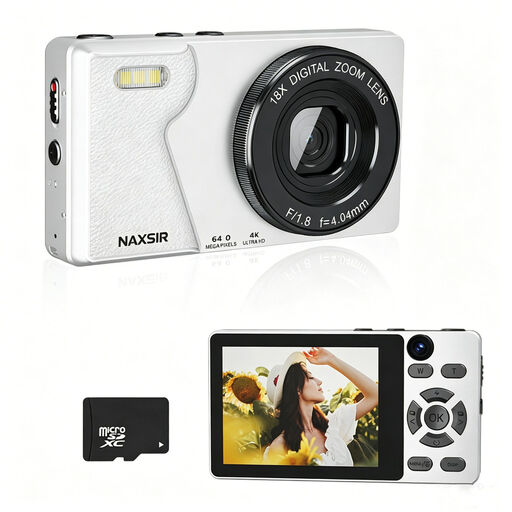 No image available
The compact camera description may appeal if you want to take a camera along on a city walk; digital zoom is not the same as optical zoom.
The product name lists 64 MP photo resolution, autofocus and a 32 GB memory card.
 No image available
The stated optical zoom is useful if you want to frame façade details closer from a fixed spot.
The product name also lists 4K, Wi-Fi and 64 MP; check which features suit the way you take photos.
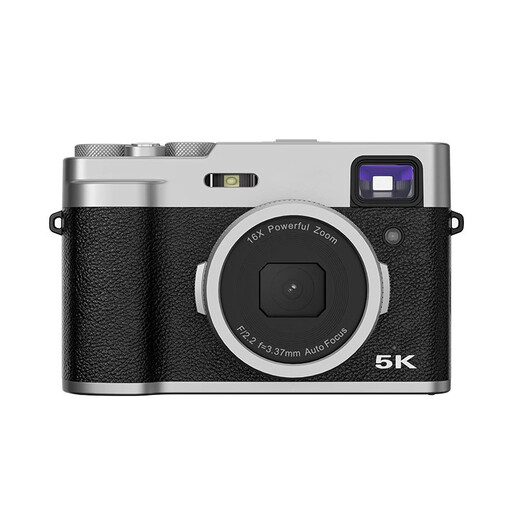 No image available
The compact camera description may suit anyone looking for a separate camera for street scenes and façades; the product name lists an optical viewfinder for framing shots.
The product name also mentions autofocus and a 2.8-inch LCD screen.
 No image available
The stated 10X optical zoom is useful if you want to frame parts of a façade larger from a fixed spot.
The product name also lists front and rear cameras; check whether this version suits your needs.
 No image available
The product name positions this model as a compact vlogging camera; compare the exact lens and controls with the framing you need for façades.
Check your position and framing before taking the shot, and look for curved lines around the edges of wide-angle photos. Nikon notes that barrel distortion can be corrected during editing, but this isn’t a substitute for choosing a suitable angle of view.
These features are useful if you want to adjust the exposure yourself or edit a shot later. Canon lists exposure compensation for the G7 X Mark III, and Fujifilm lists RAW for the X100VI; neither specification alone guarantees a well-exposed photo.
Check the exact model’s moisture protection and care instructions before taking photos in the rain. Compact doesn’t automatically mean waterproof, so don’t assume a camera is weather-resistant just because of its size.
Report a fault to the seller. According to the Dutch government, there is no fixed statutory warranty period in the Netherlands; any additional manufacturer or seller warranty is on top of your statutory rights.
If people are recognisable in the photo, first consider the privacy rules. The Dutch Data Protection Authority treats recognisable people in photos as personal data: private use within a limited circle may fall under the household exemption, but that exemption does not apply to wider public sharing, which requires a legal basis under the GDPR. This does not establish a general ban on photographing buildings.