
Façade detail photographer
If you’re across the canal and want to isolate a building, window or brickwork pattern, focus on comparing the lens’s optical telephoto end. Sony, Panasonic and Canon specify this range for each model in 35mm equivalent.


If you’re mainly photographing a single façade or brickwork detail from across the canal, look at the lens’s optical telephoto reach. If you’re close to the building, a wide-angle setting is more important for framing the whole façade. Then compare the sensor, stabilisation and weight of the exact models, and only choose a fixed-lens camera if its field of view suits your usual vantage point.
If you’re across the canal and want to isolate a building, window or brickwork pattern, focus on comparing the lens’s optical telephoto end. Sony, Panasonic and Canon specify this range for each model in 35mm equivalent.
If you can’t move further back but still want to capture the whole façade, check the lens’s widest setting and try framing the shot from a similar vantage point. Also consider the building lines in your composition.
If you’ll be carrying your camera for a long time and switching between façades and details, first work out how much zoom range you really need. A compact camera has a built-in lens, so its range needs to suit the subjects you photograph on the go.
A good fit if: you want to bring a façade or detail closer from a fixed spot across the canal. Panasonic says the TZ99 ranges from 24 to 720 mm, while Canon gives the PowerShot SX740 HS Lite Edition a range of 24 to 960 mm, both in 35mm equivalent.
Bear in mind: a long telephoto range alone doesn’t tell you how usable your photos will be in low light.
A good fit if: you want both a wide view and the option to crop in. Sony specifies a range of 24 to 200 mm for the RX100 VII, while Canon gives the G7 X Mark III a range of 24 to 100 mm, both in 35mm equivalent.
Bear in mind: the telephoto end is shorter than on the travel zoom models mentioned above. Sensor size alone doesn’t prove that you’ll get better photos in your lighting conditions.
A good fit if: you usually shoot from a predictable distance and know in advance that the field of view will work for you. Fujifilm specifies a 35 mm equivalent lens for the X100VI, while Ricoh gives the GR IIIx a field of view of around 40 mm equivalent.
Bear in mind: without optical zoom, you can’t reframe a façade that’s too wide or bring a distant detail closer with the lens.
| What to consider | What to look for when buying | Who is this important for? |
|---|---|---|
| Distant façade details | Compare the optical telephoto end in 35mm equivalent, and don’t count digital zoom as optical range. | If you want to fill the frame with a window or brickwork pattern from across the canal, telephoto reach is your first selection criterion. Around 36% of consumers prioritise this detail range. |
| A whole façade at close range | Check the wide-angle end and try framing the shot from the distance you usually shoot at. | If you can’t move back in a narrow street, you’ll want to know whether the lens can capture the whole building. Around 29% of consumers say a wide view is their main priority. |
| Changing light | Check the sensor size and stabilisation of the exact model; compare sample images taken in lighting similar to your own conditions. | If you take photos in both shade and bright light, compare the relevant specifications with your shooting conditions. Around 21% of consumers prioritise this aspect. |
| Carrying it on a walk | Compare the weight and dimensions of the exact model; check whether the stated weight includes the battery and memory card. | If you’ll be carrying your camera around the city for hours, its portability matters. Around 14% of consumers put ease of carrying first. |
A zoom figure doesn’t tell you how wide the lens starts. Alongside optical zoom, Canon lists ZoomPlus and digital zoom for the SX740 HS Lite Edition.
Compare the wide-angle end and the optical telephoto end in 35mm equivalent. Don’t count digital magnification as optical range.
According to their manufacturers, the Fujifilm X100VI and Ricoh GR IIIx have different fixed fields of view. Neither has optical zoom to adjust the framing if you’re close to a whole façade or want to capture a distant detail.
Decide in advance whether you’ll usually photograph a whole building or a single detail, and check the field of view from a similar vantage point.
According to ACM ConsuWijzer, statutory guarantees in the Netherlands depend on what you could reasonably expect from the product with normal use; there isn’t one fixed statutory time limit for every camera.
Keep your proof of purchase and report any fault to the retailer. Make sure you distinguish between your statutory rights and any additional warranty.
According to Sony, the RX100 VII is a compact model with a zoom range of 24 to 200 mm in 35mm equivalent.
According to Panasonic, the LUMIX TZ99 is designed for a range of shooting distances, with a range of 24 to 720 mm and 30× optical zoom.
Among these models, Canon gives the PowerShot SX740 HS Lite Edition a range of 24 to 960 mm and the G7 X Mark III a range of 24 to 100 mm, both in 35mm equivalent.
According to Fujifilm, the X100VI is an option with a fixed 35 mm equivalent lens.
According to Ricoh, the GR IIIx has a fixed field of view of around 40 mm equivalent.
The following Joybuy products are described in their product information as suitable for photography or vlogging. For each model, check whether the stated zoom range is optical and whether the field of view suits your vantage point; digital zoom isn’t optical telephoto zoom.
 No image available
The product title mentions 18× zoom; check whether this is optical before relying on it for distant façade details.
The title describes a camera for photography and vlogging.
 No image available
The product title mentions 12× optical zoom, a specification to consider if you want to frame a façade detail from across the canal.
The title also mentions Wi-Fi and 4K video.
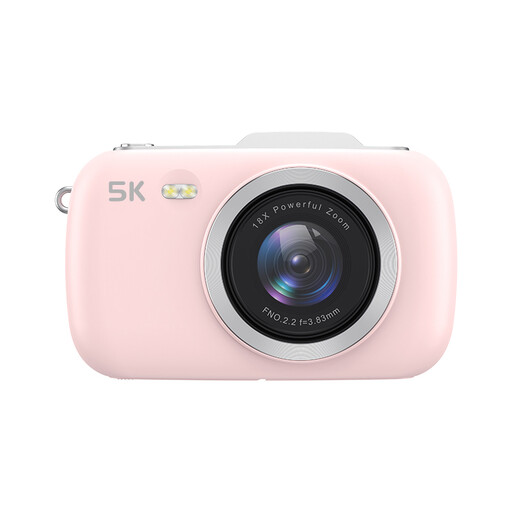 No image available
The product title mentions 18× zoom but doesn’t specify whether it’s optical. Check before choosing this model for distant façade details.
The title states that no SD card is included.
 No image available
The product title describes this model primarily as a vlogging camera; check whether its shooting format suits photographing façades.
The title mentions a 1-inch CMOS sensor, 4K/120fps video and 3-axis stabilisation.
 No image available
The product title mentions 18× digital zoom. This isn’t the same as optical telephoto zoom for distant façade details.
The title mentions 64 MP resolution and a 32 GB memory card.
If you want to capture a single façade or detail from across the canal, compare the optical telephoto end. If you can’t fit the whole building into the frame from a narrow street, compare the widest lens setting and check the framing from your usual spot.
Start by considering your vantage point and composition. Nikon recommends paying attention to lines in architectural photography and describes correcting barrel distortion at the edge of the image during post-processing. Bear this potential correction in mind when framing your shot.
Canon says this model doesn’t support USB charging and comes with a battery charger in the box. Check the packaging for the exact version, and don’t assume other compact cameras use the same charging method.
Report the fault to the retailer. According to ACM ConsuWijzer, statutory guarantees in the Netherlands depend on what you could reasonably expect from the product with normal use; there isn’t a fixed two-year statutory time limit for every camera.
First, check the privacy rules on identifiable people. The Dutch Data Protection Authority distinguishes between private use and sharing publicly or for business purposes; processing images of identifiable people for public or business use requires a lawful basis under the GDPR. A photo of buildings alone is not the same as one in which people are identifiable.