
Autumn colour photographer
You want to assess leaf colour and detail in flat light, and adjust the exposure or white balance if needed. Canon Europe describes exposure compensation and white balance as settings worth considering.


Start with the angle of view: do you want to capture the whole canal and the trees in the distance from the same spot, or focus mainly on nearby details? Then compare light-gathering ability, portability and controls for exposure and colour. A wider zoom range gives you more framing options, but it doesn’t in itself tell you how a camera performs in low light. A fixed lens limits your framing, and you’ll need to check rain protection for each model.
You want to assess leaf colour and detail in flat light, and adjust the exposure or white balance if needed. Canon Europe describes exposure compensation and white balance as settings worth considering.
You’re taking photos from the canal bank and want to switch between a wide street scene and trees in the distance. The Consumentenbond recommends considering factors such as zoom range and image quality; the angle of view you need will determine whether a fixed lens, short zoom or travel zoom is right for you.
You want a camera that’s easy to carry, and you’ll need to decide separately whether you need protection from proper rain. A model’s water resistance doesn’t automatically apply to other compact cameras.
Choose this if: you want to frame both the canal and the trees on the opposite bank from one spot. Sony lists a 1.0-type sensor and a 24–200 mm equivalent range for the RX100 VII.
Trade-off: according to Sony, the maximum aperture ranges from f/2.8 at the wide end to f/4.5 at the telephoto end. These specifications don’t guarantee results in overcast or rainy conditions.
Choose this if: you mainly photograph nearby subjects and a wider maximum aperture matters more to you than distant details. Canon lists a 24 mm wide-angle lens, 4.2× zoom and f/1.8–2.8 for the PowerShot G7 X Mark III.
Trade-off: the zoom range is shorter than on the travel zoom models mentioned here. Check that it suits the distance to the trees.
Choose this if: you want to switch between a wide view and distant details from one spot. Panasonic lists a 24–720 mm equivalent range and RAW shooting for the LUMIX DC-TZ99.
Trade-off: Panasonic also lists a 1/2.3-inch sensor and a maximum aperture of f/3.3–6.4. Don’t assume the zoom range offers an advantage in low light.
Choose this if: you mainly capture street details and smaller sections of the canal, and can walk around to change your framing. Ricoh lists an APS-C sensor and a 40 mm equivalent angle of view for the GR IIIx.
Trade-off: the GR IIIx doesn’t have optical zoom. Ricoh lists the GR III, with its 28 mm equivalent angle of view, as the wider option.
Choose this if: you want to take photos in proper rain, too. OM Digital Solutions lists an IPX8 rating, waterproofing to 15 m and a 25–100 mm equivalent zoom for the Tough TG-7.
Trade-off: these protection details apply to this model. Also check whether the stated zoom range suits the canal.
| What to consider | What should you check? | Who should prioritise this? |
|---|---|---|
| Leaf colour and exposure | Check exposure compensation, RAW, sensor size and the maximum aperture at both ends of the lens. | If I want to assess leaf colours and dark trees in overcast conditions, I look at the exposure and colour settings. Around 36% of consumers cite exposure and colour as their main reason for buying. |
| Framing from the canal bank | Compare equivalent focal lengths and check that you can zoom out far enough from the spot where you usually take photos. | If I want to switch between the whole canal scene and tree details in the distance, the angle of view I need is the deciding factor. Around 29% of consumers prioritise framing and range. |
| Carrying it on a walk | Compare the dimensions and weight, including the battery, the screen controls and whether one camera offers the range you need. | For a longer walk, I want to take a camera that suits my route and the way I work. Around 21% of consumers prioritise portability. |
| Taking photos in the rain | Check the stated waterproof rating and usage conditions for the exact model; don’t rely on it simply being a compact camera. | If I want to keep taking photos in proper rain, I check the protection offered by the specific model. Around 14% of consumers say taking photos in the rain is their main reason for buying. |
Zoom range determines what you can frame, but it doesn’t tell you on its own how the camera performs in overcast light. Alongside the 24–720 mm equivalent range, Panasonic lists a 1/2.3-inch sensor and f/3.3–6.4 for the TZ99.
For the distance between you and the trees, compare the wide-angle and telephoto ranges, as well as the sensor size and maximum aperture.
With the 40 mm equivalent GR IIIx, you can’t zoom out optically if the canal doesn’t fit in the frame from where you’re standing.
Try out the angle of view in a similar location. Consider a wider lens option if you can’t step further back.
The waterproofing listed by OM Digital Solutions for the Tough TG-7 doesn’t automatically apply to the other cameras mentioned.
Only make rain protection a deciding factor if you’ll actually be taking photos in the rain. If so, check the details for the exact model.
The RX100 VII is a compact zoom option for anyone who wants both a wide view and plenty of reach.
The PowerShot G7 X Mark III is a short-zoom option for nearby scenes.
The LUMIX DC-TZ99 is a compact travel zoom for anyone who wants to frame both wide views and distant details.
The GR IIIx suits photographers who deliberately choose a fixed, moderately narrow angle of view.
The Tough TG-7 is worth considering if taking photos in proper rain is important to you.
This selection of Joybuy products covers cameras for taking photos on the go. Compare the angle of view, type of zoom and controls for each version with what you want to capture along the canal.
 No image available
The stated optical zoom could be useful if you want to frame tree details from the canal bank. Check that the range also suits the canal scene you want to capture.
The product name lists 12× optical zoom, 4K and 64MP.
 No image available
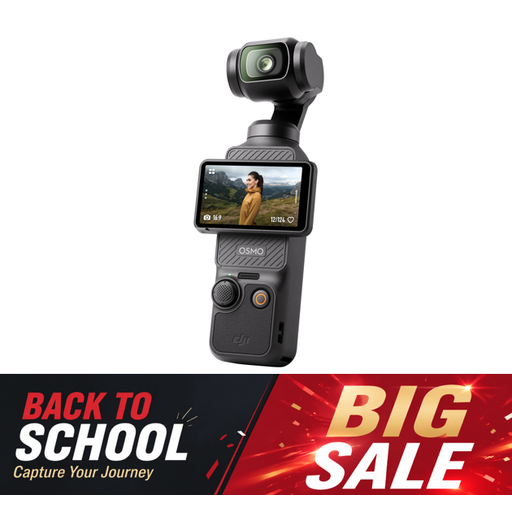
The product name mentions photography as well as video. Check whether the controls and framing suit your needs for still photos of the canal.
The product name lists a 1-inch CMOS sensor and 4K/120fps video.
 No image available
This pocket camera could suit photography on a walk. Check the type of zoom included with this version before relying on it for distant tree details.
The product name lists 4K, 44MP and the colour pink.
 No image available
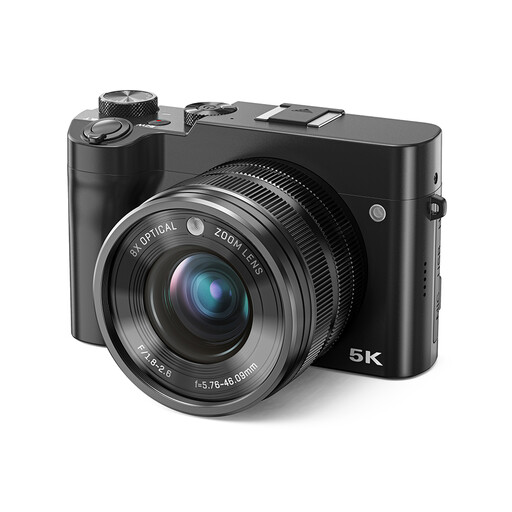
The stated optical zoom could help you frame tree details. Check that the wide-angle setting is wide enough for the canal.
The product name lists 8× optical zoom, 5K, 64MP and a dual-lens design.
 No image available
The product name positions this as a compact vlogging camera. Check whether its angle of view and controls suit your needs for photos of both the canal and trees in the distance.
Check a test shot and adjust the exposure compensation if your camera offers this feature. Choose the direction of the adjustment based on the image: a particularly bright or dark scene can affect the camera’s automatic metering.
Check the white balance. If you want to adjust colours afterwards, consider a model with RAW. Canon Europe describes RAW as an option for editing colours afterwards, but it doesn’t guarantee that every photo will turn out well.
No. Don’t assume a camera is rainproof just because it’s compact. Check the protection offered by the exact model; OM Digital Solutions lists an IPX8 rating and waterproofing to 15 m for the Tough TG-7.
Compare the weight, including the battery, and check which accessories are included with your chosen version. The Consumentenbond lists an extra battery and SD card as separate purchase considerations; check which memory card is compatible with your camera.
According to the Rijksoverheid, you’re entitled to a product that works properly in the Netherlands, and there’s no fixed statutory guarantee period. If a fault isn’t your responsibility, contact the retailer to arrange an appropriate solution.