
Silhouette photographer in changing light
You want to keep the bridge dark as the sky changes while you’re taking photos. Look for easy-to-access exposure compensation or manual exposure, and check the sky again after making an adjustment.


Choose a compact camera that lets you adjust the exposure, so you can capture the bridge as a dark shape while the sky changes. If you’re shooting from a distant viewpoint, optical zoom can make all the difference. As daylight fades, the sensor, lens aperture and how steadily you hold the camera also matter. So a greater zoom range isn’t automatically the deciding factor: compare it with the framing you want and the lighting conditions.
You want to keep the bridge dark as the sky changes while you’re taking photos. Look for easy-to-access exposure compensation or manual exposure, and check the sky again after making an adjustment.
You can’t get any closer to the bridge and want to switch between a wide view and a close-up of a detail. Compare the optical zoom range and the aperture at the telephoto end.
You want to keep taking photos as the light gets weaker, and carefully weigh up what sensor size, lens aperture and a steady shooting position mean for your photos.
A good fit if: you want to frame both the whole bridge and a distant detail from one spot.
Trade-off: a long zoom range alone won’t tell you how the camera performs as the light fades; compare the sensor and aperture of the specific model too.
A good fit if: you’re shooting from a workable distance and value exposure controls or low-light capability more than maximum telephoto reach.
Trade-off: the range is shorter than that of the travel zoom models mentioned; the right framing depends on your viewpoint and preferred composition.
A good fit if: you can choose where to shoot from and want to work with a fixed frame.
Trade-off: without optical zoom, you can’t bring a bridge closer if it looks too small in the frame from where you’re standing.
First, decide whether you can move from your chosen spot. Then compare the exposure controls, the range you want and the features that matter in fading light.
| What to consider | What to look for | Who should prioritise this? |
|---|---|---|
| Exposing the sky and silhouette | Check exposure compensation, manual modes and how quickly you can access them. | If I want to keep the bridge dark as the sky changes, I want to be able to adjust the exposure straight away. Around 33% of consumers put exposure control first. |
| Framing from a distance | Compare the optical range and check whether you can fit both the whole bridge and the detail you want in the frame. | If I’m somewhere I can’t get any closer, I want to switch between a wide view and a detail. Around 27% of consumers give range top priority. |
| Taking photos in low light | Compare sensor size and aperture at the zoom setting you actually plan to use. | If I keep taking photos as daylight fades, I want to make an informed choice about the sensor, lens and how steady I can keep the camera. Around 27% of consumers prioritise low-light capability. |
| Portability and viewpoint | Check the dimensions and weight, and whether the field of view is fixed or variable. | If I’m walking between different photo spots, I want a camera that suits my viewpoint, and I’m prepared to accept less freedom over framing if needed. Around 13% of consumers give portability top priority. |
The travel zoom models mentioned have a 1/2.3-type sensor; the Canon G7 X Mark III and Sony RX100 VII have a 1.0-type sensor. So a greater zoom range alone doesn’t tell you how a camera will perform in low light.
First, decide where you’ll be taking photos from and which compositions you need. Then compare range, sensor and aperture together.
With the RICOH GR IIIx’s fixed 40 mm-equivalent field of view, you can’t bring the bridge closer optically if it looks too small in the frame from where you’re standing.
Check beforehand whether you can move around and whether the bridge and sky will both fit into the composition you want.
Canon states that USB charging is not supported for the PowerShot SX740 HS Lite Edition.
Before a long photo session, check the power options and what’s included in the box for the exact model.
The LUMIX DC-TZ99 is a travel zoom option if both distance from the bridge and adjustable exposure matter to you.
Of these PowerShot models, the G7 X Mark III has a shorter zoom range than the SX740 HS Lite Edition.
The RX100 VII is worth considering if you want to use an electronic viewfinder to frame your shot within a compact zoom range.
The GR IIIx is a fixed focal length option if you can choose where to shoot from.
Below are Joybuy product picks for compact photography. For each model, check in particular that the stated type of zoom and range suit your shooting location.
 No image available
Optical zoom can be useful if you want to switch between a wide view and a detail from one spot.
Specifications in the product name: 12× optical zoom, WiFi, 64MP and 4K.
 No image available
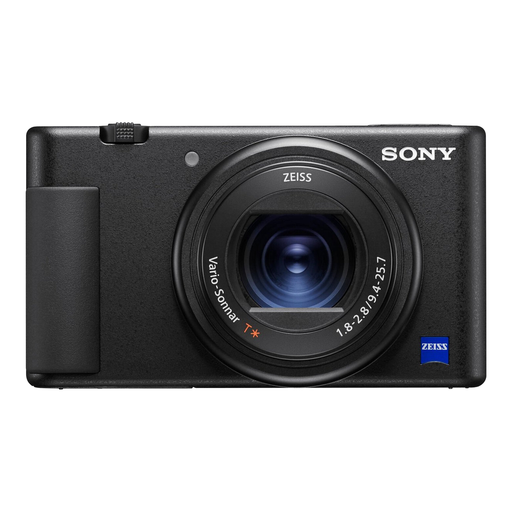
This model is sold as a small video camera; check whether its video format suits your plans for still photos of the bridge.
Specifications in the product name: 1-inch CMOS, 4K/120fps, 3-axis stabilisation and a 2-inch rotating touchscreen.
 No image available
Optical zoom is useful if you want to frame different shots from your chosen spot.
Specifications in the product name: 10× optical zoom, 56MP, 5K and front and rear cameras.
 No image available
The stated 16× zoom is digital, not optical, so it doesn’t offer the optical reach that can be useful when photographing a distant bridge.
Specifications in the product name: 4K and 44MP.
 No image available
This model could suit you if a 24–70 mm-equivalent range is enough; it may be limiting if you want to frame the bridge from a long distance.
Stated features: 1-inch sensor and 2.7× optical zoom.
Check the exposure on the sky and adjust the exposure compensation or manual settings if needed. Take another photo when the light changes; backlighting can bring out the shape of the bridge as a silhouette.
No, neither is essential for every bridge silhouette. RAW on the Panasonic DC-TZ99 gives you a different file to work with in post-processing; at slower shutter speeds, a stable setup can help reduce blur caused by camera shake. RAW or stabilisation alone can’t guarantee a well-exposed sky.
Before buying, check what’s included in the box and which memory card is compatible with the exact model. Canon says the PowerShot SX740 HS Lite Edition comes with a battery and charger and can’t be charged via USB; bear this in mind if you’ll be taking photos by the bridge for a long time.
For a consumer purchase, the statutory guarantee depends on what you could reasonably expect from the product under normal use. According to ACM ConsuWijzer, a standard online purchase generally comes with a 14-day cooling-off period from delivery; applicable exceptions may affect this.
According to the Dutch Data Protection Authority, a photo falls under the personal or household use exemption if you keep it private or share it only with a very limited group. The exemption doesn’t apply to wider publication, so consider which GDPR legal basis applies. This says nothing about access rules at a particular bridge or putting up a tripod.