Who is this guide for?

Backlit silhouette photographer

You want the bridge to stand out as a dark shape against the sky, so you’re looking for a camera that lets you adjust the exposure. Nikon explains how backlighting can make a subject stand out against a brighter sky; Canon UK explains how exposure compensation can adjust brightness in automatic and semi-automatic modes.

Photographer on the opposite bank

You can’t get any closer and want to frame your shot using optical zoom, without having to carry an interchangeable lens. The Consumers’ Association describes compact cameras as having a fixed lens; the range offered by that lens varies between models.

Light-packing weekend walker

You want to take a camera without carrying unnecessary gear, but still need the right angle of view and controls. The Consumers’ Association notes that compact cameras are usually small and lightweight; compare the weight, including the battery and memory card, of the specific models you’re considering.

What should you look for when buying?

Compact travel zoom

Choose this if: you don’t yet know which bank you’ll be photographing from and want to capture both the whole bridge and a close-up from a distance. Panasonic lists a 24–720 mm equivalent range at 4:3, 30× optical zoom and P/A/S/M modes for the DC-TZ99.

Trade-off: the sensor is 1/2.3 inch and the stated lens aperture ranges from F3.3 to F6.4, so the long zoom range doesn’t guarantee good results in low light.

1.0-type sensor with moderate zoom

Choose this if: you want to capture the sky and surroundings as well as the bridge, and are happy to have less telephoto reach. Sony says the RX100 VII has a 1.0-type sensor, a 24–200 mm equivalent range, spot metering and exposure compensation.

Trade-off: the optical range is shorter than that of the travel zooms reviewed; specifications alone can’t predict how a photo will turn out at your location.

Compact camera with extra telephoto reach

Choose this if: the bridge looks small in the frame from where you’ll be standing. Canon lists a 24–960 mm equivalent range, 40× optical zoom and exposure compensation for the PowerShot SX740 HS Lite Edition.

Trade-off: Canon lists a 1/2.3-type sensor and JPEG as the photo file format for this model; 40× optical zoom is not the same as the separately listed 80× ZoomPlus.

Fixed wide-angle lens

Choose this if: you want to create a wide composition from a suitable spot and manual exposure matters more to you than zoom. Ricoh lists a fixed lens of approximately 28 mm equivalent in 35mm format and an APS-C-size sensor for the GR IV.

Trade-off: you can’t zoom optically, so check in advance that the bridge will appear large enough in the frame from your chosen spot.

What to consider What should you check? Who should prioritise this?
Exposure for the silhouette Check whether you can use exposure compensation or manual exposure; take a test shot when you’re there. If I want to keep the bridge dark against the sky, I focus on the available settings. Around 36% of consumers prioritise exposure control.
Framing from where you’re standing Compare equivalent focal lengths and check whether you need optical zoom. If you’re on the opposite bank and can’t get any closer, your preferred framing matters most. Around 29% of consumers prioritise framing from a distance.
Luggage for your day out Compare the weight, including the battery and memory card; also check whether the controls suit you. If you want to travel light, avoiding extra weight is the main priority. Around 21% of consumers prioritise portability.
Taking photos as the light fades Check the sensor and maximum lens aperture for the exact model; don’t assume one specification guarantees a particular result. If you also want to take photos later in the day, look beyond the telephoto range alone. Around 14% of consumers prioritise photography as the light fades.

Common pitfalls

  • Assuming the biggest zoom figure means optical zoom

    For the Canon PowerShot SX740 HS Lite Edition, Canon lists 40× optical zoom and 80× ZoomPlus separately. These figures don’t mean the same thing.

    First compare the optical range and equivalent focal lengths of the exact models.

  • Assuming a larger sensor guarantees a successful silhouette

    A silhouette also depends on the lighting, composition and exposure settings; product specifications don’t define the conditions in which you’ll take the photo.

    Choose based on both the angle of view you want and the exposure settings available to you, then check a test shot.

  • Assuming every camera charges via USB

    Canon says that USB charging isn’t supported on the SX740 HS Lite Edition and that a battery charger is included in the box.

    Before you leave, check the charging method and box contents for the exact version you’re buying.

    Bear in mind that you may need to take the model-specific charger with you.

Brands and models to consider

Panasonic

The LUMIX travel zooms DC-TZ99 and DC-TZ300 offer different combinations of sensor size and zoom range.

  • Panasonic lists 30× optical zoom and a 1/2.3-inch sensor for the DC-TZ99.
  • For the DC-TZ300, Panasonic lists 15× optical zoom and a 1.0-type sensor.
  • These model specifications aren’t an independent comparison of image quality.

Sony

The RX100 VII is a compact zoom camera for anyone looking for adjustable exposure and a 1.0-type sensor.

  • Sony lists a 24–200 mm equivalent range, spot metering and exposure compensation for this model.
  • Its telephoto range is shorter than that of the DC-TZ99 and SX740 HS Lite Edition reviewed; the specifications don’t predict how a bridge photo will turn out.

Canon

The PowerShot SX740 HS Lite Edition and G7 X Mark III have different sensor and zoom specifications.

  • Canon lists a 24–960 mm equivalent range and a 1/2.3-type sensor for the SX740 HS Lite Edition; for the G7 X Mark III, it lists a 24–100 mm equivalent range and a 1.0-type sensor.
  • The standard SX740 HS and the Lite Edition are separate versions. For the Lite Edition, also check the battery and charger included with the exact package.

Ricoh

The GR IV is designed for a deliberately chosen wide composition without optical zoom.

  • Ricoh lists a fixed lens of approximately 28 mm equivalent in 35mm format, an APS-C-size sensor and manual exposure.
  • Whether the bridge appears large enough in the frame depends on where you’re standing; the product page is intended for business customers.

OM SYSTEM

The Tough TG-7 is another option to consider if protection from water and dust matters on a wet outdoor trip.

  • OM Digital Solutions lists waterproofing to 15 m, dust resistance and an equivalent optical zoom range of 25–100 mm.
  • These specifications don’t automatically make the camera the right choice for a dry outing or for photographing a bridge from a distance.

Joybuy products

These Joybuy products are digital cameras with stated zoom features, for anyone who wants to vary their framing on a weekend getaway. Check the angle of view, controls and specifications for each version.
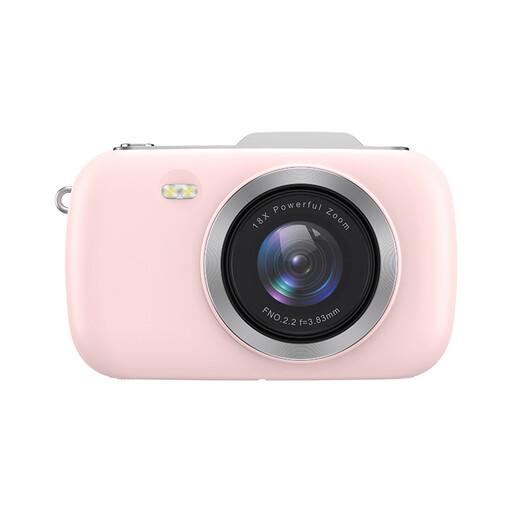
KOMERY G7-A 4K camera, pink

KOMERY G7-A 4K camera, pink

An option to compare if you want to adjust your framing on your trip; check which angle of view you’ll need from where you’ll be standing.

The product title lists 4K, 80MP and 18X zoom.

Joybuy
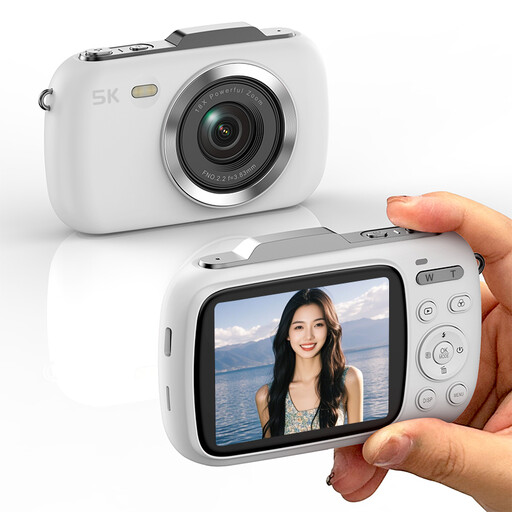
KOMERY G7 5K camera, white

KOMERY G7 5K camera, white

The stated zoom may be useful if you want to compare different framings from one spot; check in advance which angle of view you’ll need.

The product title lists 5K, 80MP and 18X zoom.

Joybuy

KOMERY W6 camera

KOMERY W6 camera

Compare this model’s controls and angle of view with what suits your chosen spot for photographing the bridge.

The product title lists 4K and Wi-Fi.

Joybuy

Songdian 5K camera, white

Songdian 5K camera, white

The product title mentions optical zoom; compare the stated range with the framing you want from where you’ll be standing.

The product title lists 8X optical zoom, 5K and 64MP.

Joybuy

Songdian 5K camera with 10X optical zoom, black

Songdian 5K camera with 10X optical zoom, black

The stated optical zoom is worth comparing if you plan to use the camera from a fixed spot; check whether the angle of view suits your composition.

The product title lists 10X optical zoom and 5K video.

Joybuy

Frequently asked questions

How do I make the bridge a silhouette rather than too bright?

Frame the bridge against the brighter sky and check the result; if needed, use exposure compensation or manual exposure to keep its outline dark. The precise setting depends on the available light, as Canon UK explains in its guidance on exposure compensation.

Do I mainly need a wide angle or a telephoto zoom for a bridge photo?

It depends on where you’re standing and how you want to frame the shot. Compare equivalent focal lengths: a fixed lens of approximately 28 mm, a 24–200 mm zoom and longer travel zooms all offer different angles of view, according to the specifications from Ricoh, Sony and the relevant camera manufacturers.

What should I take with me, and how should I look after the camera on a weekend getaway?

Before you leave, check the box contents and charging method for the exact version. Canon says the SX740 HS Lite Edition comes with a battery and charger, and that USB charging isn’t supported. The Consumers’ Association advises keeping the camera clean and handling the battery with care.

What are my rights if I buy a camera online and don’t like it or it breaks too soon?

According to ACM ConsuWijzer, when you buy online from a trader, you’ll generally have 14 days from delivery to change your mind, subject to applicable exceptions. Your statutory guarantee is separate from any retailer or manufacturer’s warranty: if a camera doesn’t do what you could reasonably expect during normal use, the retailer is responsible for providing an appropriate solution.

Can I share a bridge photo publicly if passers-by are recognisable?

Not necessarily. The Dutch Data Protection Authority distinguishes between private use or sharing with a very limited group and wider publication: recognisable people are personal data, and the exception for personal or household use doesn’t apply when sharing publicly. Consider the specific photo and how you intend to share it.
