
Bridge photographer with a fixed vantage point
You take photos from a riverbank or viewpoint where you can’t get any closer, and want to frame the bridge, or part of it, carefully.


Start by choosing a field of view that suits the spot you can stand in, then check how you can adjust the exposure for the bright sky. A fixed lens keeps your kit simple, while optical zoom gives you more freedom to frame your shot from the far bank. A higher zoom range isn’t automatically the most useful choice as the light fades.
You take photos from a riverbank or viewpoint where you can’t get any closer, and want to frame the bridge, or part of it, carefully.
You want to take a camera with a fixed lens without carrying a bag of interchangeable lenses. The Consumers’ Association describes compact cameras as generally small and light, but compare the weight of the specific models too.
You want to assess the exposure of a bright sky and a dark bridge, and see how the camera performs as the light fades.
Choose this option if: you want to frame both the whole bridge and a smaller detail from the same spot.
Bear in mind: the maximum aperture can change as you zoom in, so check the value at the focal length you’ll be using too.
Choose this option if: you want to fill the frame with part of a bridge from a distant spot; Panasonic specifies 30× optical zoom for the DC-TZ99, and Canon specifies 40× for the PowerShot SX740 HS Lite Edition.
Bear in mind: both manufacturers list a 1/2.3-type sensor for these models; the DC-TZ99 has a maximum aperture range of f/3.3 to f/6.4.
Choose this option if: you already know the framing you want from your chosen spot; the Fujifilm X100VI has a fixed 35 mm-equivalent lens, while Ricoh lists a 40 mm-equivalent lens for the GR IIIx and a 28 mm-equivalent lens for the GR III.
Bear in mind: you can’t change the framing with optical zoom, so check in advance that you can fit the bridge into the frame from an accessible spot.
Choose this option if: a fixed wide-angle lens suits the composition you want, and a weight of around 743 g including the battery still counts as a compact kit for you; Leica gives this weight for the Q3.
Bear in mind: the Leica Q3 is heavier than the travel zoom models listed, which weigh 299 g and 322 g including the battery and memory card, according to Canon and Panasonic respectively.
Canon Netherlands explains that automatic metering doesn’t always choose the exposure you have in mind. So decide on your framing first, then check the exposure in a test shot.
| What to consider | What to look for | Who prioritises this? |
|---|---|---|
| Exposure in backlit scenes | Check the exact model for exposure compensation or manual exposure, and review a test shot of the sky. | I want to keep the bridge dark without losing detail in the bright sky. Around 36% of consumers give exposure control top priority. |
| Framing from one spot | Compare focal lengths in 35 mm-equivalent terms and try out the framing from a similar distance. | From the spot I can reach, I want to choose between the whole bridge and a smaller section. Around 27% of consumers prioritise framing range. |
| Portable kit | Compare dimensions and weights on the same basis, for example, including the battery and memory card. | I want to take the camera on a walk without carrying extra lenses. Around 27% of consumers give portability top priority. |
| Taking photos in lower light | Check the maximum aperture at the focal length you’ll be using, and see what shutter speed and stabilisation controls are available. | I want to know how well the camera performs as it gets darker around the bridge. Around 10% of consumers prioritise photography as the light fades. |
A long zoom range alone doesn’t tell you how well a camera will perform in low light. Panasonic lists the maximum aperture of the Panasonic DC-TZ99 as ranging from f/3.3 at wide angle to f/6.4 at the telephoto end.
First decide where you’ll be standing and how you want to frame the shot. Then compare both the focal length and maximum aperture at the setting you plan to use.
The Fujifilm X100VI and Ricoh GR IIIx have different fixed fields of view and don’t offer the optical zoom found on the travel zoom models mentioned. As a result, you may not be able to get the framing you want from the spot you can stand in.
Check in advance that you can get the composition you want from an accessible spot; you may need to choose a different location.
Canon lists different battery types for these versions: NB-15L for the Lite Edition and NB-13L for the older SX740 HS.
Check the full model name and specified battery type before choosing a spare battery or bundle. The wrong accessory could mean an extra purchase.
The RX100 VII is a compact zoom model worth considering if you want a range from wide angle to telephoto in one camera.
The PowerShot SX740 HS Lite Edition is a travel zoom option; the G7 X Mark III is a separate compact model with a shorter zoom range.
The LUMIX DC-TZ99 is a travel zoom camera worth comparing if you want to frame shots from different distances.
The GR models have a fixed lens. According to Ricoh, the GR IIIx offers a 40 mm-equivalent field of view, while the GR III has a wider 28 mm-equivalent field of view.
The X100VI is a fixed-lens alternative if its 35 mm-equivalent field of view suits your bridge location.
These Joybuy cameras offer different zoom specifications if you want to adjust your framing from one spot. For your chosen model, check whether the zoom is optical and whether the other controls suit the way you take photos.
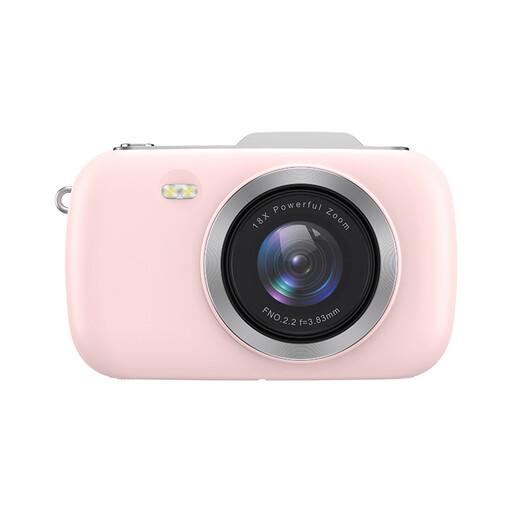 No image available
The product title lists 18× zoom; check whether this is optical zoom if you want to frame shots from a fixed spot.
The title also mentions 4K video and a portable point-and-shoot camera.
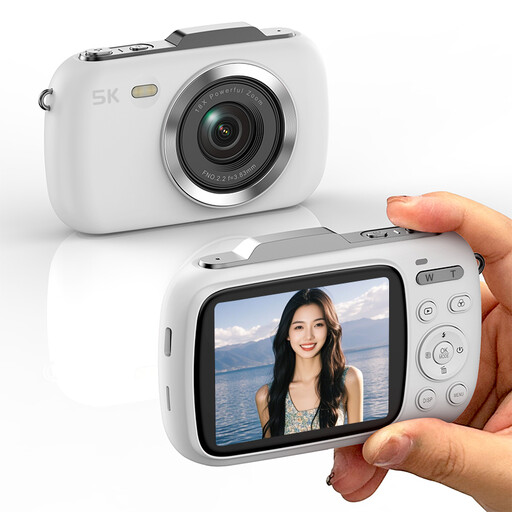 No image available
The product description lists 18× optical zoom, designed to change your framing without moving from your spot.
An SD card isn’t included, so bear that in mind when putting together your photography kit.
 No image available
The title lists 12× optical zoom, allowing you to adjust your framing from the same spot.
The listed specifications include 4K video and Wi-Fi; check that the features suit what you want to use the camera for.
 No image available
The product title lists 10× optical zoom, letting you change the framing without moving from your spot.
The title also mentions front and rear cameras; check whether these features are relevant to how you’ll use it.
 No image available
The specified 16–50mm zoom lens offers different framing options; check whether the range suits the distance to your bridge location.
The product description mentions an APS-C sensor and a lens included in the kit.
From a safe, accessible spot, position the bridge against a brighter sky and check a test shot. Adjust the exposure if the sky is too bright or the bridge isn’t dark enough; Canon Netherlands notes that automatic metering doesn’t always produce the result you want.
Not for every shot. If you use a slower shutter speed in lower light, check that you can hold the camera steady enough and whether a support or small tripod is practical at your location. A tripod isn’t essential for every bridge silhouette.
Before you set off, check that you have a usable battery and memory card, and consult the manual for your chosen model for operating and cleaning instructions. What’s included can vary by version, so don’t assume that accessories are interchangeable between models with similar names.
According to ACM ConsuWijzer, the seller is responsible for the statutory guarantee if a product used normally fails to meet what you could reasonably expect. This is separate from any manufacturer’s warranty and isn’t automatically limited to the commercial warranty period.
This depends in part on whether people can be recognised and how the photo is used. The Dutch Data Protection Authority distinguishes between private use and wider publication. If people are recognisable, the image involves personal data, and the exception for purely personal or household use doesn’t necessarily apply to sharing it publicly.