
Photography club members practising with backlighting
You want to capture the bridge as a dark shape against the sky, so easy-to-adjust exposure controls are important.


Start by considering where you can stand and whether you want to photograph the whole bridge or a section further away. Then choose a camera that lets you adjust the exposure of the sky: a short zoom or fixed wide-angle lens suits a wide view, while extra optical zoom gives you more framing options from one position. No aperture or zoom specification on its own guarantees a particular result in fading light.
You want to capture the bridge as a dark shape against the sky, so easy-to-adjust exposure controls are important.
If you can’t get closer to the bridge, the zoom range you need to frame your shot is an important factor in your choice.
You’re comparing aperture and exposure options, but you shouldn’t assume that one specification alone will determine how the final photo looks.
A good fit if: you want to frame the bridge and its surroundings, and adjust the exposure yourself. Canon lists a 24–100 mm equivalent focal length and f/1.8–2.8 for the PowerShot G7 X Mark III.
Trade-off: with this range, a section of the bridge further away won’t appear as close as it would with a longer zoom.
A good fit if: you want to take different shots from the same position. Sony lists 24–200 mm for the RX100 VII; Panasonic gives an equivalent range of 24–720 mm for the DC-TZ99 when shooting in 4:3.
Trade-off: on both models, the maximum aperture gets smaller towards the telephoto end. Extra reach doesn’t prove that a photo will look better as the light fades.
A good fit if: you can choose your position in advance and want to include the bridge and its surroundings in one composition. Ricoh lists an equivalent focal length of around 28 mm for the GR IV.
Trade-off: without optical zoom, you’ll need to change position or crop the image afterwards to get a different framing.
A good fit if: protection from wet or rough conditions is a priority. OM SYSTEM describes the Tough TG-7 as waterproof, dustproof, freezeproof and shockproof.
Trade-off: those stated protection features don’t, on their own, tell you anything about the exposure or image quality of your bridge silhouette.
| What to consider | What to look for | Who should give this extra thought? |
|---|---|---|
| Exposure of the sky and bridge | Check whether you can easily adjust exposure compensation or set the exposure manually, and review the result. | If I want to capture the bridge as a recognisable dark shape against a bright sky, I need to be able to adjust the exposure. This is the top priority for around 36% of consumers. |
| Angle of view from your position | Work out where you can stand, then compare the optical zoom range and aspect ratio. | If I can’t get any closer, I want to know whether the whole bridge or a detail further away will fit in the frame. Around 29% of consumers prioritise this kind of framing from one position. |
| Shooting as the light fades | Compare the maximum aperture at the zoom setting you actually want to use. | If I’m shooting around dusk, I compare the aperture and settings at the zoom level I intend to use. This is the main concern for around 21% of consumers. |
| Taking it out in changeable weather | Compare the size and weight of the model; check its protection features only if wet conditions are relevant to you. | If I want to take the camera with me to the riverbank, portability and, where relevant, protection from wet weather both matter. Around 14% of consumers put these factors first. |
You don’t automatically need a high zoom to get the whole bridge in the frame. The Consumentenbond also points out that cameras with a high zoom often have a smaller image sensor.
Start with your distance from the bridge and the framing you want. Then compare the wide-angle setting, optical telephoto range and aperture at the zoom setting you plan to use.
A light meter can’t tell whether you want to see detail in the bridge or capture it as a dark shape against the sky. The right exposure depends on the scene.
Take test shots and check both the sky and the outline of the bridge. Before you buy, make sure you can adjust the exposure easily.
The Dutch government distinguishes between a manufacturer’s warranty and your statutory rights. There’s no fixed statutory warranty period in the Netherlands; if a product is faulty, the seller must provide a solution.
Check who the seller is, what any additional warranty covers and which accessories are included with the specific offer.
The PowerShot G7 X Mark III is a short-zoom option for anyone who wants to photograph the bridge and its surroundings with adjustable exposure.
The RX100 VII combines a compact zoom with exposure settings for anyone who wants to try different framings from one position.
The LUMIX DC-TZ99 is a travel-zoom option if capturing a section of the bridge further away matters when you have limited space to move.
The GR IV is a compact camera with a fixed wide-angle lens, suited to a wide composition planned in advance.
The Tough TG-7 is an alternative if protection from wet and rough conditions is a priority.
Camera options at Joybuy for photography, portability or zoom range. Check each model’s listed features against your position and the framing you want.
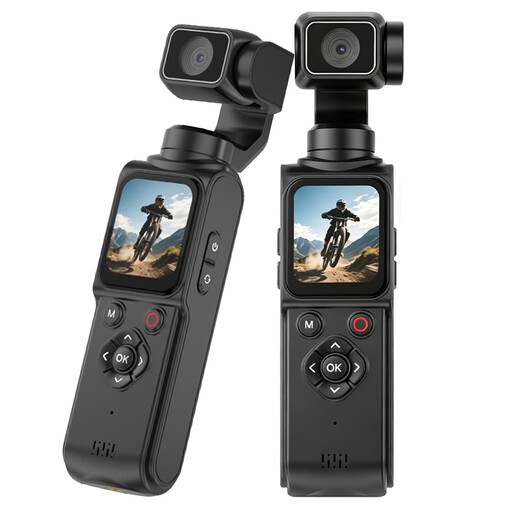 No image available
The camera is described as compact and lightweight, which may be useful if you’re taking it with you to the riverbank.
The product information lists a 1.72-inch touchscreen and a rotating lens. The stated 18× zoom is digital, not optical.
 No image available
The product title describes this as a portable point-and-shoot camera for photography.
The title lists 5K and 80 MP UHD, plus 18× zoom. The type of zoom isn’t specified here.
 No image available
If you want to capture a section of the bridge further away from the same position, the stated optical zoom range may be relevant. Check that it suits the framing you want from where you’ll be standing.
The title lists 12× optical zoom, 4K and Wi-Fi.
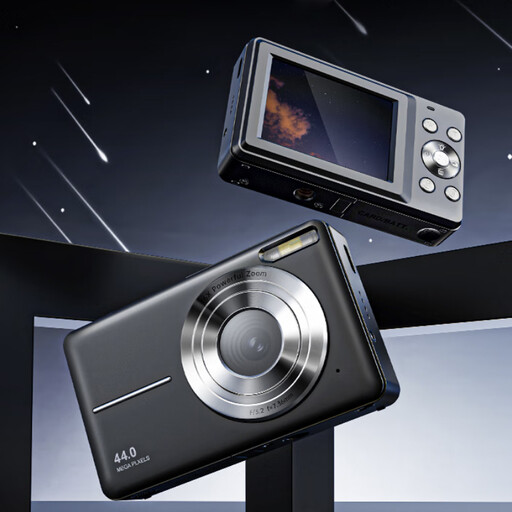 No image available
The camera is described as compact and portable, for anyone looking for a pocket-sized option for photography and video.
The product information lists autofocus and 16× digital zoom; digital zoom isn’t optical zoom.
 No image available
If you want to frame a section of the bridge further away from the same position, the stated optical zoom may be worth considering.
The title lists 10× optical zoom.
Take a test shot and adjust the exposure based on what you see on the screen. Sony shows in an example that negative exposure compensation can make the sky look richer, but the right setting depends on the conditions and your preference.
No. Choose the zoom setting that frames the bridge the way you want. On the Sony RX100 VII and Panasonic DC-TZ99, the stated maximum aperture is smaller at the telephoto end, so compare the aperture at the setting you plan to use.
Check whether the offer includes any memory card or extra battery you need, and find out who the seller is. According to the Dutch government, you’re entitled to a product that works properly in the Netherlands; if a product is faulty, the seller must provide a solution. There’s no fixed two-year statutory warranty period.
That depends on the specific circumstances and how you share it. The Dutch Data Protection Authority treats identifiable people in photos as personal data and distinguishes between sharing for strictly personal purposes and publication on behalf of an organisation. The latter requires a lawful basis under the GDPR.