
Seller of glossy books
You want the title and cover to be clearly visible, without light spots obscuring the book’s condition. The right camera can help, but having control over your setup matters too.


Start by setting up your lighting, then check whether the camera can capture both the whole book and small imperfections clearly from your shooting distance. For close-up details, focusing at short distances matters more than a long telephoto zoom; a fixed support is useful when photographing a batch of books. None of the camera specifications reviewed guarantees that reflections will disappear.
You want the title and cover to be clearly visible, without light spots obscuring the book’s condition. The right camera can help, but having control over your setup matters too.
You also photograph spines, corners and small imperfections. So check the focusing distance at the zoom setting you actually use.
You want to capture covers and details with consistent framing. A fixed camera support and background can help you keep your setup the same.
Start by setting up the lighting for reflective covers, then consider which focusing distance and camera support will suit your books and workspace.
A good fit if: you want to photograph both covers and small imperfections from one workspace; Canon lists 5 cm at the wide-angle end and 40 cm at the telephoto end for the PowerShot G7 X Mark III.
Bear in mind: the minimum focusing distance changes with the zoom setting, and this specification does not promise a reflection-free cover.
A good fit if: capturing small scuffs and details is a priority; OM SYSTEM lists a Super Macro mode and RAW shooting for the TG-7.
Bear in mind: a rugged design is not necessarily an advantage for a fixed book-photography setup; make sure you leave enough room for the lighting too.
A good fit if: you also want to use the same camera for subjects further away; Sony lists a 24–200 mm equivalent range for the RX100 VII, while Panasonic lists 24–360 mm equivalent for the LUMIX TZ300.
Bear in mind: extra telephoto reach won’t eliminate glare. For the Sony RX100 VII, the stated minimum focusing distance increases from around 8 cm at the wide-angle end to around 100 cm at the telephoto end.
| What to consider | What to look for when buying | Who is this important to? |
|---|---|---|
| Readable glossy covers | Test an actual cover under the lighting you intend to use. If needed, adjust the angle of the light or camera, and check whether a filter is compatible with the model. | If I want the title, colour and condition to remain visible, I’ll start by testing the cover setup. Around 33% of consumers put controlling reflections first. |
| Sharp images of signs of wear | Compare the minimum focusing distance at different zoom settings and try the camera from the distance you’ll actually be shooting at. | If you want to show small imperfections on corners or spines clearly, you’ll need to focus from a distance that’s practical at your table. Around 27% of consumers prioritise detail. |
| Consistent book photos | Check that the camera fits a suitable support and that you can read the screen from your chosen angle; keep the background and lighting setup consistent. | When photographing a batch of books, I don’t want the framing or lighting to change each time. Around 20% of consumers prioritise a fixed, repeatable photography setup. |
| Compact size and versatility | Frame the largest book from the distance available, then decide whether you also need the camera for other subjects. | If my table has limited space but I also want to use the camera elsewhere, I’ll weigh up its size and extra reach together. Around 20% of consumers prioritise this combination. |
A polarising filter can reduce certain reflections, but it won’t guarantee results on every book cover, and that says nothing about whether it can be fitted to your compact camera.
Check that the filter can be attached to your chosen model, and test the lighting and camera angles on an actual cover first.
Any filter you use will also need a suitable camera attachment.
For the Canon PowerShot G7 X Mark III and Sony RX100 VII, the stated minimum focusing distance differs between the wide-angle and telephoto settings.
Measure how much room you have above the book and check the focus at the zoom setting you’ll actually use.
A longer zoom range, by itself, tells you nothing about how readable a reflective cover will be or how well the camera focuses at close range.
First work out your shooting distance, the size of your largest book and the detail shots you’ll need. Then consider how else you might use the camera.
The PowerShot G7 X Mark III is a fixed-lens option for photographing covers and details at a book table.
The TG-7 is worth considering if capturing very small imperfections is a key priority.
The RX100 VII is a compact alternative if you want a longer optical zoom range as well as a camera for book photography.
The LUMIX TZ300 is a travel zoom option for buyers who also want to use the camera for other subjects.
This selection includes compact cameras and a Sony ZV-E10 kit with an interchangeable lens; not every option is a compact camera. Compare the features listed with your shooting distance, and test whether the camera can capture your desired book details in focus.
 No image available
Could suit you if you’re looking for a compact point-and-shoot camera; test the focus from the distance you’ll use to photograph books.
The product name lists 80 MP, 4K and 18X zoom; pink finish.
 No image available
Worth considering if you want a portable point-and-shoot camera; check the focus from your actual book-photography distance.
The product name lists 80 MP, 5K and 18X zoom; white finish.
 No image available
Could suit you if you’re looking for a pocket camera; take a test shot to see whether autofocus works from your book-photography distance.
The product name lists 4K, 44 MP and 16X zoom; pink finish.
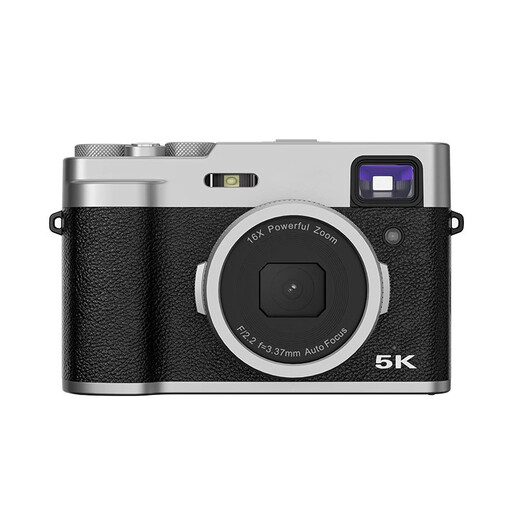 No image available
Autofocus is listed as a feature, making this model worth considering for book photography; test the focus from the distance your setup allows.
The product name lists 48 MP, 5K, a 2.8-inch LCD and an optical viewfinder; black finish.
 No image available
This is a mirrorless camera with an interchangeable lens, not a compact point-and-shoot camera; consider whether this type of camera suits your book-photography setup.
The product description lists a vari-angle screen and Product Showcase setting. An SD card and adapter/charger are not included, according to the product description.
Not according to the camera specifications reviewed. Start by setting up your lighting carefully and adjust the angle of the light or camera if needed. Nikon describes polarising filters as a way to reduce certain reflections; check that the filter fits your camera model and test the effect on the cover.
Use a plain background and a fixed camera support, position the books in a similar way, and check the framing and exposure before you start. Canon describes a tripod as a way to help achieve consistent product photos; it isn’t an essential accessory.
Report the fault to the seller. According to ACM ConsuWijzer, your statutory guarantee is separate from any manufacturer’s guarantee; if a product is faulty despite normal use, the seller must offer an appropriate remedy free of charge. There is no single fixed statutory guarantee period that applies to every camera.
Don’t use someone else’s protected photos without permission. The Dutch Government says that using copyright-protected photos may require permission. This general guidance does not determine separately which rights apply to every listing photo you take yourself that shows a book cover.