Start with the photos you need: a full view of the tin, close-ups of small decorative details, or a repeatable series featuring both. Check the minimum focusing distance at the zoom setting you plan to use, then test your set-up with a stable camera position, diffused light and a suitable white balance. Extra zoom alone won’t solve reflections or a minimum focusing distance that’s too great.
Who is this choice relevant to?
Detail photographer
If you want to show the patterns, paintwork or embossing on your biscuit tin, check that the focusing distance suits the zoom setting and crop you plan to use. Canon Netherlands, Sony Netherlands and Panasonic Netherlands list different focusing distances for wide-angle and telephoto settings for each model.
Photographer with a shiny tin
If you want to photograph the decoration in recognisable colours without distracting bright spots, pay attention to your lighting set-up and white balance. Basler AG describes diffuse lighting for reflective surfaces, while Canon Netherlands explains why white balance matters in challenging lighting conditions.
Portfolio photographer
If you want to show the whole tin and several photos with similar framing, consider the available camera distance, a stable position and the background. Canon Netherlands describes a tripod as a useful aid for consistent composition.
What should you look for when buying?
First decide whether detail, reflection control, a full view or repeatable framing for your portfolio matters most. Then compare the camera specifications with the space and lighting available on your photo table.
| What to consider |
What should you check? |
Who is this important for? |
| Small details |
Compare the minimum focusing distance at each zoom setting and test whether the detail appears large enough in the frame. |
If fine patterns or embossing are the focus of your portfolio, you’ll want to know whether the camera can focus from the distance you need. Around 33% of consumers prioritise capturing detail. |
| Reflections and colour |
Check the adjustable white balance and photo file format; try diffused or repositioned lighting too. |
With a shiny tin, you’ll want to reduce bright spots and keep the colours of your decoration recognisable. Reflections and colour reproduction are the main concern for around 27% of consumers. |
| Getting the whole tin in the frame |
Measure the available camera distance and check with a test frame that the angle of view suits your set-up. |
If you want to show the shape and decoration of the entire tin, it needs to fit in the frame from the distance you have available. Getting a suitable full view is the main priority for around 20% of consumers. |
| A repeatable set-up |
Check whether you can use the screen and controls from the camera position you have in mind; keep the background and framing consistent. |
For a series of portfolio photos, you’ll want to position the camera securely and recreate the same composition. Around 20% of consumers prioritise repeatability. |
Common mistakes
-
Assuming the shortest macro distance applies at every zoom setting
With some zoom cameras, the minimum focusing distance at the telephoto end can be greater than at the wide-angle end. So a short distance in one setting doesn’t mean you can focus close up in every setting.
Check the distance at the zoom setting you plan to use for photographing the decoration, and test whether the detail appears at the size you want in the frame.
-
Expecting more megapixels or zoom to solve reflections
A shiny surface calls for careful lighting; white balance also affects how colours are rendered.
Take test shots with diffused or repositioned lighting, and set the white balance under the lighting you plan to use for your photos. A stable, diffused lighting set-up may require extra time or equipment.
-
Assuming every compact camera produces the same photo files
Listed file formats vary by model. Panasonic specifies RAW and JPEG for the DC-TZ99; Canon specifies JPEG for photos taken with the PowerShot SX740 HS Lite Edition.
Consider whether you want to be able to adjust colours afterwards in RAW, and check the exact model and its specifications.
Camera brands to consider
Canon
The PowerShot G7 X Mark III and SX740 HS Lite Edition offer different features to consider for close-ups and framing. These specifications apply to these models only and not automatically to other Canon cameras.
- Canon Netherlands specifies focus bracketing for the G7 X Mark III and a minimum focusing distance of 5 cm at wide angle and 40 cm at telephoto.
- For the SX740 HS Lite Edition, Canon Netherlands lists 1 cm at wide angle in macro mode and JPEG for photos. Check the settings for the exact model.
Sony
The RX100 VII could suit photographers who want to combine biscuit tin photos with photography from further away. Sony Netherlands specifies an equivalent range of 24–200 mm for this model.
- Sony Netherlands lists a 1.0-type sensor and 8× optical zoom for the RX100 VII.
- The stated minimum focusing distance is approximately 8 cm at wide angle and approximately 100 cm at telephoto. So a longer zoom range doesn’t mean you can focus close up at every setting.
Panasonic
According to Panasonic Netherlands, the LUMIX DC-TZ99 combines a travel zoom with wide-angle macro, RAW and focus stacking.
- Panasonic Netherlands specifies 3 cm in wide-angle macro mode and lists RAW and JPEG for the DC-TZ99.
- The minimum focusing distance is 200 cm at telephoto. The stated equivalent range of 24–720 mm applies at a 4:3 aspect ratio; the range changes with other aspect ratios.
Fujifilm
The X100VI is a fixed-angle option for photographers who can adjust the camera position and want to use RAW.
- Fujifilm specifies an APS-C sensor, 40.2 million effective pixels, a fixed angle of view equivalent to 35 mm and focusing from approximately 10 cm.
- The fixed lens doesn’t offer optical zoom. Check whether you can frame both the whole tin and the details you want from your available set-up.
OM SYSTEM
The Tough TG-7 is worth comparing if small decorative details matter and you want to explore macro modes.
- OM SYSTEM lists macro modes, focus stacking and RAW for this model.
- OM SYSTEM positions the TG-7 primarily as a rugged outdoor camera. That positioning alone doesn’t tell you whether it offers an advantage for photographing a biscuit tin on a photo table.
Cameras at Joybuy
Below are Joybuy cameras that could suit photographing a decorated biscuit tin. The product names mention a range of zoom and shooting features; for each model, also check the focusing distance and test whether it suits the detail shots you want to take.
 No image available
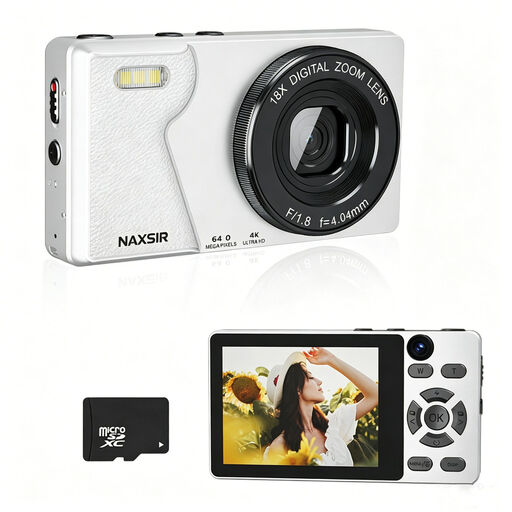
NAXSIR digital camera, 4K, 64 MP, 18× digital zoom
The product name mentions digital zoom, which you can take into account when deciding on the crop you want; the zoom specification doesn’t tell you how close the camera can focus.
The product name lists 64 MP photo resolution, autofocus and a 32 GB memory card.
View at Joybuy
 No image available
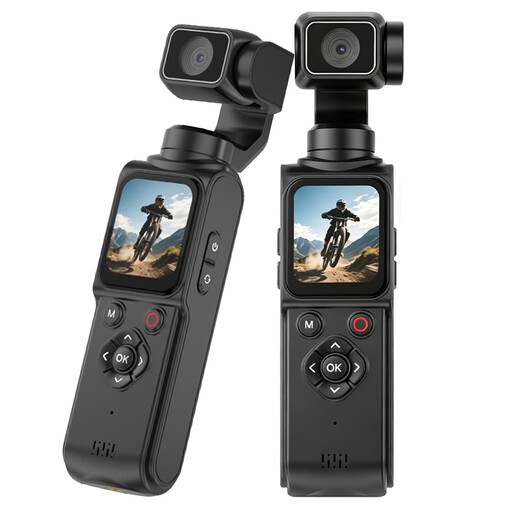
KINSI Mini Vlog Camera 4K, 64 MP, 330° rotating lens
The rotating lens and touchscreen are features to consider if you want to try different shooting angles; check whether the camera also suits the framing you want for the tin.
The product name lists Wi-Fi, a 1.72-inch touchscreen, face recognition, a tripod and Type-C.
View at Joybuy
 No image available
KOMERY G7-A 4K camera, 80 MP, 18× zoom, pink
The product name lists zoom; before choosing, check the minimum focusing distance at the setting you plan to use for the decoration.
The product name lists 4K, 80 MP, 18× zoom and the colour pink.
View at Joybuy
 No image available
KOMERY G7 5K camera, 80 MP, 18× zoom, white
The product name lists 18× zoom but doesn’t give a minimum focusing distance for close-ups. Check this specification if small details matter.
The product name lists 5K, 80 MP, 18× zoom and the colour white.
View at Joybuy
 No image available
Songdian 4K pocket camera, 44 MP, 16× zoom, pink
The product name mentions zoom and a pocket camera. Assess the crop and check the minimum focusing distance before choosing it for detail shots based on zoom alone.
The product name lists 4K, 44 MP, 16× zoom and the colour pink.
View at Joybuy
Frequently asked questions
Is a short macro focusing distance enough to fill the frame with the smallest decoration?
No, the focusing distance doesn’t tell you how large the decoration will appear in the frame. Check the crop at the zoom setting you need; the stated distances for the Canon PowerShot G7 X Mark III, Sony RX100 VII and Panasonic DC-TZ99 differ between wide-angle and telephoto.
How do you get started with a fixed set-up for portfolio photos?
Place the tin against a simple background and position the camera securely for a full-view shot. Keep the framing and background as consistent as possible for subsequent shots, then check the focus on details and any reflections separately.
Does your compact camera need to shoot in RAW?
Not necessarily; RAW is mainly useful if you want to edit colours and exposure afterwards. Panasonic Netherlands specifies RAW and JPEG for the DC-TZ99, while Canon Netherlands lists JPEG for photos taken with the SX740 HS Lite Edition. A suitable white balance still matters.
Can you use other people’s photos in your online portfolio?
As a general rule, you need the creator’s permission to publish someone else’s copyright-protected photos or other work. The Dutch government distinguishes between personal use and publication, so check that you have permission before publishing someone else’s work in your portfolio.


